• Welcome to Photrio!
    Registration is fast and free. Join today to unlock search, see fewer ads, and access all forum features.
    Click here to sign up

Digitizing with enlarger lens

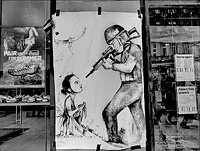
Viaduct.jpg

A
Viaduct.jpg

  • 3
  • 1
  • 42
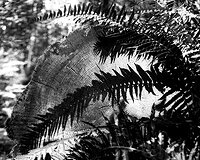
Durham walk.jpg

A
Durham walk.jpg

  • 0
  • 0
  • 30

Recent Classifieds

Forum statistics

Threads
202,538
Messages
2,842,048
Members
101,369
Latest member
hluvmiku
Recent bookmarks
0
Now try it with a lens from a decent scanner.

Lens from scanner? What kind of lenses do they have, focal length etc? I imagine it would be quite incompatible with digital camera.
 
Depends, most from 35mm scanners will be around 40mm.
 
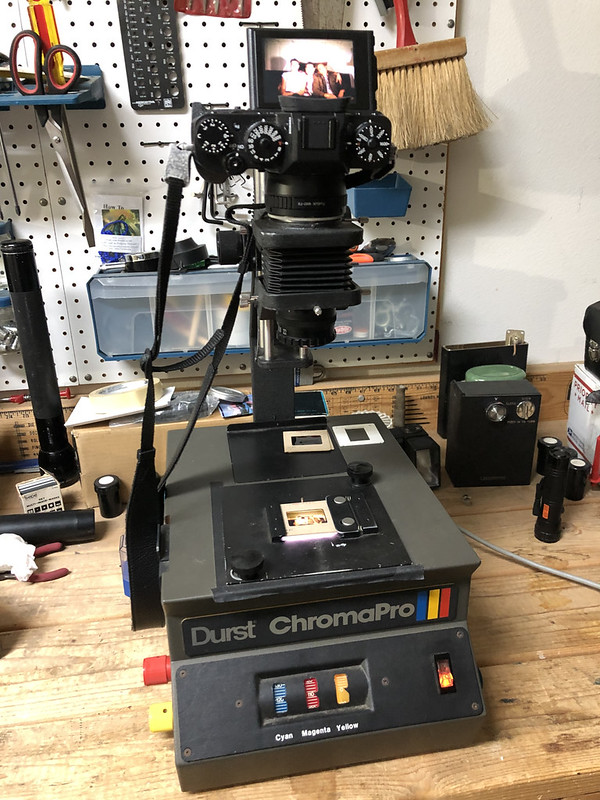
I use an APS-C (Fujifilm XT-2) + an enlarging lens on a Durst slide copier to digitize 1/2 frame 35mm up to 6x6 negatives (6x6 is pushing it a bit). I mainly digitize 35mm and some 6x6. 1/2 frame 35mm I used a 50mm enlarging lens (had a roll or two worth). For full frame 35mm and 6x6 I use an 80mm enlarging lens. Took some adapters, but I got it to work pretty well. I also use a negative holder, a Pixl-Latr, and some enlarger negtaive holders. The Pixl-Latr, though far from perfect, works best overall.
 
Depends, most from 35mm scanners will be around 40mm.

That would be perfect focal length. Hmm, where can I get one ..

I use an APS-C (Fujifilm XT-2) + an enlarging lens on a Durst slide copier to digitize 1/2 frame 35mm up to 6x6 negatives (6x6 is pushing it a bit). I mainly digitize 35mm and some 6x6. 1/2 frame 35mm I used a 50mm enlarging lens (had a roll or two worth). For full frame 35mm and 6x6 I use an 80mm enlarging lens. Took some adapters, but I got it to work pretty well. I also use a negative holder, a Pixl-Latr, and some enlarger negtaive holders. The Pixl-Latr, though far from perfect, works best overall.

It was not only few days a go I got the idea from here, probably from you. If it was you or someone else: thank you, this was so eye opening!

My bellows+slide copier is this one:

copier.jpg


It is a bit of a squeeze to get 35mm frame to fit with that setup + 50mm lens on APS-C sensor. The first bellows between camera and lens are just a tiny bit too thick. I could remove + modify the setup but I plan to use to to make positives. I think I paid 100 euros for the setup. It is so good, everything is built with accuracy and it is heavy + stiff.

Full frame body would be cool and help fitting everything with that setup. Maybe some used full frame Canon DSLR, I need to check prices.

Still pretty hyped about this. I have never got so good digitized material from film.
 
I did a test using an 80mm enlarging lens, and it worked well. The images had a little less contrast than my other tests with macro camera lenses, which isn’t so bad working with slides. Sharpness was as good or better. Biggest downside for me was that the whole rig was a little ungainly, though that is a solvable problem.
 
Real scanners have built-in optics. Were we not talking about using digital cameras here?
Yes, but the "lens from a decent scanner" comment was talking about the lenses built into scanners.
 
Here is a color E6 slide copied with a Nikon D800 and Nikkor 60mm macro lens. The sharpness is stunning.
 
Here is the Durst set-up. In this case I was copying slides, so used the standard Durst slide insert.

Nice. I didn't google the Chromapro but that is pretty much perfect for the job :smile: Based on lens distance I assume that is 90mm on full frame?
 
I’ve used my Schneider 80mm enlarging lens with an adaptor on my Vivitar bellows system with the slide copy attachment and my Minolta SRT to make copies for years. I thought that it should work for digital scanning but, alas, I don’t own a digital camera, except for my phone. A friend gave me his Epson V500 scanner so I’m good with that for now. But if I got a DSLR I’d give it a try.
 
My Epson V750 Pro is great for MF and up but blows chunks for 35mm!
 
Nice. I didn't google the Chromapro but that is pretty much perfect for the job :smile: Based on lens distance I assume that is 90mm on full frame?

I am using 80mm on APS-C. I suspect full frame will use 50mm (for a 35mm negative).
 
I am using 80mm on APS-C. I suspect full frame will use 50mm (for a 35mm negative).

Hmm, wait. I tried to focus my 75mm lens (just for test) and couldn't get it in focus because of limited travel in the bellows. I need to try again. I thought I need smaller focal length to fit all of the 35mm on APS-C. I probably need to build some kind of better copy stand..
 
Hmm, wait. I tried to focus my 75mm lens (just for test) and couldn't get it in focus because of limited travel in the bellows. I need to try again. I thought I need smaller focal length to fit all of the 35mm on APS-C. I probably need to build some kind of better copy stand..

I have a Pentax Bellows with slide copier attachment, and the travel is very restrictive for APS-C. Maybe an 80mm enlarging lens might work, not sure (have not tried it). Enlarging lenses are much shorter than many photographic lenses with helicoids. I did try a Fujinon 43-75mm zoom on the bellows set-up and I suspect the length of the lens itself was an issue. The Durst has much more travel available between the end of the lens and the slide/negative (you can detach the slide copier, but then you have to shield the intermediate distance from external light if you use ambient light as the source).
 
A few years ago i did explore Canon FL bellows with negative/slide holder on APSC camera and it had serious issues. Unfortunately I do not remember what lens did I use back then? Most likely Canon Macro 50 or some longer enlarger lens? Problem is that negative holder is on fixed distance position. I got almost full frame when I inserted around 30mm extension between bellows and holder. I did a few shots and passed that bellows to the friend who had full frame camera at the time.
Nikon did the best job for their bellows because their negative holder is on adjustable distance rod. Back in the day those bellows were designed for 24x36mm cameras and manufacturer 50 or 55mm macro lens to produce 1:1 or bigger magnification copy. APSC format changes all of that. But even on Nikon bellows I had to use 75 or 80mm lens to fill full frame on APSC.
 
Last edited:
I checked, and I am actually using a 75mm enalarging lens (I have a Komuranon-E 75mm f5.6, and sometimes I use an inexpensive Schneider Componar 75mm- when the bellows start getting scrunched too much with 6x6, the Schneider is a little more forgiving).
 
Last edited:
From the sample in your blog post, it seems you have better high values but the toe has a more abrupt rolloff to black than the print. Has that been your experience with other negatives?

I believe it is just how I've adjusted the digitized picture endpoints. Also the print is a smartphone capture so some automatic adjustments might happen. For sure the digitized version as better dynamics. I tried bracketing + HDR combining and it seems to work well too. There is no need for it as digital cameras can capture the whole density range of my film frames.
 
I tried it with that exact lens and found it had a 'hot spot' in the center where the exposure was significantly brighter when i adapted it to my sony a7r2. i think that is because light we being scattered inside the adapter housings. i should get it out again and take another look
 
Last edited:
Photrio.com contains affiliate links to products. We may receive a commission for purchases made through these links.
To read our full affiliate disclosure statement please click Here.

PHOTRIO PARTNERS EQUALLY FUNDING OUR COMMUNITY:


Ilford ADOX Freestyle Photographic Stearman Press Weldon Color Lab Blue Moon Camera & Machine
Top Bottom