• Welcome to Photrio!
    Registration is fast and free. Join today to unlock search, see fewer ads, and access all forum features.
    Click here to sign up

Didn't Ansel Adams called it the "Fuzzy wuzzies"?

IMG_1779.JPG

H
IMG_1779.JPG

  • 0
  • 0
  • 24
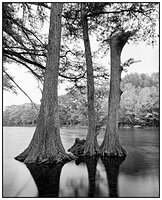
Frio River

A
Frio River

  • 5
  • 0
  • 46

Recent Classifieds

Forum statistics

Threads
203,579
Messages
2,856,689
Members
101,910
Latest member
cburlette
Recent bookmarks
0
Some pretty misleading stereotypes here.
I'm not trying to mislead anybody, but between Adams and Mortenson is a huge difference in philosophy in photography and probably life too.
 
I don't think the original Surrealists ever thought of Mortensen as one of their own.

Photography is a very limited media compare to painting or literature, and I never meant to look at Mortensen and surrealism from the same level.

Cheers.
 
I have a collection of bound volumes of UK magazine "Amateur Photographer" 1946-1952, there is no mention of Ansel Adams but there are some laments on the decline of UK Pictorial Photography. Perhaps the situation was the same in the US or possibly AA was better known there at that time, IDK.
 
What I meant by "misleading" is that stereotypes are made about certain famous photographers like AA based upon mass-reproduction of what is actually a small part of their overall work. If you take in his extensive portraiture, one-off small Polaroid shots, and actually decent examples of his
own early "fuzzy-wuzzies", that would probably change some opinions. F/64 was a brief manifesto mentality, which mellowed in time. But he was
widely recognized as a landscape photographer in this country by the 40's and 50's, both due to his major contribution to the National Park system
as a photographer and activist, and due to his core relation to planting photography departments in major museums, including a lot of work outside his personal genre preferences. Steichen was another early mover and shaker. But all along there were those sniping that AA was just a "rocks and trees" guy. Nonsense. He never made serious inroads into color photography, and I think he had a relation of envy toward Eliot Porter, who did, and whose coffee-table books soon overtook AA's black and white work in the heyday of land protection, when the battle turned from National Parks to designated Wilderness Areas. There was a famous big split in the movement between AA, who retained leadership of the Sierra Club, and David Brower, who split off and founded Friends of the Earth, and who passed away not too long ago here in town. AA accused Brower of spending too much money on color photography books and purged; but these book did have a huge public impact at the time.

 
What I meant by "misleading" is that stereotypes are made about certain famous photographers like AA based upon mass-reproduction of what is actually a small part of their overall work. If you take in his extensive portraiture, one-off small Polaroid shots, and actually decent examples of his
own early "fuzzy-wuzzies", that would probably change some opinions. F/64 was a brief manifesto mentality, which mellowed in time. But he was
widely recognized as a landscape photographer in this country by the 40's and 50's, both due to his major contribution to the National Park system
as a photographer and activist, and due to his core relation to planting photography departments in major museums, including a lot of work outside his personal genre preferences. Steichen was another early mover and shaker. But all along there were those sniping that AA was just a "rocks and trees" guy. Nonsense. He never made serious inroads into color photography, and I think he had a relation of envy toward Eliot Porter, who did, and whose coffee-table books soon overtook AA's black and white work in the heyday of land protection, when the battle turned from National Parks to designated Wilderness Areas. There was a famous big split in the movement between AA, who retained leadership of the Sierra Club, and David Brower, who split off and founded Friends of the Earth, and who passed away not too long ago here in town. AA accused Brower of spending too much money on color photography books and purged; but these book did have a huge public impact at the time.

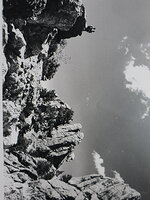
Do I dare say that some of Ansel's followers are fanatical? When I was in college in the late 80's working on my photography degree, there are quite a few emulators in my class. They were older photographers that took trips to Yosemite and the southwest. They though Adams was God. One time they were on the lightbox inspecting the 4x5 negs. I cringed when they were cutting the negs in half to destroy them. I asked why? They said they weren't sharp. I was shocked to say the least.
 
The famous interpreter of Bach was Wanda Landowska. When a critic mentioned that she played Back too romantically she said that Bach was a very romantic man, he had 22 children didn't he! :smile:
 
Why did you cringe. Why were you shocked?

All because they didn't even proof the negs or even made any attempts in printing them. Everything had to be in focus. Also, did they feel that something not sharp in a neg a sin and they had to destroy it?
 
I don't print my out of focus negatives unless I intended them to be out of focus. Why would I?
 
Pictorialism is not a matter of just printing a negative out of focus or even defocusing the camera before taking an image. Were it as simple as that Pictorialists often use soft focus lenses designed for the purpose. They produce a different effect.
 
I don't print my out of focus negatives unless I intended them to be out of focus. Why would I?
My fellow classmates, f/64 devotees destroyed negs that didn't have everything sharp. As for me, I would try to proof them first before making the final decision.
 
You can't tell whether your negatives are sharp or not without proofing them?
 
Well, if you've been around as many of AA's big prints as I have, you wouldn't call his negs sharp by modern standards, or even by contemporaneous
pro lab standards. That's why he espoused printing big using mat paper at lower overall contrast - cause his own negs didn't hold up well at high contrast much over 2X or 3X enlargement (which amounts to 20X24 from an 8x10 neg). And yeah, I'd agree that he had a lot of wannabee clones who
went around imagining that the Zone System was a religion. None of that matters. What does matter, to me at least, is whether or not you really perceive things and have the ability to communicate your vision in the print. AA had an exquisite sense of light and poetic composition. You don't get that simply by wearing a beard and cowboy hat.
 
I think this whole f64 thing is being taken a little out of context. I believe this all started with Stieglitz and Strand with their attempting to establish photography as a valid art medium without it needing to emulate painting and charcoal drawing etc. As I understand it, it was the reason for the falling out of Stieglitz and Steichen. Adams and Cunningham and Weston and others were trying to establish that photography at it's highest technical quality was the best tool for expressing their visions of life and form and nature. They disdained the fuzzy wuzzies as photography pretending to be something else. For a while it seemed they were successful in raising pure photography to fine art in the minds of the public. I believe we have to say now it was a failure, as straight photography has fallen to the lowest of the low and all manner of technical distress or altered reality or painterly affects is considered the work of real artists and straight photography the work of technical nerds.
Generally speaking that is. Most people do love the work of Michael Kenna who's fuzzy wuzziness is an expression of time.
 
You can't tell whether your negatives are sharp or not without proofing them?

My point is don't judge an image by one criteria. Sometimes a photographer can miss out printing a real gem if they reject a negative for part of the image is not sharp. It's like dating, don't judge a women by superficial criteria. Get to know the person before rejecting her. As with an image, see deeper than just how sharp an image is. :wink:
 
Saw his latest show at the Catherine Edelman Gallery in Chicago. I was impressed.
 
... Sometimes a photographer can miss out printing a real gem if they reject a negative for part of the image is not sharp. It's like dating, don't judge a women by superficial criteria. ...

Right. I have a box where I toss my "reject" photos (those that aren't good enough for an album, but not totally screwed up). Just yesterday I came across a photo shot out my window on a foggy day - soft, lots of flare, odd angle - now it looks interesting.
 
Steichen did it all well. One of the finest pictorial portraitists ever, and also capable of very modern-looking silver images. Stieglitz himself worked in different styles, esp if one factors in his skill at reproductions as well as wet contact prints. Weston did plenty of soft-edged work, and it was
some of his best. Granted, what I came in contact with first were some of his classic Point Lobos contact prints. In all of this, it's important to distinguish dialectic positions, which trend toward hyperbole for the sake of argument (which I admittedly am a blatant abuser of, at times), and the
far more inclusive range of styles most of these photographers actually worked with. Besides, most of them had to make a living at some other form
of photography than what now garners their artistic apotheosis. In other words, they knew how to do things technically and proficiently based upon
what routine clients paid, and not just their own immediate aesthetic preferences.
 
Right. I have a box where I toss my "reject" photos (those that aren't good enough for an album, but not totally screwed up). Just yesterday I came across a photo shot out my window on a foggy day - soft, lots of flare, odd angle - now it looks interesting.

i have looked at and printed negatives that i thought were rejects on the proof sheet
and now, 10-30 years later i realize they were the best on the roll and
i understood what i was going after. its interesting how time can allow
for perspective and understanding of an image to change.
 
Well, if you've been around as many of AA's big prints as I have, you wouldn't call his negs sharp by modern standards, or even by contemporaneous
pro lab standards

Those were other times, with other lenses (... A long way to explain)

AA had an exquisite sense of light and poetic composition. You don't get that simply by wearing a beard and cowboy hat.

Just like W. H. Mortensen had his own exquisite sense, without needing to be degraded or not well considered for that, by simply doing things the other way around.

... I have a box where I toss my "reject" photos (those that aren't good enough for an album, but not totally screwed up). Just yesterday I came across a photo shot out my window on a foggy day - soft, lots of flare, odd angle - now it looks interesting.

i have looked at and printed negatives that i thought were rejects on the proof sheet
and now, 10-30 years later i realize they were the best on the roll and
i understood what i was going after. its interesting how time can allow
for perspective and understanding of an image to change.


Those are beautiful examples of how, in the end, it is our personality (our look, knowledge, ... Our learning) what really change, rather than the photographs.
 
i have looked at and printed negatives that i thought were rejects on the proof sheet
and now, 10-30 years later i realize they were the best on the roll and
i understood what i was going after. its interesting how time can allow
for perspective and understanding of an image to change.

+1

Then too after a time you sometimes see what I think of as the photograph within the photograph. You crop out all the nonessentials. Often this is a more powerful image than the original.
 
Stieglitz was basically a student of PH Emerson, the Godfather of photography as "fine art". I wouldn't term Emerson a pictorialist in the sense of
anything fuzzy-wuzzy. That misunderstanding is apparently due to some utterly horrible digi-snaps of his prints on the web. He was into making
exquisite platinum prints, which included outdoor subject matter popular among painters of that era, esp post-Impressionists.
 
Photrio.com contains affiliate links to products. We may receive a commission for purchases made through these links.
To read our full affiliate disclosure statement please click Here.

PHOTRIO PARTNERS EQUALLY FUNDING OUR COMMUNITY:


Ilford ADOX Freestyle Photographic Stearman Press Weldon Color Lab Blue Moon Camera & Machine
Top Bottom