
• Welcome to Photrio!
    Registration is fast and free. Join today to unlock search, see fewer ads, and access all forum features.
    Click here to sign up

Diagnose this problem

Recent Classifieds

Forum statistics

Threads
202,058
Messages
2,834,537
Members
101,094
Latest member
not_cal
Recent bookmarks
0

Darren Guy

Member
Allowing Ads
Joined
Mar 11, 2012
Messages
18
Format
35mm
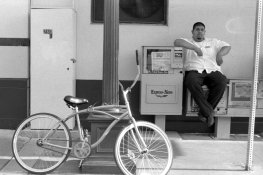
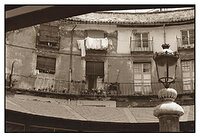
Some of the negatives have this weird pattern on them - in the sky, and on the wall next to the guy sitting. This is the first time I've noticed it after processing around 10-12 rolls, and am assuming it has to do with my processing. It is more prevalent on other images on this roll, but these are the only ones I have handy. Most of the images turned out OK, and others not so much. I'm hoping to correct whatever I did wrong so that it doesn't happen again. Thanks.

 

Attachments

  • 20120526r01f030_Edit.jpg
    20120526r01f030_Edit.jpg
    258.3 KB · Views: 254
  • 20120524r01f023_Edit.jpg
    20120524r01f023_Edit.jpg
    265.3 KB · Views: 228

shuttershane

Member
Allowing Ads
Joined
Feb 14, 2012
Messages
30
Format
Medium Format
that looks like water spots to me...Texas is known for hard water. Did you use tap water?
 
OP
OP

Darren Guy

Member
Allowing Ads
Joined
Mar 11, 2012
Messages
18
Format
35mm
I use distilled water for the developer, stop, and fix. I then wash my double reel tank with tap (inversion cycles 5,10,15,20,15) then the last two with distilled water and Ilfotol - 10 then 5. Then I vigorously shake reels individually over my tub, unreel, and hang. I never had a problem on my first 8-10 rolls doing it this way. I wonder what changed? Any ideas on a better way to wash the film?
 

BainDarret

Subscriber
Allowing Ads
Joined
Dec 31, 2011
Messages
353
Location
Ottawa, On
Format
Multi Format
Try a more dilute solution of the wetting agent (Ilfotol). When I use Kodak Photo Flo I normally use it diluted at 1:400 instead of 1:200. Works well and no water spots. I also use distilled water to make up my final rinse.
 
Joined
Jan 21, 2003
Messages
15,715
Location
Switzerland
Format
Multi Format
Those are water marks, regardless of the technique you used to hang your rolls.

Have you ever tried hanging your film diagonally? Water droplets left on the film have a much shorter distance to travel until they reach an edge, where they can safely dry out without causing water marks in the image area.

Also, remove your film from the reels, and see-saw it through the wetting agent in an open container. This way your film is very evenly coated with the wetting agent before you hang it to dry.
 

cliveh

Subscriber
Allowing Ads
Joined
Oct 9, 2010
Messages
7,816
Format
35mm RF
Using distilled water just before drying should prevent water maks (calcium deposits formed on the shiney side of film). Easy to remove though - lay your neg strips on your negative storage page shiney side up, breathe on them as though you are misting up a mirror and then gently rub them with a soft lens cleaning cloth (never try and wipe the emulsion side). If they still persist, dab a little ethanol on the cloth and wipe again.
 

smieglitz

Member
Allowing Ads
Joined
Oct 18, 2002
Messages
1,950
Location
Climax, Michigan
Format
Large Format
I use a sponge film squeegee like the one made by Yankee to eliminate this problem. I always check the sponge to make sure it has no small particles of anything on it after dunking it in the tank full of Photo-Flo. (I assume Ilfotol is the Ilford equivalent of Photo-Flo.) Squeeze all the solution from the sponge and with only enough pressure to contact the film evenly, and draw the squeegee down the film one time. The key is to use a gentle touch and have the squeegee damp with the wetting agent, not water. I should mention that the film on the reel has been submerged for about 30 seconds in Photo-Flo mixed with distilled water previous to using the squeegee. It also helps to draw the squeegee upwards on the end where the film is being held, pat your fingers dry at that point and grab the film where you've just squeegeed, then run the sponge down the film. Otherwise, pinching the wet film at the end to hold it may let a water drop follow the sponge down the film and form a spot as it dries.

I never have spots or scratches using this procedure although I have seen many students scratch their film by being heavy-handed with the squeegee or if using a hard rubber squeegee.

With sheet film I forego squeegeeing, hang the film, and use paper towel along the edge and/or corner of the negative to wick off the wetting agent.
 

cliveh

Subscriber
Allowing Ads
Joined
Oct 9, 2010
Messages
7,816
Format
35mm RF
I would never use a squeegee and can't understand why they were ever suggested for photography.
 

mts

Member
Allowing Ads
Joined
Feb 12, 2004
Messages
372
Location
Los Alamos,
Format
Multi Format
I have to sponge both B&W and color films owing to the low ambient humidity typically 5-10% in New Mexico. Residual photo-flo does not drain before it dries leaving terrible water spots. The problem is much worse for sheet film and 120 owing to the larger surface area. Removing remaining drops with a gentle wipe solves the problem.
 
Joined
Jan 21, 2003
Messages
15,715
Location
Switzerland
Format
Multi Format
I have to sponge both B&W and color films owing to the low ambient humidity typically 5-10% in New Mexico. Residual photo-flo does not drain before it dries leaving terrible water spots. The problem is much worse for sheet film and 120 owing to the larger surface area. Removing remaining drops with a gentle wipe solves the problem.

I have exactly the same problem in Minnesota in the the winter. Due to the cold it is bone dry in the air, and my film dries extremely quickly.

While I don't use a sponge, I have to use an extremely soft rubber edge to remove excess wetting agent. I have found Kodak, Ilford, and Fuji films safe for this practice, but Foma, Efke, and Lucky (the only others I've tried) have gotten microscopic scratches which show in the prints. If I do not use the supple rubber edge to remove the excess, my film is full of mineral deposits and marks which I have subsequently been unable to remove after the emulsion is dry.
 

Paul Howell

Subscriber
Allowing Ads
Joined
Dec 23, 2004
Messages
10,134
Location
Scottsdale Az
Format
Multi Format
Phoenix has really hard water as well and I used distilled for the wetting agent and still got water marks. I now wash using tap water filtered though an inline filter, then rinse in deionized water, then distilled water with wetting agent. I dont know how much of the minerals the inline filter removes but it appears to help.
 

ath

Member
Allowing Ads
Joined
Aug 29, 2006
Messages
844
Location
Germany
Format
35mm
I would never use a squeegee and can't understand why they were ever suggested for photography.

I would never hang up a film for drying unless having it "squeegeed" before with a piece of fresh paper kitchen towel.
Hundreds of films later - I can't understand why people have water marks.
YMMV
 
Joined
Jan 21, 2003
Messages
15,715
Location
Switzerland
Format
Multi Format
I have exactly the same problem in Minnesota in the the winter. Due to the cold it is bone dry in the air, and my film dries extremely quickly.

While I don't use a sponge, I have to use an extremely soft rubber edge to remove excess wetting agent. I have found Kodak, Ilford, and Fuji films safe for this practice, but Foma, Efke, and Lucky (the only others I've tried) have gotten microscopic scratches which show in the prints. If I do not use the supple rubber edge to remove the excess, my film is full of mineral deposits and marks which I have subsequently been unable to remove after the emulsion is dry.

I should add that in 99% of my prints, since I have started doing this, I get maximum two or three spots in my prints, even in 16x20 from 35mm. They are squeaky clean, which works out great for me, because I HATE spotting prints, with a real passion.
 

Vilk

Member
Allowing Ads
Joined
Jan 15, 2008
Messages
515
Location
hegeso.com
Format
35mm
Ah, welcome to the club! :sad:

There's nothing I haven't tried yet to get rid of those. At best, I am able to minimize the incidence--say, a frame or two lost per roll of thirty-six. Best results: everything tap, then a vigorous one-minute rinse in distilled, pour out, 15-second rinse in PhotoFlo at about 1+4000 (a few drops per half-gallon), vigorous dog-shake before hanging (vertically). If you're hanging them in the bathroom, make sure your taps don't leak as this will spray tiny droplets (mineralized!) all around the place.

Keep posting, folks. Always ready to try out new ideas.

Best of luck fighting this scourge!

PS. I always suspected hanging diagonally might work--just never got around the topology and the hardware required. :laugh:
 

pbromaghin

Subscriber
Allowing Ads
Joined
Sep 30, 2010
Messages
3,865
Location
Castle Rock, CO
Format
Multi Format
Can these be got rid of by re-washing with proper technique, or are they permanent?
 

Leigh B

Member
Allowing Ads
Joined
Jan 17, 2011
Messages
2,059
Location
Maryland, USA
Format
Multi Format
Yeah, the one on the wall to the guy's left is definitely a water spot. I really don't see any in the motel shot, but maybe I'm not looking closely enough.

Wash with a good hypo clearing agent like PermaWash, following the directions. It only takes a couple of minutes to completely remove the fixer, not an hour.

I've never used Ilfotol, so I'm not familiar with it. I've used PhotoFlo for over 50 years, and never had any water spotting problems in thousands of rolls.
PhotoFlo is just soap. It reduces the surface tension of the water so it drains off rather than beading up.

- Leigh
 

Leigh B

Member
Allowing Ads
Joined
Jan 17, 2011
Messages
2,059
Location
Maryland, USA
Format
Multi Format
Pre-soak, or the lack thereof, would have absolutely nothing to do with the effect the OP is seeing.

- Leigh
 

cliveh

Subscriber
Allowing Ads
Joined
Oct 9, 2010
Messages
7,816
Format
35mm RF
After washing the film in free flowing tapwater, I dunk the spiral in deionised water for about 30 seconds and swirl it around before hanging to dry and I never get any drying marks.
 

Loren Sattler

Subscriber
Allowing Ads
Joined
Dec 25, 2005
Messages
384
Location
Toledo, Ohio
Format
Medium Format
cliveh, your post "I would never use a squeegee and can't understand why they were ever suggested for photography."

I use a very soft squeegee with a very light touch on film to remove and clumps of grain that can cause an imperfection on the print similar to a dust spot, learned this in an advanced printing workshop years ago.
 

Loren Sattler

Subscriber
Allowing Ads
Joined
Dec 25, 2005
Messages
384
Location
Toledo, Ohio
Format
Medium Format
Vilk, your issues with water spots with very small dilutions of photo flo may be caused by too little concentration of the photo flo. When I have had similar issues, I have solved it with a more photo flo, not less.
I find that about 1/8 to 1/4 of a capful of photo flo to 32 ounces of water (city water) usually works well. Not sure what this dilution would amount to, but it is still very light.
 
Photrio.com contains affiliate links to products. We may receive a commission for purchases made through these links.
To read our full affiliate disclosure statement please click Here.

PHOTRIO PARTNERS EQUALLY FUNDING OUR COMMUNITY:


Ilford ADOX Freestyle Photographic Stearman Press Weldon Color Lab Blue Moon Camera & Machine
Top Bottom