• Welcome to Photrio!
    Registration is fast and free. Join today to unlock search, see fewer ads, and access all forum features.
    Click here to sign up

Diafine and Compensating Developers question

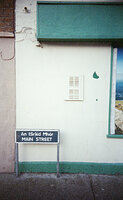
An tSráid Mhór

A
An tSráid Mhór

  • 0
  • 0
  • 16
IMG_1285.jpeg

D
IMG_1285.jpeg

  • 0
  • 0
  • 24

Forum statistics

Threads
203,124
Messages
2,850,182
Members
101,688
Latest member
linie4
Recent bookmarks
0

ParkerSmithPhoto

Member
Allowing Ads
Joined
Jan 16, 2010
Messages
1,685
Location
Atlanta, GA
Format
Medium Format
How much does agitation affect the contrast when using Diafine and compensating developers? Is it possible to use agitation as a variable to get some contrast control out of these developers?
 
NO!, there is no way to adjust the contrast produced by Diafine. You may be able to do it by using an alternative bath B. A higher pH will produce higher contrast and vv.
 
It seems like more agitation in the B bath would lead to less compensation (the highlights would be spending less of their time in exhausted developer), which I guess constitutes a one-sided increase in contrast. I'm not sure the effect would be very large, though.

-NT
 
Too much agitation will result in decreased density. The manufacturer of Diafine is very specific on the kind and amount ot agitation to use with this developer.
 
The Story goes you get no development in bath A. This is not true. In all 2 part developers I have tested you get development in bath A. So you may get your best results by shaking the film more in bath A or leaving it in bath A longer. Still it will be nowhere near what you can get with more shaking or longer development in a regular developer.
 
All developing agents have a pH at which they stop acting. Development can be prevented in bath A by having a low pH. There are other methods for slowing or preventing development in bath A. For example, Kodak used 100 g/l of sucrose in two divided developer formulas to slow the creation of an image.
 
The Story goes you get no development in bath A. This is not true. In all 2 part developers I have tested you get development in bath A. So you may get your best results by shaking the film more in bath A or leaving it in bath A longer. Still it will be nowhere near what you can get with more shaking or longer development in a regular developer.

I can tell you that Diafine bath A without bath B gives only a very tiny amount of development. It's not none, to be sure, but it is pretty much inconsequential. I've tried it out of curiosity. And leaving the film in bath A longer than specified (they now say 4 minutes for some films, 3 for most) has no practical effect. Now if you left it in an hour or something, maybe it would have a small noticeable effect but an extra minute or two or three won't be noticed.
 
Diafine is very sensitive to agitation routine. The manufacturer's recommendation works well. I have tried it with more agitation, and the only result was much larger grain.
 
+1. Diafine is a great developer when you need what it does. Follow the instructions precisely and it works great within, of course, the constraints of its nature - it's a two bath compensating, effective-speed-increasing (with most films) developer that does what it's going to do with little control beyond using Diafine or not. The stuff last sooo long that it's easy to keep it available to use when needed.

There's debate about the speed increase and I've not done any sensitometry, but if you try shooting, for example, Tri-X at box speed, I guarantee you won't like the results much and they will look overexposed regardless of what a densitometer might say.
 
Photrio.com contains affiliate links to products. We may receive a commission for purchases made through these links.
To read our full affiliate disclosure statement please click Here.

PHOTRIO PARTNERS EQUALLY FUNDING OUR COMMUNITY:



Ilford ADOX Freestyle Photographic Stearman Press Weldon Color Lab Blue Moon Camera & Machine
Top Bottom