

• Welcome to Photrio!
    Registration is fast and free. Join today to unlock search, see fewer ads, and access all forum features.
    Click here to sign up

Developing time of Ilford RC paper if used as film negative

Iriana

H
Iriana

  • 0
  • 0
  • 14
Puddle

Puddle

  • 2
  • 2
  • 75

Recent Classifieds

Forum statistics

Threads
202,729
Messages
2,844,717
Members
101,487
Latest member
Bmattei
Recent bookmarks
1
FYI, I have often read about people getting good results when rating their paper at ISO3 or even 6, but I have never gotten good results myself beyond maybe ISO 0.5 or 1 at best. The lack of response to red light and the very high response to blue compared to green make it difficult to tame/control contrast in real-world situations. I don't know how or why others get acceptable results at e.g. ISO3; all I know is it never worked for me.
Yes, this is how I exactly feel. How people can manage it or at least I’d like to know the success-failure ratio.
It looks to me that I might take photos of objects/buildings/cars but for instance nature where green is more likely to be present is out of the question or I don’t know how to tame it.
 
Oh, then it’s more of a gamble than photography.

Isn't it? And that is the fun, exciting, playful part of this. I've decided not to take photography seriously ever again.

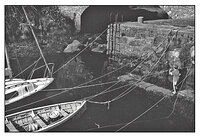
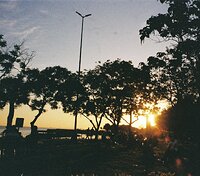
Here are my first out of the studio shots with RB67 on Ilford MG IV pearl paper developed in Ilford Multigrade developer:

aunesilta_paprneg_540.jpeg

aunesilta_paprneg_539.jpeg


Really worth shooting more and play around. Having another back loaded with paper is a fun twist to the game! (I was shooting the bridge with film back too)
 
It looks to me that I might take photos of objects/buildings/cars but for instance nature where green is more likely to be present is out of the question or I don’t know how to tame it.
Actually, the green subject should be good - it will be picked up by the slower green sensitive emulsion.
It is the blue and red subjects that cause the contrast challenges.
 
Isn't it? And that is the fun, exciting, playful part of this. I've decided not to take photography seriously ever again.

Here are my first out of the studio shots with RB67 on Ilford MG IV pearl paper developed in Ilford Multigrade developer:

View attachment 242989
View attachment 242990

Really worth shooting more and play around. Having another back loaded with paper is a fun twist to the game! (I was shooting the bridge with film back too)
I only shoot with obscuras and they tend to take high contrast photos as far as I experienced.
Your photo looks gorgeous and you can open up the lens on your rb67 so it won't pick up that amount of contrast and it's a really healthy looking experiment, a fun. What I attached is a disaster that's why I called it gambling and still don't know how to solve the issue.
 
Actually, the green subject should be good - it will be picked up by the slower green sensitive emulsion.
It is the blue and red subjects that cause the contrast challenges.
Should I give it 2 or 3 stops more exposure if the green sensitive emulsion is slower?
 
Should I give it 2 or 3 stops more exposure if the green sensitive emulsion is slower?
2 or more three stops than what? :D
If you want to work with mainly green subjects, than use a yellow filter to minimize the blue light and subjects in the scene.
All of the red subjects are going to come out clear on the negative and black on the print.
Now do tests to see what speed you are getting with just the green sensitive emulsion, used to photograph green subjects.
The tests may be affected by the yellow filter, because in addition to filtering out blue, it also may add neutral density. You may wish to meter through the filter.
You can do the same with the blue sensitive emulsion, mainly blue subjects and a magenta filter.
 
2 or more three stops than what? :D
If you want to work with mainly green subjects, than use a yellow filter to minimize the blue light and subjects in the scene.
All of the red subjects are going to come out clear on the negative and black on the print.
Now do tests to see what speed you are getting with just the green sensitive emulsion, used to photograph green subjects.
The tests may be affected by the yellow filter, because in addition to filtering out blue, it also may add neutral density. You may wish to meter through the filter.
You can do the same with the blue sensitive emulsion, mainly blue subjects and a magenta filter.
I just thought that I underexposed the photos and I should use slower shutter speed by 2-3 stops.
As the subject was grass with bushes and were green and I used a yellow filter on one of them I’m even more confused what is the problem with these shots.
 
I just thought that I underexposed the photos and I should use slower shutter speed by 2-3 stops.
As the subject was grass with bushes and were green and I used a yellow filter on one of them I’m even more confused what is the problem with these shots.
You may be running into reciprocity failure problems, and your meter may have been overly influenced by the blue colours and light in the scene.
Did you meter through the yellow filter?
 
I measured ambient light with the dome of my meter and used ISO 3
I only shoot with obscuras and they tend to take high contrast photos as far as I experienced.
Your photo looks gorgeous and you can open up the lens on your rb67 so it won't pick up that amount of contrast and it's a really healthy looking experiment, a fun. What I attached is a disaster that's why I called it gambling and still don't know how to solve the issue.

Shooting on paper is pretty sketchy business anyways and more an experiment than "serious" stuff (what is serious anyway..). Just take this as a play and try to find your own ways and suitable scenes for this method.

In general I believe we should just experiment and play and maybe as a side job able to grab some decent frames.
 
FYI, I have often read about people getting good results when rating their paper at ISO3 or even 6, but I have never gotten good results myself beyond maybe ISO 0.5 or 1 at best.

I do a bit of reversal processing with Fomaspeed VC paper and I too like you found that EI of 0.5 or 1 gives the best results. As the exposure is long at this EI, reciprocity failure also kicks in.
 
I’d like to use rc papers instead of film negatives in a pinhole camera, so then to make contact print. Is the developing time determined by inspection or can I use the given time which is on the datasheet let’s say 1.30min as a basic? Okay, it depends on several factors and tastes but still. It’s hard to see the dark areas in safelight and I might over or underdevelop it.
use the time from the data sheet for full development. You can control contrast and develop a dilution.You can control contrast and develop a dilution.
 
Photrio.com contains affiliate links to products. We may receive a commission for purchases made through these links.
To read our full affiliate disclosure statement please click Here.

PHOTRIO PARTNERS EQUALLY FUNDING OUR COMMUNITY:


Ilford ADOX Freestyle Photographic Stearman Press Weldon Color Lab Blue Moon Camera & Machine
Top Bottom
