
• Welcome to Photrio!
    Registration is fast and free. Join today to unlock search, see fewer ads, and access all forum features.
    Click here to sign up

Developing HP5+ in D-76 1+1

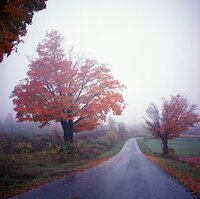
Rainy Day Trees

A
Rainy Day Trees

  • 4
  • 0
  • 51
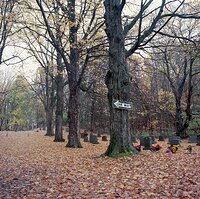
One Way

A
One Way

  • 1
  • 1
  • 49

Forum statistics

Threads
203,150
Messages
2,850,590
Members
101,698
Latest member
Weishampel
Recent bookmarks
0

lgrabun

Member
Allowing Ads
Joined
Jan 6, 2008
Messages
43
Format
Medium Format
So the old abage "better is the enemy of good enough" holds once again.

I've changed my old trusted Rodinal in which I used to develop HP5+ for D-76. Being a bit worried about excessive contrast, I diluted it one to one and develop the film - which, as far as I recall, exposed at 320, if it matters - for 11 minutes. The time was taken from the film box.

I haven't made the prints yet but it looks to my unexperienced eye as the negative was lacking contrast, a bit underdeveloped. Is it the characterstics of diluted D-76 or the time was too short? DigitalTruth says I should have bathed the negative for 13 minutes.

Once I've listened to what vendor says and it happened to be not the best idea.

What are your experiences with 1+1 D-76 and HP5+?
 
Last edited by a moderator:
10 second agitation every 30 seconds for the first three minutes, then 10 second agitation every minute.
 
So once again the old abage "better is the enemy of good enough".

I've changed my old trusted Rodinal in which I used to develop HP5+ for D-76as far as I recall, exposed at 320, if it matters - for 11 minutes. The time was taken from the film box.
I haven't made the prints yet but it looks to my unexperienced eye as the negative was lacking contrast, a bit underdeveloped. Is it the characterstics of diluted D-76 or the time was too short? DigitalTruth says I should have bathed the negative for 13 minutes.
Once I've listened to what vendor says and it happened to be not the best idea.

What are your experiences with 1+1 D-76 and HP5+?
I expose at E.I.400 and develop for 13 minutes, but the ISO and/or development should be adjusted if it doesn`t work for you.
 
10 second agitation every 30 seconds for the first three minutes, then 10 second agitation every minute.

Lack of agitation could be part of the problem. I have not used this film developer combination much, but I generally find that high speed films exposed with an EI close to box speed needs agitation every 30 seconds when developed in D76 in small tanks.
 
Ahh, I didn't have any HP5+ boxes left, but I had a look at the Ilfordphoto.com website and in the pdf on dev.times I can see the error. The times for ID11 and D76 differ. They shouldn't to that, as these two developers share the same receipe. Use the times for ID11 and you will be OK.
(It's the same thing with Ilfotech HC and HC 110, which as far as I know are the same developers too. For some films the times are the same and for some films there's a difference.)

//Björn
 
Print the negs on your normal grade paper. If they are too flat, go to a higher grade paper for them. For later rolls, increasing development time by ca. 20% should increase neg contrast by about one grade of paper. Use ASA standard development of agitation five seconds each thirty seconds in a small tank.
 
Will give a try of your hints next time I have some HP5+ to develop. 10 second rotation every minute with R09 1+40 was right spot on.

By the way, is a three reel tank still a small tank? ;-)

@edtbjon: thanks for pointing this out. Will be more cautios with Ilford's datasheets.
 
You have made a big jump with this switch. I find for more contrast i use the 30 seconds on, 30 seconds off method of agitation. This does give more contrast, but more than likely not what you are used to. I am curious, why the switch, other than availability?
michel
 
I am curious, why the switch, other than availability?

Grain. On 135 R09 1+40 gives some visible grain, particularly on greater enlargements (18x24). Not that shun the grain (That is called grain. It is supposed to be there.), just sometimes I like the things more smooth :smile:
 
So the old abage "better is the enemy of good enough" holds once again.

I've changed my old trusted Rodinal in which I used to develop HP5+ for D-76. Being a bit worried about excessive contrast, I diluted it one to one and develop the film - which, as far as I recall, exposed at 320, if it matters - for 11 minutes. The time was taken from the film box.

I haven't made the prints yet but it looks to my unexperienced eye as the negative was lacking contrast, a bit underdeveloped.

I use ID-11 1+1 for HP5+, I rate at 250 ISO and develop for 11 min. 30 sec agitation first then three inversions per minute. I start the timer when I fill the tank with developer and I finish the timer when I fill the tank with stop bath. I find the results very satisfactory in terms of shadow detail, sharpness and grain appearance. I am willing to try 10 min., I like the idea to expose for shadows and develop for highlights. Your negatives might not look contrasty but you might get perfect prints in terms of highlight and shadow details.

IMO, I wouldn't judge a negative buy it is appearance, but rather the print or the scan. The contrast might depend on the scene, a snowscape might seem very contrasty from the negative.
 
Using diluted ID11 for me meant that I had to give a little more agitation - a sort of double inversion rather than single, each half a minute. That made quite a difference and got back the contrast I was expecting.

At work (a few years ago now) we had deep tanks with five litres of chemicals in each, all in a big sink/water-bath. It is that sort of system which is a "big tank". The development is done in darkness and the film is lifted out of the chemical for agitation purposes - a manual dip-and-dunk. I still think that is the best way to develop sheet film too.
 
When I shot HP5+, I always used D-76 straight (no dilution) for 6.5-7min, with constant agitation 1st minute, then 10sec every 30sec. Never had a problem until got a bad batch of film, and then dropped Ilford altogether.
 
IMO, I wouldn't judge a negative buy it is appearance, but rather the print or the scan. The contrast might depend on the scene, a snowscape might seem very contrasty from the negative.

True, true. I set up the darkroom yesterday and it turned out that negatives prints beautifuly on normal graded paper. All the prints are a tad contrasty in fact and I am willing to try a paper with a special gradation. Anyway, D-76 diluted one to one and HP5+ exposed at 320 developed for 11 minutes gives pleasant results. I am posting a scan of a negative, hope you don't mind.


The details aren't as wonderfully rendered on a print though highlights are preserved. I will try a softer paper next time anyway.
 
I think your agitation was proper, I assume you're at 68F. You might try 75F.

But Anscojohn is right; the proof is in the print; try printing the negatives before you mess with the film development.
 
Photrio.com contains affiliate links to products. We may receive a commission for purchases made through these links.
To read our full affiliate disclosure statement please click Here.

PHOTRIO PARTNERS EQUALLY FUNDING OUR COMMUNITY:


Ilford ADOX Freestyle Photographic Stearman Press Weldon Color Lab Blue Moon Camera & Machine
Top Bottom
