
• Welcome to Photrio!
    Registration is fast and free. Join today to unlock search, see fewer ads, and access all forum features.
    Click here to sign up

Developing 60 years old Kodak Super XX - darkening after 24hrs

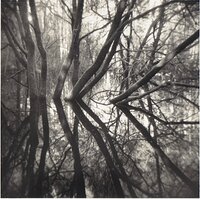
Flooded woodland

Flooded woodland

  • 15
  • 1
  • 96
Babylon

D
Babylon

  • 3
  • 1
  • 85

Recent Classifieds

Forum statistics

Threads
202,841
Messages
2,846,348
Members
101,559
Latest member
gnafin61
Recent bookmarks
0

Pierrepevel

Member
Allowing Ads
Joined
Oct 7, 2023
Messages
9
Location
Ireland
Format
Analog
Hello,

I have a spool of Kodak Super XX, 35mm , which was discontinued in around 1960.
I did few test shots, determined that film is still usable at ISO 3-6. It come pretty good, semi stand development, 15C for 2hrs. Unfortunately negative is darkening after 24hrs.

How I can prevent negative from darkening? Fixed for 5 min
 
Are you sure you fixed long enough? Cut a piece of film and try fixing it. Does it clear? After how much time? You'll need to fix for at least twice that time.
 
Are you sure you fixed long enough? Cut a piece of film and try fixing it. Does it clear? After how much time? You'll need to fix for at least twice that time.

I did fixer test today. It is fixing (clearing) within 90 sec.
I did fixed my film for 5 min.

So next time will fix for 10 min +
 
Did you also agitate during fixing? A few inversions every minute or more, can't do too much.
 
If it really cleared in 90", then 5' should be enough. But "clearing" is rather subjective, so there's a clearing test where you first apply a drop of fixer on your film and wait 30" before fixing it. You count the time it takes for the clear spot to disappear and at least double this time for fixing.
 
It would seem that you did everything right based on what you say so I have no idea why it is darkening except to say the cause may lie elsewhere but where I have no idea. I can't say for certain that longer fixing time or greater agitation will not work but it doesn't seem likely to me

Can we take it that the fixer you used was used recently and that the last film fixed in it is fine?

pentaxuser .
 
If the edges are also darkening which were not exposed to light then "maybe" there is something wrong with the film itself.

Did you use a acid stop bath?
 
It sure sounds like exhausted fixer to me... Can you elaborate on what kind of fixer, how much it has been used/stored, etc.? A rapid fixer should clear film in 30 seconds.

Doremus
 
I don’t think it’s darkening.

You’re seeing high fog, it’s why you can only use it between EI 2-4.

That’s what very old Super-XX does.
 
That's an old thick-emulsion style film. Besides the usual suspects already mentioned, there is the fact that thick emulsions absorb solutions more deeply than typical modern thin emulsions, and might need more proficient stop and well fix and washing steps,
especially when that old. You might also need a fog cutter, namely about 2 ml of 1% benzotriazole added per liter of your developer; but that comes with the penalty of further reduced film speed.
 
Fog doesn't set in after the film is developed.

Does the undeveloped film smell like vinegar? The film base may be deteriorating - I have developed some older film that was more transparent when wet than when dry (can't remember what film - maybe some Tri-X from the 50s) - never figured out why.
 
Right. So looks like this is a base fogging.
How to avoid that fogging after developing?

I will try to fix longer, for 10-12 min.
 
Literally, to avoid it, get some fresh 5222 Double-X.

But if you want to use the Super-XX, embrace the fog and simply shoot at EI 2-4.

You may add benzotriazole or potassium bromide to your developer.

You may develop in strong concentrated but very cold 50-degrees F for a short time.

But I just use it as-is… and I get long print times, but fun pictures.
 
Does the (dry) emulsion side look reflective if you hold it under a strong light? I’m just wondering if you’ve got silver redistributed across it. Used to happen to me with Tri-X in one particular developer.

Some photos of your negs would aid diagnosis anyway.
 
PXL_20231018_125403675-01.jpeg
 
This is quick photo of my negative in strong light.
It is a heavy fog I think. Although it is usable
 
Looks like age fog to me.

Unless the fog is patchy or uneven, (as Bill Burk suggests) just print through the density if you want to use this film.
 
This is almost certainly fog. You can try using a restrainer like Benzotriazole with it but - if memory serves - this will like reduce effective film speed somewhat (I may be wrong about that, it's been ages since I used it).

I routinely develop very old film, including some Super XX 2x3 sheet film from 1961 I played with a couple years ago. While it does have age related fog, that mostly expresses itself as somewhat lower contrast but is still entirely printable. The larger issue is mechanical deterioration of the film over time.

I process old films in either D-23 1:1 or Pyrocat-HD 1.5:1:200 using semistand development:
  • Prewet for 3 min
  • Continuous agitation in developer for 2 min
  • Let is sit without agitation at all,
  • At 31min give it 15 sec agitation
  • Pull it at 60min
Here are scans of prints from negs of the 1961 Super XX, exposed at the full box speed and processed as above (shot handheld on a Baby Speed Graphic, so not as sharp as they might have been):


Note that there has been some emulsion damage with time - hence the dark spots. Also, Super XX was a pretty grainy film, and even at 2x3 is shows up noticeably. Pyrocat-HD does mask that grain better than D-23.
 
This is almost certainly fog. You can try using a restrainer like Benzotriazole with it but - if memory serves - this will like reduce effective film speed somewhat (I may be wrong about that, it's been ages since I used it).

I routinely develop very old film, including some Super XX 2x3 sheet film from 1961 I played with a couple years ago. While it does have age related fog, that mostly expresses itself as somewhat lower contrast but is still entirely printable. The larger issue is mechanical deterioration of the film over time.

I process old films in either D-23 1:1 or Pyrocat-HD 1.5:1:200 using semistand development:
  • Prewet for 3 min
  • Continuous agitation in developer for 2 min
  • Let is sit without agitation at all,
  • At 31min give it 15 sec agitation
  • Pull it at 60min
Here are scans of prints from negs of the 1961 Super XX, exposed at the full box speed and processed as above (shot handheld on a Baby Speed Graphic, so not as sharp as they might have been):


Note that there has been some emulsion damage with time - hence the dark spots. Also, Super XX was a pretty grainy film, and even at 2x3 is shows up noticeably. Pyrocat-HD does mask that grain better than D-23.

Thank you.
I have KBR at the moment only.
 
Photrio.com contains affiliate links to products. We may receive a commission for purchases made through these links.
To read our full affiliate disclosure statement please click Here.

PHOTRIO PARTNERS EQUALLY FUNDING OUR COMMUNITY:


Ilford ADOX Freestyle Photographic Stearman Press Weldon Color Lab Blue Moon Camera & Machine
Top Bottom
