
• Welcome to Photrio!
    Registration is fast and free. Join today to unlock search, see fewer ads, and access all forum features.
    Click here to sign up

D96 1+1 solution per a roll of film

Recent Classifieds

Forum statistics

Threads
202,850
Messages
2,846,537
Members
101,567
Latest member
FilmByJasper
Recent bookmarks
1

Richard Man

Member
Joined
Sep 24, 2005
Messages
1,327
Format
Multi Format
Sorry if this is covered somewhere, but my google-fu fails me. I want to try D96 1+1 with my Jobo rotary. What's the minimum amount of 1+1 solution needed for one roll of film?

Thanks
 
I assume for now, that this question is not specific to D-96, but actually meant to ask "how much chemistry does a Jobo tank need?". To which I can only answer "Which Jobo tank will you be using?". Will it be a 1510 tank? Answer: around 100-120ml. Will it be a 1520? Answer: 250ml. Or something larger?
 
Rudi, I think Richard wants to know the minimum volume of D-96 1+1 for a 36-exposure roll (or equivalent) so he doesn't use too little developer. I can't find anything specific for D-96 in that regard, but it should be similar to D-76.

So, diluted 1+1, you should figure on 250ml of solution for 1 36-exposure roll or equivalent (one 120 roll, 4 4x5 sheets, 1 8x10 sheet).

That seems like a good starting point at least.

Doremus
 
Rudi, I think Richard wants to know the minimum volume of D-96 1+1 for a 36-exposure roll (or equivalent) so he doesn't use too little developer. I can't find anything specific for D-96 in that regard, but it should be similar to D-76.

So, diluted 1+1, you should figure on 250ml of solution for 1 36-exposure roll or equivalent (one 120 roll, 4 4x5 sheets, 1 8x10 sheet).

That seems like a good starting point at least.

Doremus

Yea, exactly what I was asking. I have been using Jobo for almost 20 years now so I know the min. tank capacity.

250ml 1+1 was going to be my starting point too, since they claim 8-16 (?) rolls for 1 liter of stock + 1 L of water. Thanks
 
Sorry if this is covered somewhere, but my google-fu fails me. I want to try D96 1+1 with my Jobo rotary. What's the minimum amount of 1+1 solution needed for one roll of film?

Thanks

I use 150ml stock plus 150ml water to develop one film in the Jobo for years as a one-shot solution for consistent development without a prewash.
 
Out of curiosity, what does D96 do differently from D76?

Supposedly lower contrast with 1+1, and very robust, and "made for" movie stock.

I'm sure we will get lots of opinions on how those 3 above points are non-sense. Anyway, I do have my go to developers, so this is just for fun.
 
Out of curiosity, what does D96 do differently from D76?

I've not run a direct comparison (still on the to-do list :wink:, but generally speaking, being a motion picture developer, D-96 needs to be:
- economical in high volume use
- replenish-able
- optimised for continuous transport systems
- stable day to day
- grain structure optimised for motion picture work (big enlargements and sequential images).

looking at the formulas, the differences look rather minor:
D-96 has
0.75x the amount of Metol and Sodium Sulfite,
0.3x of Hydroquinone,
2.25x of Borax,
plus a small amount of Bromide added.
 
You need at least 80ml of stock. I have no clue how much total working solution you will need for your Jobo, but for my 8x10 BTZS cap, I start with 125ml stock, plus 125ml water to make 1+1. So, most importantly, it depends on having enough stock per roll/sheet of film.
 
I've not run a direct comparison (still on the to-do list :wink:, but generally speaking, being a motion picture developer, D-96 needs to be:
- economical in high volume use
- replenish-able
- optimised for continuous transport systems
- stable day to day
- grain structure optimised for motion picture work (big enlargements and sequential images).

looking at the formulas, the differences look rather minor:
D-96 has
0.75x the amount of Metol and Sodium Sulfite,
0.3x of Hydroquinone,
2.25x of Borax,
plus a small amount of Bromide added.

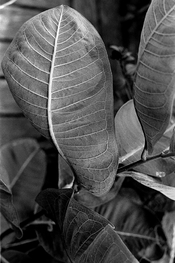
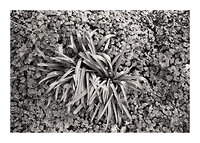
I just finished off a 1 liter stock with replenishment, running 22 36 exp rolls of double-X. I can report that it was economical. The replenishing was simple and stable, I tracked the pH over 6 months with replenishment and it increased only 0.08, less variable than D76 or D23 stock. Development was consistent between first and last films, also more so than D23 or D76 stock. The grain was more pronounced than D23 or D76 imho but with somewhat better edge sharpness. Example of D96 Double-X on overcast, late afternoon, late fall day.
 

Attachments

  • 2023-41-04C.jpg
    2023-41-04C.jpg
    375.7 KB · Views: 101
  • 2023-38-05C.jpg
    2023-38-05C.jpg
    332 KB · Views: 100
I have never diluted D96. Anyone have experience with 1:1 and how does it behave? I see some times in Massive Dev, but there are only a few and I guess they are wrong...
 
I just finished off a 1 liter stock with replenishment, running 22 36 exp rolls of double-X. I can report that it was economical. The replenishing was simple and stable, I tracked the pH over 6 months with replenishment and it increased only 0.08, less variable than D76 or D23 stock. Development was consistent between first and last films, also more so than D23 or D76 stock. The grain was more pronounced than D23 or D76 imho but with somewhat better edge sharpness. Example of D96 Double-X on overcast, late afternoon, late fall day.

thanks for the hand-on report, and the sample images (the leaf looks great).

seems that your experience matches what the theory would suggest. better buffering due to the higher borax content and lightly more grain and better sharpness because of the lower Sulfite content.
 
I have never diluted D96. Anyone have experience with 1:1 and how does it behave? I see some times in Massive Dev, but there are only a few and I guess they are wrong...

I would look at the times of D-76 and D-76 1+1 for your specific film, calculate the time difference and use the same factor for D-96 to D-96 1+1.
 
You need at least 80ml of stock. I have no clue how much total working solution you will need for your Jobo, but for my 8x10 BTZS cap, I start with 125ml stock, plus 125ml water to make 1+1. So, most importantly, it depends on having enough stock per roll/sheet of film.

Thanks!
 
I have never diluted D96. Anyone have experience with 1:1 and how does it behave? I see some times in Massive Dev, but there are only a few and I guess they are wrong...

Both the Cinestill and the FPP sites have some numbers on 1+1 timing.
 
Out of curiosity, what does D96 do differently from D76?

This is a highly relevant question in these modern times, where motion picture related materials are used a lot with still photography.
But back in the day, the motion picture labs and the still film labs rarely talked :smile:.
Mostly, the difference is that D96 was what was used with motion picture film, what the film manufacturers expected to e used with motion picture film and what the cinematographers expected to be used to be used with motion picture film.
All of which flowed from the intended use - exposed in movie cameras, lit (or not) with movie lighting, and printed not on to paper, but rather on to projection print stock.
While D76 was used instead by still photographers and still photography labs and intended for a different use.
 
Both the Cinestill and the FPP sites have some numbers on 1+1 timing.

I mix my D-96 developer according to the officially published recipe. I have no idea what's in the CineStill and FFP packages, but the development times they give differ greatly. I'm not too sure it's a good idea to go by their published times.

I would look at the times of D-76 and D-76 1+1 for your specific film, calculate the time difference and use the same factor for D-96 to D-96 1+1.

Thanks. That's a really interesting idea.
A single use at 1:1 dilution sounds tempting, but I'm afraid the contrast will drop too much. I will test and see if it works.
 
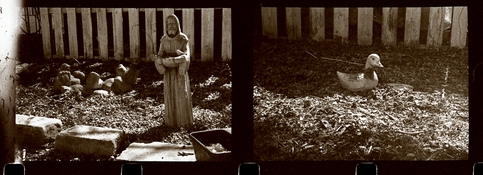
Here's a bit of 16mm Eastman Double-X in stock D-96.

Minolta 16ii, yellow filter
XX D-96 stock 7'
V800 scan
m16ii_XX_yellow_d96_7_s.jpg

It's a great combo and I recommend anyone using D-96 to pair it with Double-X and vice versa.
 
A single use at 1:1 dilution sounds tempting, but I'm afraid the contrast will drop too much. I will test and see if it works.

contrast should stay very similar if you extend the developing times for the same midtone density.

depending on your agitation method, you might get a bit more shadow detail and highlight compensation, but even that depends probably depends on the film used.
 
Here's a bit of 16mm Eastman Double-X in stock D-96.

Minolta 16ii, yellow filter
XX D-96 stock 7'
V800 scan
View attachment 358486

It's a great combo and I recommend anyone using D-96 to pair it with Double-X and vice versa.

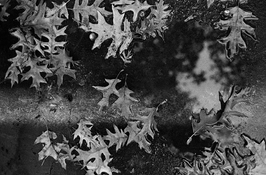
I agree! I was quite pleased with my results:
Now I'm going to have to give 1+1 a go!
 
I mix my D-96 developer according to the officially published recipe. I have no idea what's in the CineStill and FFP packages, but the development times they give differ greatly. I'm not too sure it's a good idea to go by their published times.


Thanks. That's a really interesting idea.
A single use at 1:1 dilution sounds tempting, but I'm afraid the contrast will drop too much. I will test and see if it works.

Did you end up testing 1:1 ?
 
Sorry if this is covered somewhere, but my google-fu fails me. I want to try D96 1+1 with my Jobo rotary. What's the minimum amount of 1+1 solution needed for one roll of film?

Thanks

not calculated;just from experience, I used 150ml stock with 150ml of water in the small Jobo canister to develop 2 35mm film. Now, in the Lab Box, I use 250ml +250ml. Both seem to work identically.
 
Did you end up testing 1:1 ?

Not yet. Due to lack of reliable data on times and shuffles, I have to do my own tests specifically for this. I just don't have time. I don't want to test on footage I don't want to lose.
 
Photrio.com contains affiliate links to products. We may receive a commission for purchases made through these links.
To read our full affiliate disclosure statement please click Here.

PHOTRIO PARTNERS EQUALLY FUNDING OUR COMMUNITY:


Ilford ADOX Freestyle Photographic Stearman Press Weldon Color Lab Blue Moon Camera & Machine
Top Bottom