
• Welcome to Photrio!
    Registration is fast and free. Join today to unlock search, see fewer ads, and access all forum features.
    Click here to sign up

D-23 Grey precipitate ?

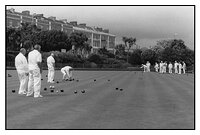
The bowling green

A
The bowling green

  • 0
  • 0
  • 13
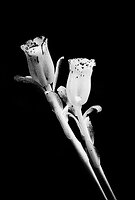
Indian ghost pipe plant.

H
Indian ghost pipe plant.

  • 3
  • 1
  • 28

Forum statistics

Threads
202,942
Messages
2,847,852
Members
101,549
Latest member
mennojim
Recent bookmarks
0

BradS

Member
Allowing Ads
Joined
Sep 28, 2004
Messages
8,129
Location
Soulsbyville, California
Format
35mm
I mixed up a liter of D-23 about a month ago. It has developed six sheets of FP-4+ (4x5) and four rolls of 35mm (36 exp). It has been stored in an amber glass bottle, with a poly cone cap. The ambient temp in the room has fluctuated between...oh, let's say, 60~90 degrees F.

This morning, I went to use the D-23 and noticed that there was a grey precipitate in the bottom of the beaker (as I was pouring the stuff into the film developing tank). All turned out OK...

Seems like the grey stuff must be silver...yes? Why would it fall out of solution? Is it time to mix up a new batch of D-23?
 
Last edited by a moderator:
I think it is silver. When I used D-23, I always filtered thru a coffee filter first. If those little particles get into your soft gelatin emulsion, they'll never come out. I ruined some negs that way. Dried film felt like sandpaper.
 
I agree it is sliver or something that dissolved - I see this on several Metol based developers - I never filtered it though - I just decanted the clean stuff off the top.
 
According to Anchell and Troop D-23 can leave a grey deposit on the surface of the film - but this can be removed by a fresh acid stop bath.

Hope this helps,

Lachlan
 
BradS said:
I mixed up a liter of D-23 about a month ago. It has developed six sheets of FP-4+ (4x5) and four rolls of 35mm (36 exp). It has been stored in an amber glass bottle, with a poly cone cap. The ambient temp in the room has fluctuated between...oh, let's say, 60~90 degrees F.

This morning, I went to use the D-23 and noticed that there was a grey precipitate in the bottom of the beaker (as I was pouring the stuff into the film developing tank). All turned out OK...

Seems like the grey stuff must be silver...yes? Why would it fall out of solution? Is it time to mix up a new batch of D-23?

Brad: I went from using D23 straight to diluting 1:1 and was never bothered with the precipitate. Also it appeared my negatives were a tad sharper, I put this down to the fact I was diluting the sulfite. One of my favorite combinations was D-23 (1:1) with APX-100 (120 and sheet) alas no longer with us :sad:

Mike
 
D-23 contains enough sodium sulfite that it acts as a silver solvent, giving finer grain than something like Beutler's (metol and sulfite, but a lot less sulfite).

The precipitate is very likely to be a silver compound. Silver sulfide, perhaps?

Don't worry about it. :smile:
 
Like the sediment in the bottom of a fine bottle of wine. Pour from the top and filter if the suspension rises to high in the bottle. Never happened again after using distilled water. Sometimes these wierd percipitates kept returning in the same bottle so I tossed out that container and start with a new one and it goes away.
Chris
 
(chuckling to self...) Oh, so that explains the stain at the bottom of the plastic bottle in which I used to store the D23...
 
Used high sulfite developers like D-23 tend to throw down a precipitate of silver on standing. These developers dissolve some of the silver halide from films during use which is then reduced to metallic silver.
 
The precipitate is a silver compound. It is very helpful with negatives exposed of a flat subject in flat light. Death Valley in January is very commonly heavily overcast. At these times the difference in highlight and shadow can often be as little as 1 1/2 stops.
I use extended stand development in heavily used D-23 to develop these into beautiful negatives. Actually I use what was called when I learned it, Total Development. The silver gets replated in the highlights increasing the contrast wonderfully.
My developing times for this run from 3 - 8 hours with agitation each hour.

Jim:smile:
 
Photrio.com contains affiliate links to products. We may receive a commission for purchases made through these links.
To read our full affiliate disclosure statement please click Here.

PHOTRIO PARTNERS EQUALLY FUNDING OUR COMMUNITY:


Ilford ADOX Freestyle Photographic Stearman Press Weldon Color Lab Blue Moon Camera & Machine
Top Bottom
