• Welcome to Photrio!
    Registration is fast and free. Join today to unlock search, see fewer ads, and access all forum features.
    Click here to sign up

Compositional Paralysis?

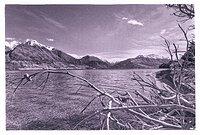
Refuge

H
Refuge

  • 1
  • 0
  • 35
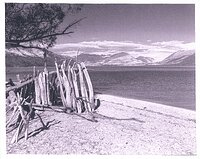
Solitude

H
Solitude

  • 1
  • 0
  • 28

Recent Classifieds

Forum statistics

Threads
203,611
Messages
2,857,073
Members
101,930
Latest member
littlelullaby
Recent bookmarks
0
“Rules are for the guidance of wise men and the obedience of fools.”
Group Captain Sir Douglas Robert Stuart Bader CBE, DSO & Bar, DFC & Bar, FRAeS, DL

Darrell Martinie ( the cosmic muffin ) used to say something very similar ..
"It is a wise person who rules the stars, a fool who is ruled by them"

and it has nothing to do with putting oneself in harms way ...
 
Last edited by a moderator:
He's the numpty who flew into Heathrow, announced on radio he was approaching and landed without following air traffic instructions or entering the stack and waiting for his slot. People who break rules like that are fools.

When was this? As I have never heard of this incident.
 
When was this? As I have never heard of this incident.

After the war. I don't know when exactly when but I was told by an RAF Captain/Navigator friend of mine who said he became a royal PITA after the war and they eventually took his flying license away from him. He thought he could do anything he wanted because he was Bader.
This is what what happens when you build someone up as a war hero for propaganda and publicity purposes.
 
After the war. I don't know when exactly when but I was told by an RAF Captain/Navigator friend of mine who said he became a royal PITA after the war and they eventually took his flying license away from him. He thought he could do anything he wanted because he was Bader.
This is what what happens when you build someone up as a war hero for propaganda and publicity purposes.

Are you sure this is correct? Or just what your friend said?
 
I've always liked this one.

“Now to consult the rules of composition before making a picture is a little like consulting the law of gravitation before going for a walk. Such rules and laws are deduced from the accomplished fact; they are the products of reflection.” – Edward Weston

And then............


“When subject matter is forced to fit into preconceived patterns, there can be no freshness of vision. Following rules of composition can only lead to a tedious repetition of pictorial cliches.” – Edward Weston
 
Are you sure this is correct? Or just what your friend said?

It's what I was told, I have no idea of the accuracy of it but I also have no reason to dispute it. I'll leave that to you.
 
I've always liked this one.

“Now to consult the rules of composition before making a picture is a little like consulting the law of gravitation before going for a walk. Such rules and laws are deduced from the accomplished fact; they are the products of reflection.” – Edward Weston

And then............


“When subject matter is forced to fit into preconceived patterns, there can be no freshness of vision. Following rules of composition can only lead to a tedious repetition of pictorial cliches.” – Edward Weston

careful spreading notions like this it may lead to people down the path of creative thinking and we all know
no one should ever do anything "outside the box" ...
 
Last edited by a moderator:
"Crap of Thirds". I like that, and it's exactly true. I can usually tell a Crap of Thirds photo because the composition is often awkward and imbalanced. The correct rule of composition is "Make it look good." A lot of that is a balance issue that can't be stated in words and refuses to follow rules, but is felt. If you were happier when you were going by feel, you were probably doing it right, and you should go back.

When I taught photography, years ago, I used to tell people that they grew up fed on good composition, in ads, on TV, in movies, and that when shooting a picture they should move the framing around until it looked like something they might see in a good publication. Unfortunately that idea doesn't work as well as it used to, but moving the framing until something clicks is still a good idea. You might start looking at pictures in terms of trying to find the balance that's there, and feel whether it's good or bad.

+1
 
"Crap of Thirds". I like that, and it's exactly true. I can usually tell a Crap of Thirds photo because the composition is often awkward and imbalanced. The correct rule of composition is "Make it look good." A lot of that is a balance issue that can't be stated in words and refuses to follow rules, but is felt. If you were happier when you were going by feel, you were probably doing it right, and you should go back.

When I taught photography, years ago, I used to tell people that they grew up fed on good composition, in ads, on TV, in movies, and that when shooting a picture they should move the framing around until it looked like something they might see in a good publication. Unfortunately that idea doesn't work as well as it used to, but moving the framing until something clicks is still a good idea. You might start looking at pictures in terms of trying to find the balance that's there, and feel whether it's good or bad.

I wouldn't call it crap of thirds, as for some it is a good guide, which for some, it is all it is meant to be.

http://www.soulcatcherstudio.com/exhibitions/trees/hcb.html
 
why isn't there a camera which uses the golden rectangle ratio (1 : 1.618) as it film format?
 
why isn't there a camera which uses the golden rectangle ratio (1 : 1.618) as it film format?

Because as Hasselblad said in its ads, "Square is the perfect shape."
 
I do find it useful to take off my glasses so everything is just a blur.

I also find it useful to go out and find one thing and then try and take as many pictures of that one thing that I can think of, working from different heights and angles.

But in reality, don't get too concerned over it. The rules are guidelines and it is nice to have these in the back of your mind when you are working. Sometimes it is like riding a bike. In the beginning everything is at the front of your mind and you wobble and fall easily. But after awhile it all becomes more automatic and things become more natural. Then one day as you are riding, or taking photographs, you look back and wonder what the hullabaloo was all about. :smile:

Sound advice[emoji3]
Alex
 
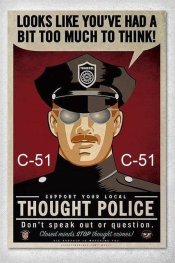
Just leave out the C-51 reference for this thread.
 

Attachments

  • image.jpg
    image.jpg
    103 KB · Views: 138
why isn't there a camera which uses the golden rectangle ratio (1 : 1.618) as it film format?

I actually have one. It uses a paper holder that has two different window mats that can be inserted. The first is 5.3 x 9 inches, and the second is 5.9 x 10 inches. These are the same aspect ratio as 122 "postcard" format. If I leave out the window mat, the opening in the holder is 6.3 x 10 which is your golden rectangle. I have only used it that way a few times, since I prefer the postcard ratio.....:smile:
 
Here's my take on rules - I was a music major in college and the more I "learned" about music, the more mathematical it became. Suddenly, instead of art, music became a math problem. It kind of ruined the art form for me. Art should be "free flowing" and not so mathematically rigid. So, instead of following them religiously, I consider rules as potential problem solvers when needed and not definitive guides that every picture must follow. In other words, toss the calculator out the window.
 
I was a mathematics major in college, and I agree with you. It takes a conscious effort for me not to let it intrude on pinhole photography, which should be free-flowing and playful and almost carefree.
 
How does mathematics work with the guitar work of Jimi Hendrix?
 
Just don't expect perfection and keep shooting. Just work past your paralysis. I have to shoot a lot of crap to get the good ones. Shooting will unclog your creative pores.
 
We have to take your word for this stuff. We don't know if you pictures were actually better before you became analytical or not. But composition is important. But when we are learning it's often better to learn it from the prints we make. Take the picture of the scene the way you feel it. Then analyze the print for how you could have done better. Get a critique from someone whose work you respect.

Because composition should not be much of a thought out process after a while it should be automatic. You should instinctively set your camera up that way.

Another idea is to shoot one shot of the scene from a wider angle. And print both that and your other print. Then when looking at the prints see if you got the best composition.

That's my advice. Shoot from instinct, they analyze the print. And adjust your thinking from there.

In sports you practice, and practice, but in a game you just play. In practice you analyze, but when you play, you shut off your mind.

I´d like to say my opinion. I agree completely with the idea that compositin should not be overthought. I approach this in a way that works for me and it´s very simple, and that is I look at the viewfinder to see what is going to be on film. I press the shutter only when I like what I see. This can sound stupid, it does even for me, but I don´t really think much about the elements of the image, I try to observe and then I somehow know when I am seeing a pleasing (for me) composition. My photographs have improved since I started and I think this has happened not necessarily because I think more and more about the elements of the image, but because I am a better observer and I realize it becomes always more and more refined what I find pleasing. Maybe this is not the most rational way to deal with the graphical aspects of photography, but on the other hand my main concern is not to be able to produce estetically perfect images, rather images I myself like to look at.
 
I've always liked this one.

“Now to consult the rules of composition before making a picture is a little like consulting the law of gravitation before going for a walk. Such rules and laws are deduced from the accomplished fact; they are the products of reflection.” – Edward Weston

And then............


“When subject matter is forced to fit into preconceived patterns, there can be no freshness of vision. Following rules of composition can only lead to a tedious repetition of pictorial cliches.” – Edward Weston

Fantastic!!


OP,

Train yourself to look for what looks good in an image. Whether looking at art or looking at your own/other's images.
Unless you're someone who's prone to learning by the 'rules',
Throw them out of your mind as far away as possible. Anything self-taught stays with you longer than whatever you can learn from 'rules'.
 
I´d like to say my opinion. I agree completely with the idea that compositin should not be overthought. I approach this in a way that works for me and it´s very simple, and that is I look at the viewfinder to see what is going to be on film. I press the shutter only when I like what I see. This can sound stupid, it does even for me, but I don´t really think much about the elements of the image, I try to observe and then I somehow know when I am seeing a pleasing (for me) composition. My photographs have improved since I started and I think this has happened not necessarily because I think more and more about the elements of the image, but because I am a better observer and I realize it becomes always more and more refined what I find pleasing. Maybe this is not the most rational way to deal with the graphical aspects of photography, but on the other hand my main concern is not to be able to produce estetically perfect images, rather images I myself like to look at.

I learned composition by reading about it. Then I went back to my previous pictures and studied them, and some were decent as they were, but with many of them I went back in the darkroom and cropped to give them more "interest", which good composition will often do. Initially I shot a lot of balanced, pretty pictures but after I played with cropping especially, I started to get the rhythm of a picture, movement, tension, and a far more dynamic print.

And soon I noticed that subconsciously I was getting better composition full frame, so to speak, and I did far less cropping. But in your example is does sound like you spend a fair bit of time thinking about composition while looking through the viewfinder, and the issue I have with that type of analysis, is that you don't always get to shoot with larger formats and tripods and have the time to analyze that way. Sports, street photography and people photography does not often have the luxury or extended time overplanning a shot. That was my point.
 
I learned composition from books and studying art. I know the various rules, but I take the photograph when the composition feels right for me. That works real well.
 
Photrio.com contains affiliate links to products. We may receive a commission for purchases made through these links.
To read our full affiliate disclosure statement please click Here.

PHOTRIO PARTNERS EQUALLY FUNDING OUR COMMUNITY:


Ilford ADOX Freestyle Photographic Stearman Press Weldon Color Lab Blue Moon Camera & Machine
Top Bottom