
• Welcome to Photrio!
    Registration is fast and free. Join today to unlock search, see fewer ads, and access all forum features.
    Click here to sign up

Compositional Paralysis?

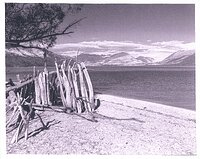
Refuge

H
Refuge

  • 1
  • 0
  • 26
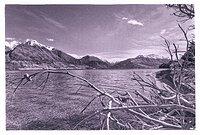
Solitude

H
Solitude

  • 1
  • 0
  • 23

Recent Classifieds

Forum statistics

Threads
203,610
Messages
2,857,054
Members
101,927
Latest member
paulbesley
Recent bookmarks
0

Nathan King

Member
Allowing Ads
Joined
Sep 27, 2013
Messages
248
Location
Omaha, NE
Format
35mm RF
I'm having a serious issue with my photographs, and hopefully others here have been through this and can steer me in the right direction. The more I am learning about classical composition, lighting, etc. the worse my photographs are becoming. Strange, huh? Hear me out.

My early photographs were relatively carefree; I saw something interesting and released the shutter. They are dynamic and interesting. I am now putting so much thought into everything that I'm missing great photographs. Are my important elements on a third? What are my leading lines doing? What is the light doing? What if I move over two steps?....and the shot is gone before I can scan around the viewfinder to ensure everything is just right and press the shutter. I think I've taken three photographs in the last week. They're largely uninteresting. I liken this problem to a golfer having the yips on the putting green, and it's very frustrating!

Am I going mad? :confused:
 
Your thinking too much. Set the aperture/shutter to the light conditions of the day, so you only have to focus. Now relax and photograph anything you find of interest. Do this again and again and images will happen.
 
Wot he says! Less thinking is needed.
 
I once asked my doctor friend about a similar problem, these are his directions:

-Apply Diana or Holga to affected area daily for one to three weeks or until symptoms disappear
-If symptoms re-appear later, do not acquire new gear...this will only mask the symptoms.
-When in doubt, blur it out. Wider apertures are indeed better.

I don't know about the last one even if it works for me but the first two I can confirm the advice is/was spot on.
 
When I was 14 years old a friend of my mom's looked at some of my work and commented, "These are wonderful images, Mike. But do you know 'what' makes them good?". I couldn't answer her question and that deeply disturbed me. Yes, I could 'see' and 'do' but I didn't fully comprehend 'why' because until that very moment I had focused on technical aspects of the media and studied the 'rules'. After that, my semi-automatic thinking/composing/shooting changed and I was better able to plan and visualize my images. This didn't affect anything, really, except to slow me down a bit unless there was a 'grab shot' I'd miss otherwise. That was a good thing... for me. I've never forgotten that wise lady's excellent advice... which was posed as a seemingly simple question. I'm still forever grateful to her.

The idea, IMO, is to think without thinking. And to follow 'rules' when they fit a particular subject... but otherwise break them.
 
Not sure what compositions or ideas you're trying to find or work out. As I'm only a landscape photographer I spend A LOT of time scouting or pre-fielding ideas. As I do not shoot in mid day light this can be the best time to take in the sites and ideas. The compositions can be seen in bad light too, but more often could or should be shot during agreeable light for the media being used.
If I find a site I like I will follow up with using the TPE program for sunrise & sunset light angles and TOD, as well as if a moon is in the possible works. Additionally, I use Weather Underground for cloud cover issues and all around weather support items of concern.

As stated already it's a matter of relaxing a bit and things will come to mind over time. However, doing research as I've mentioned is my relaxation and puts me in a place of comfort knowing I've worked out as much as possible prior to analyzing the best fstop and shutter speed for the given light once I'm on site.

I think we all hit slumps at times in this area, but it should not be of excessive concern and things usually will change.
 
I sympathize. There's a photograph I made of some plant leaves, and my scheme is to make a large pastel, painting, print, something from it. So I made an outline drawing, and copied it onto two sheets of paper, 8 images to each sheet. I've been working on each thumbnail w/ some colour markers, making different versions in different colours, adding black lines around some images, none on others, etc. When I finally looked at all of them I saw right away that the first one I made was the best. It wasn't as refined, design wise, and some of the colours seemed at first to clash, but now I see that I pulled it all together and made it work. There's a freshness to it that the others lack. That's the one that gets made into a large piece. But, as I work on the larger piece it may work out to be a totally different design. You never really know how its going to go. The piece will dictate how it is supposed to be during the making.

Not that there's anything wrong w/ learning classical composition. It works. But sometimes our innate sense of composition is better. The old saying is to learn all this, then forget it. When you operate subconsciously w/o thinking, it just rolls along.
 
Last edited by a moderator:
I'm having a serious issue with my photographs, and hopefully others here have been through this and can steer me in the right direction. The more I am learning about classical composition, lighting, etc. the worse my photographs are becoming. Strange, huh? Hear me out.

My early photographs were relatively carefree; I saw something interesting and released the shutter. They are dynamic and interesting. I am now putting so much thought into everything that I'm missing great photographs. Are my important elements on a third? What are my leading lines doing? What is the light doing? What if I move over two steps?....and the shot is gone before I can scan around the viewfinder to ensure everything is just right and press the shutter. I think I've taken three photographs in the last week. They're largely uninteresting. I liken this problem to a golfer having the yips on the putting green, and it's very frustrating!

Am I going mad? :confused:

now that you know the rules
it is time to break them ..
( in other words you are now self conscious .. )
go back to being care-free
and everything will fall into place ..


have fun!
john
 
Last edited by a moderator:
Stop wasting your time on crap of thirds and what else you are trying to limit yourself. But here is nothing wrong with getting of good light. I also wait sometimes for weeks to get good light and sky. And sometimes I take no pictures if no good light.
 
we all reach plateaus in our personal photographic odysseys. Sometimes it takes a while to get off one plateau and onto the next and other times its quite quick. Changing the route to the next one may help.
 
Haha. This happened to me with golf. I was playing pretty good, then I took lessons from a pro, after that I got worse as I was too aware of what I did wrong and was over-thinking everything!

Occasionally I have issues like you describe and here's two things I did: 1. I wear glasses and without them everything is a blur. So what I'd do is remove my glasses and then reframe and recompose but now not seeing too many details and instead in larger and more broad shapes. Believe it or not this helped a lot. 2. Using my 6x6 cameras I'd look through the viewfinder and pretend I'm shooting for a square album cover. I think where perhaps the name of the artist or title of the album would go. This makes me think through in a balanced why of composing. I think also in terms of unique angles, shapes and perspectives trying to think what might look "cool" on an album cover. This too helped somehow. Fun exercises anyway...
 
well, my two cents are: get a folder, like a Zeiss ikon Nettar. Its zone focusing, and use as waist level. use pinhole, holga or the like. FEEL your composition. Feel your distance, do not bring a 35mm camera along to figure it out. If at all possible Feel your exposure. Get back to who you are as you dwell as a dweller.
 
In my opinion, this is part of growth. I think a lot of photographers start doing it more intentionally when they see something pretty cool in past photos. Then you start learning the rules - technical and compositional - and start thinking more than just shooting. To some extent, just go with that - learn the rules, figure out which are worth breaking and when. Now that you've recognized you're at that stage, it might get easier to go back to the earlier style, but with the added knowledge of techniques, etc...
 
In my opinion, this is part of growth. I think a lot of photographers start doing it more intentionally when they see something pretty cool in past photos. Then you start learning the rules - technical and compositional - and start thinking more than just shooting. To some extent, just go with that - learn the rules, figure out which are worth breaking and when. Now that you've recognized you're at that stage, it might get easier to go back to the earlier style, but with the added knowledge of techniques, etc...

+1
 
I'm having a serious issue with my photographs, and hopefully others here have been through this and can steer me in the right direction. The more I am learning about classical composition, lighting, etc. the worse my photographs are becoming. Strange, huh? Hear me out.

My early photographs were relatively carefree; I saw something interesting and released the shutter. They are dynamic and interesting. I am now putting so much thought into everything that I'm missing great photographs. Are my important elements on a third? What are my leading lines doing? What is the light doing? What if I move over two steps?....and the shot is gone before I can scan around the viewfinder to ensure everything is just right and press the shutter. I think I've taken three photographs in the last week. They're largely uninteresting. I liken this problem to a golfer having the yips on the putting green, and it's very frustrating!

Am I going mad? :confused:

We have to take your word for this stuff. We don't know if you pictures were actually better before you became analytical or not. But composition is important. But when we are learning it's often better to learn it from the prints we make. Take the picture of the scene the way you feel it. Then analyze the print for how you could have done better. Get a critique from someone whose work you respect.

Because composition should not be much of a thought out process after a while it should be automatic. You should instinctively set your camera up that way.

Another idea is to shoot one shot of the scene from a wider angle. And print both that and your other print. Then when looking at the prints see if you got the best composition.

That's my advice. Shoot from instinct, they analyze the print. And adjust your thinking from there.

In sports you practice, and practice, but in a game you just play. In practice you analyze, but when you play, you shut off your mind.
 
Last edited by a moderator:
As said, it's part of growth. Sacrilegious I know, but maybe play fast and loose with a digital camera for a while as that experimentation does not involve the time and effort of film and darkroom print. Just to get you over this bump, mind you!
 
"Crap of Thirds". I like that, and it's exactly true. I can usually tell a Crap of Thirds photo because the composition is often awkward and imbalanced. The correct rule of composition is "Make it look good." A lot of that is a balance issue that can't be stated in words and refuses to follow rules, but is felt. If you were happier when you were going by feel, you were probably doing it right, and you should go back.

When I taught photography, years ago, I used to tell people that they grew up fed on good composition, in ads, on TV, in movies, and that when shooting a picture they should move the framing around until it looked like something they might see in a good publication. Unfortunately that idea doesn't work as well as it used to, but moving the framing until something clicks is still a good idea. You might start looking at pictures in terms of trying to find the balance that's there, and feel whether it's good or bad.
 
I find that when I compose a picture that looks best to me, I'm automatically following the "rules" of composition because the rules come from our innate view of what works aesthetially. The rules are not so much rules but rather a reflection of what our brain finds already finds pleasing.
 
“Rules are for the guidance of wise men and the obedience of fools.”
Group Captain Sir Douglas Robert Stuart Bader CBE, DSO & Bar, DFC & Bar, FRAeS, DL
 
“Rules are for the guidance of wise men and the obedience of fools.”
Group Captain Sir Douglas Robert Stuart Bader CBE, DSO & Bar, DFC & Bar, FRAeS, DL

He's the numpty who flew into Heathrow, announced on radio he was approaching and landed without following air traffic instructions or entering the stack and waiting for his slot. People who break rules like that are fools.
 
I do find it useful to take off my glasses so everything is just a blur.

I also find it useful to go out and find one thing and then try and take as many pictures of that one thing that I can think of, working from different heights and angles.

But in reality, don't get too concerned over it. The rules are guidelines and it is nice to have these in the back of your mind when you are working. Sometimes it is like riding a bike. In the beginning everything is at the front of your mind and you wobble and fall easily. But after awhile it all becomes more automatic and things become more natural. Then one day as you are riding, or taking photographs, you look back and wonder what the hullabaloo was all about. :smile:
 
He's the numpty who flew into Heathrow, announced on radio he was approaching and landed without following air traffic instructions or entering the stack and waiting for his slot. People who break rules like that are fools.

We have a few of that type around here as well. After they end up crashing and burning they then try to convince us that crashing and burning really is a good thing, it really is what they were trying to accomplish in the first place, and we're all the real fools for seeking to avoid ending up entombed inside similar heaps of twisted wreckage and burning rubber.

:tongue:

Ken
 
Photrio.com contains affiliate links to products. We may receive a commission for purchases made through these links.
To read our full affiliate disclosure statement please click Here.

PHOTRIO PARTNERS EQUALLY FUNDING OUR COMMUNITY:


Ilford ADOX Freestyle Photographic Stearman Press Weldon Color Lab Blue Moon Camera & Machine
Top Bottom
