
• Welcome to Photrio!
    Registration is fast and free. Join today to unlock search, see fewer ads, and access all forum features.
    Click here to sign up

Compensating Exposure When using Filter

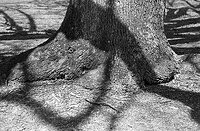
Tree with Big Shadows

Tree with Big Shadows

  • 2
  • 0
  • 52
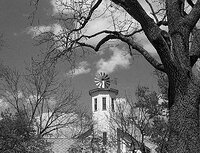
Everal Barn

A
Everal Barn

  • 1
  • 0
  • 52

Forum statistics

Threads
203,455
Messages
2,854,976
Members
101,851
Latest member
Si_Voltage
Recent bookmarks
0
Sirius:

Do you have a filter with a filter factor expressed in terms of stops? If so, that is quite unusual because "Filter Factors are not intended to be expressed in stops, but rather as a factor which is applied either to the film speed or the shutter speed (not the aperture).

This is made clear in, for example, the listing for the K2(Y) in the Hoya filter catalogue, where it is suggested that you either apply a Filter Factor of 2.0 to change in exposure, or apply a one stop change in exposure.

This is made even clearer in the listing for the NDx8, either apply a filter factor of 8, or adjust by three stops.

If you try to express filter factors in stops, you are confusing two different approaches to the same issue.


Filter factors can also confuse and befuddle people if they are listed (uncommonly, but it can be found) as EV values — not something a beginner will come across too often!
Matt's explanation is correct in expression of compensation.
 
The thing to keep in mind is that filter factors are not f stops (see the link below for how this works). Generally, an orange filter will need 1 1/2 to 2 stops of exposure, and you can't always depend on your camera's meter to make the right adjustments. On some yes, on others no. Since B&W film has such a wide exposure latitude, it rarely makes much difference though. I always do a test roll w/ different filters on a new camera to dial things in if it has AE and go by the negatives. The red and yellow filters did everything I need, and the orange didn't seem to do much besides screw up people's complexions.

https://www.google.ca/
 
Rely on "latitude", PLUS guess the filter effect, or ASSUME an in-camera meter is optimized for some wavelength very different from human vision?? Sounds like a great way to either lose your shadow values or blow out the highlights. Now why should people learn what EV means? Because it's
interchangeable with either f-stops or aperture changes, or a combination thereof. Hardly a difficult concept.
 
Don't meter through the filter.the filter will change the meter's spectral sensitivity,which can screw things up.Just meter normally and then add a stop of exposure

What he said.
Variations of spectral sensitivity of the meter and colors of the subject.
Using the view camera by Steve Simmons has an example of "correct" compensations in the book. But keep in mind
these are with one type of film an a particular processing scheme.
 
An orange filter factor is 1.5, so open up the aperture by 1.5 stops or lengthen the exposure by one shutter speed plus the aperture by half an f/stop.

On the other hand if you have an slr with a meter behind the lens, just put the filter on the lens and the light meter will take care of it.
I believe it to be a better idea to leave the f/stop as is for DOF or composition and extend the exposure time instead
 
I believe it to be a better idea to leave the f/stop as is for DOF or composition and extend the exposure time instead

I do either, but I agree it is easier to calculate the new shutter speed.
 
Photrio.com contains affiliate links to products. We may receive a commission for purchases made through these links.
To read our full affiliate disclosure statement please click Here.

PHOTRIO PARTNERS EQUALLY FUNDING OUR COMMUNITY:


Ilford ADOX Freestyle Photographic Stearman Press Weldon Color Lab Blue Moon Camera & Machine
Top Bottom
