
I've been reading The Negative and searching threads for information on guidelines to use for compensating development in high contrast scenes. I have successfully used stand development when pushing TMY-2 to 1600, using T-Max developer for 26 minutes only agitating the first minute. That was a guess and it worked.
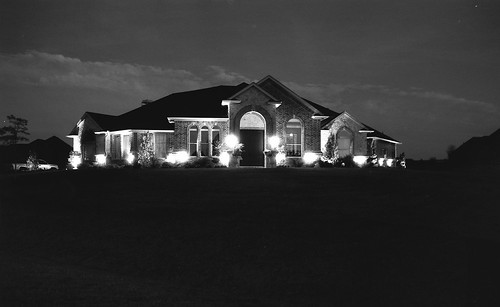
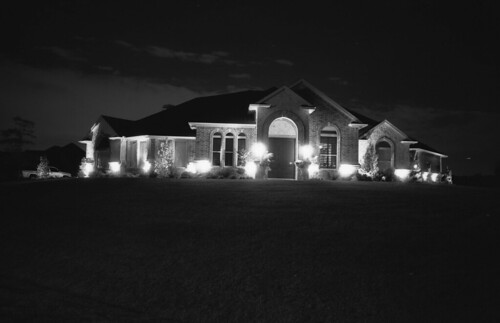
What I am trying to accomplish now is something I don't have time to do a lot of testing for first. I need to make some exposures at night of a lighted house, similar to taking street pictures with street lights in the scene. My idea is to use reduced agitation or stand development to develop the shadows without blowing out the highlights, which is quite easy in scenes of this type (in my experience). The film I am thinking of using is 100 TMX (135) but I also have TMY, Plus-X, and Tri-X. I've had good results with T-Max developer at 1:9, so that would be my starting point. I also have HC-110, D-76, and XTOL, but I only have a 1 roll tank which limits my chemical volume to 250 mL or so.
Does anyone use any certain techniques or rules of thumb when trying to compress the dynamic range of a scene? I need to make these exposures soon and don't have time to do a whole bunch of testing first, so I was hoping for a good starting point.
Thank you,
Nick
What I am trying to accomplish now is something I don't have time to do a lot of testing for first. I need to make some exposures at night of a lighted house, similar to taking street pictures with street lights in the scene. My idea is to use reduced agitation or stand development to develop the shadows without blowing out the highlights, which is quite easy in scenes of this type (in my experience). The film I am thinking of using is 100 TMX (135) but I also have TMY, Plus-X, and Tri-X. I've had good results with T-Max developer at 1:9, so that would be my starting point. I also have HC-110, D-76, and XTOL, but I only have a 1 roll tank which limits my chemical volume to 250 mL or so.
Does anyone use any certain techniques or rules of thumb when trying to compress the dynamic range of a scene? I need to make these exposures soon and don't have time to do a whole bunch of testing first, so I was hoping for a good starting point.
Thank you,
Nick