


I don't know if I'd use a commercial Caffenol developer. Part of the appeal for me is to vary the formula and application; the spirit of experimentation for the non-chemist.
I use Caffenol as a paper developer as discussed in this thread: (there was a url link here which no longer exists)
I find it very effective in this regard, rendering lith-like prints. (though Tim Rudman tells me that Caffenol developing is not infectious, a key requirement in lith printing.)
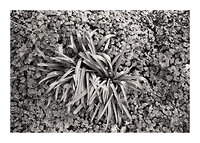
The following print was developed between 3-5 minutes in traditional Caffenol (non-C) on Kentmere VC Glossy.
http://www.woophy.com/map/download.php?file=328182.jpg
Here is the same shot printed on out-dated Kodak Polymax paper. I think the resulting swirls are a result of the extreme age of the paper. I like it, though.
http://www.woophy.com/map/download.p...e=320120.jpg
I use Caffenol as a paper developer as discussed in this thread: (there was a url link here which no longer exists)
I find it very effective in this regard, rendering lith-like prints. (though Tim Rudman tells me that Caffenol developing is not infectious, a key requirement in lith printing.)
The following print was developed between 3-5 minutes in traditional Caffenol (non-C) on Kentmere VC Glossy.
http://www.woophy.com/map/download.php?file=328182.jpg
Here is the same shot printed on out-dated Kodak Polymax paper. I think the resulting swirls are a result of the extreme age of the paper. I like it, though.
http://www.woophy.com/map/download.p...e=320120.jpg
Last edited by a moderator:


