

• Welcome to Photrio!
    Registration is fast and free. Join today to unlock search, see fewer ads, and access all forum features.
    Click here to sign up

Color enlarging

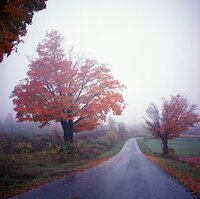
Rainy Day Trees

A
Rainy Day Trees

  • 1
  • 0
  • 25
One Way

A
One Way

  • 0
  • 0
  • 18

Forum statistics

Threads
203,144
Messages
2,850,507
Members
101,695
Latest member
zzbao
Recent bookmarks
0

macandal

Member
Allowing Ads
Joined
Mar 6, 2009
Messages
145
Location
San Francisco, CA
Format
4x5 Format
So I finally did it. (there was a url link here which no longer exists) Now things get exciting. I've done B&W enlargements. How different are they from color? Is it something you guys can tell me how here or is it too difficult to learn this way? I went to Rayko here in San Francisco to process the film. I was planning on going tomorrow to make a contact print and one enlargement. They offer a tutorial for $60. If I have to, I'll pay the $60, but if this is something I can figure out on my own, then won't.

What say you?
 
IMO $60 is a very good price if the teacher is good. I'd say do it. You can figure out color printing on your own (I've done it), but having someone around with experience will help you get up to speed much-much quicker.
 
IMO $60 is a very good price if the teacher is good. I'd say do it. You can figure out color printing on your own (I've done it), but having someone around with experience will help you get up to speed much-much quicker.

+1

$60 is cheap for a hands-on, actually see (and hear and smell :smile:) learning experience.

It will give you invaluable context, that will serve to enhance the value of all the internet and printed resources you may subsequently consult.
 
Seems a fair price, when you consider you could know how to do it by tomorrow! Reading about it would take a whole day and you would be intimidated. Doing it will take a few hours and you'll build confidence.
 
So I finally did it. (there was a url link here which no longer exists) Now things get exciting. I've done B&W enlargements. How different are they from color?
What say you?

I'd say that colour is quite different from B&W. One has, err.. colour in the print and the other err.. doesn't:D

OK couldn't resist it. On a serious note $60 sounds reasonable to me as well. It will give you the kind of confidence that otherwise might be missing and lack of confidence means more frustration and mistakes. It might even save you a chunk of the $60 in paper.

Have fun

pentaxuser
 
Dear Mario,

Take the class. You should also search the forum using the key words "tray processing RA-4 room temperature".

Printing color is good fun. You will enjoy it.

Neal Wydra
 
Is it something you guys can tell me how here or is it too difficult to learn this way? I went to Rayko here in San Francisco to process the film. I was planning on going tomorrow to make a contact print and one enlargement. They offer a tutorial for $60. If I have to, I'll pay the $60, but if this is something I can figure out on my own, then won't.

What say you?

I learnt how to do it from reading posts on here, I made a file full of information on colour balance and then I printed it out. I still refer to it now. However, I think I would have taken a lesson if it was convenient - it's more social isn't it?

Colour printing is lots of fun, it's not difficult.
 
Basically RA4 processing when you get the hang of it is actually a doddle. It is a balancing act between temperiture - exposure-color-balance-film-printing paper-and chemicals.

Get one set of materials that suits you and stick with them. Get one set of chemicals to process the film and one set to develop the paper and stick with them. Make sure your temperiture is consistent and the remainder will come naturally. You can 'dodge and burn' in the same fashion as B&W but you run the risk of odd areas with different colour balance. It is all a matter of practice. That $60 fee to teach you looks like a good deal. There is nothing like someone to show you the ropes
 
Personally, I would try it on my own first. Where you may need help would be with color filters on the enlarger. Again, not rocket science, DIY is how many learn to adjust the filters, along with available aids. Then again, $60 is not much, may help get you on a fast track. Good Luck.
 
Take the class.
It's not a class. It's someone showing me the steps. It's one-on-one. I guess that's even better. :smile:

You should also search the forum using the key words "tray processing RA-4 room temperature".
They don't do tray processing. They use a big machine. Like the ones one used to see in places where they developed film.
 
I learnt how to do it from reading posts on here, I made a file full of information on colour balance and then I printed it out. I still refer to it now. However, I think I would have taken a lesson if it was convenient - it's more social isn't it?
Maybe you could share the information you put together? I'd love how to do it.

You guys have convinced me. I'm going to go for it. And, as I said before, it's not a class but someone showing me the steps of color printing.
 
Basically RA4 processing when you get the hang of it is actually a doddle. It is a balancing act between temperiture - exposure-color-balance-film-printing paper-and chemicals.

Get one set of materials that suits you and stick with them. Get one set of chemicals to process the film and one set to develop the paper and stick with them. Make sure your temperiture is consistent and the remainder will come naturally. You can 'dodge and burn' in the same fashion as B&W but you run the risk of odd areas with different colour balance. It is all a matter of practice. That $60 fee to teach you looks like a good deal. There is nothing like someone to show you the ropes
They provide the chemicals for printing and I don't know what they use. I only had to provide my chemicals for developing because they don't offer that. I don't know what kind of chemicals they use.

Thanks.
 
For the tutorial, will they start with one of your negatives and then work through determining the correct filter pack and exposure? If you have your own darkroom, how similar is your setup to the one that you will be using for the tutorial?
 
C-printing is hard. I did one print and that was enough for me. I've watched a few people who are great at it, and gotten to see the work of some others who are masters of it. It's a dying art, in large part because color processors are so rare now. Word to the wise: Chemistry for C-printing is bad stuff. You don't want your hands on it. Gloves are a must.
 
Dear Mario,

Do the search anyway unless you will continue to have access to the processing machines after your tutorial. I assume you will want to print color at home using your new enlarger. Further, as noted above, if you do process at home use gloves. Also find out where your household chemical waste collection site is. In the Chicago area we have several that will collect hobby chemicals for free.

Neal Wydra
 
Color printing is hard and you really need a color analyser to get good results. Then there is the need for a dichroic enlarger head or silters, etc. Color paper is expensive and unlike BW paper it does go bad. I tried it for awhile and decided it was too much hassle and too expensive. One has to be very determined to print color.
 
Last edited by a moderator:
Ignore the naysayers.

I find color printing quite easy. I too thought I needed a color analyzer and bought one but now I only use it for exposure determination when changing print sizes as with a little experience I learned to color balance quickly by eye. Learning color theory will help with this. You can determine a starting filtration for each film type you will be printing (which with today's films are very close to each other) then tweak from there. Not that hard!

The use of trays and room temperature developer makes making small test prints quick and easy. Don't use drums or high temperatures.

Color paper can be frozen extending the life for years. Color chemistry, stored properly, can last as long as B&W.

Color printing may seem problematic at first but once you get experience it is just as easy as B&W and very rewarding.
 
A good book, a box of color paper, proper chemicals, and an evening to yourself will be a good start. Printing at home may be very different that the process they do. Different chemicals, paper, enlarger or printer, method of delivering the chemicals, example, machine vs tray or drum. Its not hard to learn, it does take effort and commitment.
 
Color printing is hard and you really need a color analyser to get good results. Then there is the need for a dichroic enlarger head or silters, etc. Color paper is expensive and unlike BW paper it does go bad. I tried it for awhile and decided it was too much hassle and too expensive. One has to be very determined to print color.

I respectfully disagree. The color paper is half the cost of BW rc paper and dirt cheap compared to fiber. Kodak's color chemistry lasts forever after it is mixed and is reasonably cheap when you buy it in bigger volume. This makes for low cost experimentation. I find I enjoy color printing much more because of the lower cost, so I can experiment much more without worrying of paper/chemistry wastage. Yes you should have a dichroic enlarger for easier filtering. But I find color analyzer unnecessary. I do have it, but rarely use it. Color is all in the mindset. Just find the quickest possible way to process test strips, and remember that color paper is cheap. Most important to have fun with it. Yes, color paper goes bad, so the solution is to use more of it so you can go through it quicker :D
 
Dear Mario,

Do the search anyway unless you will continue to have access to the processing machines after your tutorial. I assume you will want to print color at home using your new enlarger. Further, as noted above, if you do process at home use gloves. Also find out where your household chemical waste collection site is. In the Chicago area we have several that will collect hobby chemicals for free.

Neal Wydra
Mmm? I'm not sure what search you're referring to? In any case, I don't have a home darkroom and, for the foreseeable future, I won't so I will continue using the facilities at Rayko. I don't have to worry about getting chemicals on me because they don't use the tray system. It's a machine that does the processing.

Thanks.
 
Mmm? I'm not sure what search you're referring to? In any case, I don't have a home darkroom and, for the foreseeable future, I won't so I will continue using the facilities at Rayko. I don't have to worry about getting chemicals on me because they don't use the tray system. It's a machine that does the processing.

Thanks.

In that case, they will be teaching you on the exact process you would using, its a good deal then, go for it. Have fun.:smile:
 
The use of trays and room temperature developer makes making small test prints quick and easy. Don't use drums or high temperatures.
I can't use trays; they (Rayko) use the drum. As far as room temperature chemicals, in San Francisco, especially at this time of year, room temperature means having chemistry at 50 F, isn't that a bit too cold?
 
...room temperature means having chemistry at 50 F, isn't that a bit too cold?

Yes. Turn up the heat and take off your coat.:D

I inferred from your OP, as I think others did that your ultimate goal was to print at home.
 
You use a heated water bath or tray to keep your bottles of chemistry at the correct temperature.
And you want enough solution volume in the drum so the temp doesn't drop during development.
A prerinse with correct temp water prior to actual dev will help condition the inside of the drum. I
use RA4 chem at 84F. But ambient temp in the room itself shouldn't be so far out of whack that
you get a temp drop in the general process (and I live in the Bay area, so know what 50 deg is like
even midsummer!). Drum work way better than trays anyway, and are safer on your lungs. Make
sure you have decent ventilation!
 
I was wondering...? Does color paper come in fiber based and resin coated varieties or is it just one kind of paper?
 
Photrio.com contains affiliate links to products. We may receive a commission for purchases made through these links.
To read our full affiliate disclosure statement please click Here.

PHOTRIO PARTNERS EQUALLY FUNDING OUR COMMUNITY:


Ilford ADOX Freestyle Photographic Stearman Press Weldon Color Lab Blue Moon Camera & Machine
Top Bottom
