

• Welcome to Photrio!
    Registration is fast and free. Join today to unlock search, see fewer ads, and access all forum features.
    Click here to sign up

Clearing Kallitypes - Disodium EDTA vs Tertrasidum EDTA vs Citric Acid

a sidebar

H
a sidebar

  • Tel
  • Feb 3, 2026
  • 0
  • 0
  • 116

Recent Classifieds

Forum statistics

Threads
202,168
Messages
2,836,179
Members
101,149
Latest member
hegoss
Recent bookmarks
0

cirwin2010

Member
Joined
Jan 3, 2021
Messages
249
Location
Massachussetts
Format
Analog
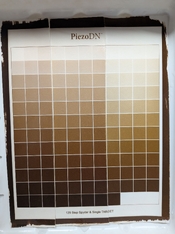
I've found myself doing a lot of testing to perfect my kallitype process and understand the effects of different variables in that process. Right now I'm trying to find the best way to clear my prints after development. I just did the following test and got some interesting results. See picture attached.

Test:
Test sheet developed per my standard process then cut into three strips. Each strip went straight into its own clearing bath and was cleared for 10 minutes at room temp (~60F). The strips were rinsed then fixed for 2 minutes.

Developer: Sodium Acetate 100g + tartaric acid 3g per liter
Developer temp: 110F
Development length: 10 minutes
Paper: Legion Revere Platinum

Bath 1 (left strip): 1% solution of disodium EDTA
Bath 2 (middle strip): 1% solution of tetrasodium EDTA
Bath 3 (right strip): 3% solution of citric acid

Tap water pH: UNKNOWN


Observed Results:
-The citric acid was by far the most effective at clearing the yellow stain from the print. Curiously it changes the color of the print from neutral black/grey to brown. The citric acid appeared to bleach the highlights, especially after fixing.

-The tetrasodium EDTA was ineffective at clearing the print under these conditions. No color change detected. No bleaching of the highlights before or during the fix.

-The disodium EDTA was more effect than the tetrasodium EDTA, but less effective than the citric acid at clearing the yellow stain under these conditions. Minimal to no bleaching was detected and there is a small amount of color shift to brown. There was significantly more yellow stain prior to fixing.

-tetrasodium EDTA followed by platinum or palladium toners (contains citric acid) clears yellow stain and does not bleach as much highlight

Questions for the community and myself:

1. The citric acid color change is throwing into question if I have been adequately toning my prints in palladium. I usually tone until I see a complete color change (brown for Pd) plus several more minutes to be sure (about 10 minutes total). But has the color change I've been witnessing from the citric acid that makes up the toner solution? This might explain the seemingly high capacity of my toner. Platinum toning likely does not have this problem since the final color turns neutral black/grey after a brief change to browns (likely the citric acid).

2. Is my tap water pH to blame for some of these results? It is dry this time of year to collect distilled water was my dehumidifier. Instead I've been using tap water. I've order a pH test strip kit to check. I thought I got better results with the tetrasodium previously which could be explained by using distilled water, but I don't know for sure.

3. Why does Bostick and Sullivan sell the Tetrasodium EDTA as part of their kallitype kits? Tetrasodium EDTA is alkaline which should making clearing iron ions harder if not impossible according to available information. Disodium EDTA is acidic and should make for a better clearing agent. I sent an inquiry to B&S asking why tetrasodium EDTA is supplied instead of bisodium. They replied stating that "bisodium EDTA is very expensive and the results in the end are the same" and that the print must be develped well for effective clearing (5-10 minutes per their instructions). The disodium I purchased was cheaper than B&S tetrasodium, but that could something with their suppliers. As far as developing the print "well" I have never been able to get clear highlights without toning (likely the citric acid in the toner helping).

4. Is there any reason to use anything other than citric acid?

5. Is my sodium acetate developer to blame for some of my results? I've started testing sodium citrate for ease of use. I've only tested it with citric acid for clearing, but it appears to clear more easily and does not change color or bleach during clearing. It states very brown through the whole process.

6. Why does the citric acid clearing bath change the color of the print? Warmer colors typically means finer silver crystals. Is the acidity of the clearing bath somehow influencing a change when using sodium acetate developers? This would also explain the bleaching.

7. Can sodium acetate developed prints be adequately cleared without influencing a color change?


PXL_20251209_021524590_1.jpg
 

koraks

Moderator
Moderator
Joined
Nov 29, 2018
Messages
27,440
Location
Europe
Format
Multi Format
2. Is my tap water pH to blame for some of these results?

This is pretty much the only I can answer definitively: No. Tap water pH really doesn't matter here. Whatever you dissolve in the tap water to the tone of 1-3% w/v will totally swamp the pH of the tap water, whatever it may have been initially. All three compounds you've used act as an acid or a base and will therefore obliterate what tiny buffering capacity your tap water has initially.

4. Is there any reason to use anything other than citric acid?

Going by what you show above as a result of your testing, I see quite a lot of bleaching in that sample, also in the black border around the print. A 3% citric acid solution is pretty darn strong; for clearing a siderotype print, I'd start with the proverbial 'pinch' of citric acid instead. I guess that will likely cut down the bleaching.

6. Why does the citric acid clearing bath change the color of the print?
That's likely related to the bleaching; the citric acid apparently simply etches away part of the silver image. A print like this one consists of very finely divided metallic silver particles that are more susceptible to chemical attack than solid silver objects. This also implies toning wasn't quite complete, which I think is rather likely since 100% complete toning is probably a point you never really reach anyway.

I'm not of much help on the other questions, sorry.
 

revdoc

Member
Allowing Ads
Joined
Apr 12, 2015
Messages
318
Format
35mm
You should read chapter 10 of Mike Ware's Platinomicon. It covers the use of both forms of EDTA. His context is the platinum print, but a lot of the chemistry is applicable to kallitypes as well.

FWIW, I have never geen able to clear kallitypes developed with acetate, so I just use citrate instead, and tone.

The internet archive has a copy of Dick Stevens' Making Kallitypes: A Definitive Guide that talks about the effects of different developers.
 

Andrew O'Neill

Moderator
Moderator
Joined
Jan 16, 2004
Messages
13,035
Location
Coquitlam,BC Canada
Format
Multi Format
I've always only ever gone with Citric Acid to clear Kallitypes. It's a lot more available than EDTA.
Personally, I've never cared for Sodium Acetate developing. It's never been reliable. My go to is Sodium Citrate, followed by gold toning.
 

nmp

Member
Allowing Ads
Joined
Jan 20, 2005
Messages
2,101
Location
Maryland USA
Format
35mm
Part of the bleaching could be that it is clearing out better. Since you are using digital negative, this is not a problem. Choose citric acid (at a lower concentration as @koraks alluded, like 1%) and redo the standard exposure time as it would move higher than the other two. Most likely you will get the density at the high end back with extra exposure. The correction curve will be different too.

:Niranjan.
 

koraks

Moderator
Moderator
Joined
Nov 29, 2018
Messages
27,440
Location
Europe
Format
Multi Format
Part of the bleaching could be that it is clearing out better.
That's a good point; it's possible that some of the density is basically just stain. However, looking at the dmax of the samples above, I suspect there may be a little actual bleaching occurring on top of that, so I'd definitely try again with a much lower citric acid concentration. 1% would be on the high side IMO; for Van Dyke Brown I usually use something like 0.1% or even less.
 
OP
OP

cirwin2010

Member
Joined
Jan 3, 2021
Messages
249
Location
Massachussetts
Format
Analog
I'm going to do some more testing later. I'll try a weaker solution of citric acid, perhaps 1% as mentioned. I'm still going to expect some bleaching since I saw some color change with the disodium EDTA which may be because it is slightly acidic.


I am likely going to repeat this test with a sheet developed in sodium citrate. From my limited testing I did not see any color change or bleaching in 3% citric acid, but I'll see how it behaves in other clearing solutions. The sodium citrate developed prints do bleach in the fix if they are not toned to at least a slight degree.


Assuming the behavior is different between the two developers, I don't understand why. Metallic silver should just be metallic silver. If citric acid is dissolving the silver, or forming water soluble complexes, then I would expect to see bleaching in both prints. In fact I would expect there to be MORE bleaching from the citrate developer as it produces finer silver particles as evident by its warm color. Maybe there is some other byproduct preset from the developers causing a change?


I also want to do some more testing regarding toning. I need to validate if this is true, but I think sodium citrate prints are slower to tone than sodium acetate. Platinum toner is pretty easy to tell progress from color change and from my limited testing it seemed extremely slow for citrate prints. If this is the case I could only guess as to why. Perhaps something with the surface area of the silver particles? Or I just need to replenish my toner. TBD.
 
Last edited:
  • cirwin2010
  • Deleted
  • Reason: duplicate comment

Cor

Member
Joined
Aug 21, 2006
Messages
223
Location
Leiden, The
Format
Multi Format
Just in the middle of a Kallitype printing session (you know why, Koraks..😉..), my procedure is based on Sandy King's protocol: double coat with FeOX and AgNO3, develop in 20% Na Acetate, rinse with water with a pinch of citric acid, than clearing in 3% citric acid, rinse again, tone with Palladium (single shot), wash with plain water and 2 bath fix in basic Hypo. Cannot say I have observed bleaching.
good luck,

best,

Cor
 

Andrew O'Neill

Moderator
Moderator
Joined
Jan 16, 2004
Messages
13,035
Location
Coquitlam,BC Canada
Format
Multi Format
Curious to know what most Kallitypers use to fix with? I've always used a semi-rapid fix containing Sodium Thiosulphate and Ammonia. It has worked very well, and I've never seen any bleaching. Yes, there is a slight drop in Dmax in the Citric Acid clearing bath, but it's restored once plopped in the fix. I also use the same type of fixer for Salt printing.
 

nmp

Member
Allowing Ads
Joined
Jan 20, 2005
Messages
2,101
Location
Maryland USA
Format
35mm
Assuming the behavior is different between the two developers, I don't understand why. Metallic silver should just be metallic silver.

Developer here is really not a developer in the classical sense of one in silver gelatin printing. Here, it is actually a co-solvent for ferrous oxalate which is insoluble in water. In order to facilitate the reaction between Fe(2) and silver nitrate, we have to first get the Fe(2) in solution. That is the primary function of solutions of alkali salts of oxalates, citrates etc. Once Fe(2) goes into solution with the help of the "developer," it then finds a silver ion closeby to reduce it to metallic silver. One would expect that this two step process is kinetically driven and as such the outcome (particle size distribution, extent of conversion etc) would depend on characteristics of the developer.

:Niranjan.
 
Last edited:
OP
OP

cirwin2010

Member
Joined
Jan 3, 2021
Messages
249
Location
Massachussetts
Format
Analog
Curious to know what most Kallitypers use to fix with? I've always used a semi-rapid fix containing Sodium Thiosulphate and Ammonia. It has worked very well, and I've never seen any bleaching. Yes, there is a slight drop in Dmax in the Citric Acid clearing bath, but it's restored once plopped in the fix. I also use the same type of fixer for Salt printing.

I just use a bath of sodium thiosulfate to keep things simple.
 
OP
OP

cirwin2010

Member
Joined
Jan 3, 2021
Messages
249
Location
Massachussetts
Format
Analog
Just in the middle of a Kallitype printing session (you know why, Koraks..😉..), my procedure is based on Sandy King's protocol: double coat with FeOX and AgNO3, develop in 20% Na Acetate, rinse with water with a pinch of citric acid, than clearing in 3% citric acid, rinse again, tone with Palladium (single shot), wash with plain water and 2 bath fix in basic Hypo. Cannot say I have observed bleaching.

good luck,

best,

Cor
My process up until this point has been:

1. 10 minute sodium acetate development
2. 5-10 minutes in tetrasodium EDTA
3. Rinse
4. about 10 minutes in palladium or platinum toner (this clears the remaining iron stain)
5. fix for 2 minutes in sodium thiosulfate

With this process I get some lightening of highlights, but my calibration accounts for that and I end up with a good result.
Bleaching seems to only become a problem with sodium acetate development and a 3% clearing bath. Or it bleaches in the fix when using sodium citrate development with no toner.

Paper choice could be a factor?
 
OP
OP

cirwin2010

Member
Joined
Jan 3, 2021
Messages
249
Location
Massachussetts
Format
Analog
Developer here is really not a developer in the classical sense of one in silver gelatin printing. Here, it is actually a co-solvent for ferrous oxalate which is insoluble in water. In order to facilitate the reaction between Fe(2) and silver nitrate, we have to first get the Fe(2) in solution. That is the primary function of solutions of alkali salts of oxalates, citrates etc. Once Fe(2) goes into solution with the help of the "developer," it then finds a silver ion closeby to reduce it to metallic silver. One would expect that this two step process is kinetically driven and as such the outcome (particle size distribution, extent of conversion etc) would depend on characteristics of the developer.

:Niranjan.

Allow me to attempt to clarify question. I am familiar that different development agents will result in different results. The crystal structure and size of the silver particles influences the "look" of the image. My question is that the end result is just metallic silver, yes? Why would one developer influence how resilient the silver is to bleaching from and acid?

I also may not be fully understanding your point, so apologies if that is the case.
Regardless, your comment is interesting. I've experienced what I can only describe as a "ripening" of my sodium acetate developer. When the solution is fresh, my prints are brown in color. But after a print to two goes through the developer I get neutral blacks instead. Would this be an effect of iron building up in the solution?
 

fgorga

Member
Joined
Aug 31, 2015
Messages
858
Location
New Hampshire
Format
Multi Format
Allow me to attempt to clarify question. I am familiar that different development agents will result in different results. The crystal structure and size of the silver particles influences the "look" of the image. My question is that the end result is just metallic silver, yes?
Yes and No! See below.
Why would one developer influence how resilient the silver is to bleaching from and acid?

I think that you have, in a way, answered your own question; see the text which I have made bold, above!

The structure and size of the silver particles will influence the rate of their further reaction of almost any type.

One needs to remember that any reaction of the silver is going to take place at the interface between the particle surface and the liquid and its rate is therefore dependent on the available surface area.

The smaller the crystals are the larger their surface to volume ratio is. Thus small crystals will get smaller faster than will larger crystals. One might even expect that the smallest crystals might get 'used up' and completely disappear. This would likely be seen as bleaching.
 
OP
OP

cirwin2010

Member
Joined
Jan 3, 2021
Messages
249
Location
Massachussetts
Format
Analog
Yes and No! See below.


I think that you have, in a way, answered your own question; see the text which I have made bold, above!

The structure and size of the silver particles will influence the rate of their further reaction of almost any type.

One needs to remember that any reaction of the silver is going to take place at the interface between the particle surface and the liquid and its rate is therefore dependent on the available surface area.

The smaller the crystals are the larger their surface to volume ratio is. Thus small crystals will get smaller faster than will larger crystals. One might even expect that the smallest crystals might get 'used up' and completely disappear. This would likely be seen as bleaching.

That intuitively makes sense and is in line with my own understanding.
But what I wonder is why does sodium citrate developed prints appear less effected by citric acid clearing? Sodium citrate produces a warmer image which, from my understanding, is due to smaller silver crystals. Sodium acetate development yields a neutral black image which would mean larger crystals, yes? I would expect the citrate prints to bleach more, not the other way around.

Perhaps there is more too it than just bigger or smaller crystals? Maybe the acetate crystals aren't larger, but have a different structure entirely? Idk if anyone here has the answer to this.

I also could be getting too ahead of myself. I still need to repeat the above test with a sodium citrate print to confirm.
 

koraks

Moderator
Moderator
Joined
Nov 29, 2018
Messages
27,440
Location
Europe
Format
Multi Format
I would expect the citrate prints to bleach more, not the other way around.
@fgorga addressed that in particular:
The smaller the crystals are the larger their surface to volume ratio is. Thus small crystals will get smaller faster than will larger crystals.

But your comment about geometry is also interesting; I think none of us knows for sure. But so far the simple model of "smaller = bleaches faster" seems to work fairly well in terms of understanding what's going on.

(you know why, Koraks..😉..)

Yes, yes! And very much looking forward to the outcome, hehe!
 

nmp

Member
Allowing Ads
Joined
Jan 20, 2005
Messages
2,101
Location
Maryland USA
Format
35mm
Allow me to attempt to clarify question. I am familiar that different development agents will result in different results. The crystal structure and size of the silver particles influences the "look" of the image. My question is that the end result is just metallic silver, yes? Why would one developer influence how resilient the silver is to bleaching from and acid?

I also may not be fully understanding your point, so apologies if that is the case.
Regardless, your comment is interesting. I've experienced what I can only describe as a "ripening" of my sodium acetate developer. When the solution is fresh, my prints are brown in color. But after a print to two goes through the developer I get neutral blacks instead. Would this be an effect of iron building up in the solution?

hmm....I guess the used developer contains either silver nitrate or ferrous oxalate whichever is in excess, in addition to ferric oxalate and silver particles which I presume you filter out. One could think of a scenario where having some silver nitrate in the developer might play a role one way or another, perhaps speeding up the development. You can check if there is excess silver nitrate by putting a drop of it in a bit of the fixer - should get precipitates of silver thiosulfate. If there are ferrous ions in excess, then a drop of k ferricyanide should yield Prussian blue. Interesting experiment would be to add some silver nitrate to fresh developer and see what happens to print tone.

:Niranjan.
 
OP
OP

cirwin2010

Member
Joined
Jan 3, 2021
Messages
249
Location
Massachussetts
Format
Analog
hmm....I guess the used developer contains either silver nitrate or ferrous oxalate whichever is in excess, in addition to ferric oxalate and silver particles which I presume you filter out. One could think of a scenario where having some silver nitrate in the developer might play a role one way or another, perhaps speeding up the development. You can check if there is excess silver nitrate by putting a drop of it in a bit of the fixer - should get precipitates of silver thiosulfate. If there are ferrous ions in excess, then a drop of k ferricyanide should yield Prussian blue. Interesting experiment would be to add some silver nitrate to fresh developer and see what happens to print tone.

:Niranjan.

These are interesting ideas. I have some beakers and potassium ferricyanide lying around. I'll add this to the list of experiments.
 
OP
OP

cirwin2010

Member
Joined
Jan 3, 2021
Messages
249
Location
Massachussetts
Format
Analog
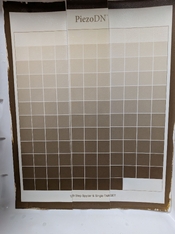
I repeated my experiment but this time using sodium citrate developer. All the variables are the same, but I did mix up the order of my test strips.

Left strip: tetrasodium EDTA
Middle strip: disodium EDTA
Right strip: 3% citric acid
So I was wrong. Citric acid does bleach the sodium citrate prints. Not much clearing is needed as it barely has any yellow in the highlights after development. The citric acid clearing bath has the most brilliant white compared to the disodium and tetra sodium, but it has bleached the most compared to the others. I am not sure if the remaining color in the paper base is iron or silver at this point.
 

Attachments

  • PXL_20251211_223953094.jpg
    PXL_20251211_223953094.jpg
    791.4 KB · Views: 38
OP
OP

cirwin2010

Member
Joined
Jan 3, 2021
Messages
249
Location
Massachussetts
Format
Analog
Then for another experiment I developed in sodium acetate (like my first post) and cut it into three pieces. The first went into the 3% citric acid clearing bath. The second went into a 0.5% citric acid clearing bath for 5 minutes. And the third went into the disodium EDTA for 5 minutes then into the 0.5% citric acid clearing bath for 5 minutes.

Left strip: 3% citric acid
Middle strip: 0.5% citric acid
Right strip: 1% disodium EDTA -> 0.5% citric acid

The 3% citric acid like usual cleared the best. The 0.5% citric acid did not clear the highlights completely at 5minutes, but had the same amount of bleaching and color change as the 3%. The disodium EDTA -> 0.5% citric acid was slightly better than the 0.5% citric acid alone, but not as good as the 3% for clear highlights.
 

Attachments

  • PXL_20251211_232809918.jpg
    PXL_20251211_232809918.jpg
    1 MB · Views: 29
OP
OP

cirwin2010

Member
Joined
Jan 3, 2021
Messages
249
Location
Massachussetts
Format
Analog
Due to the color change in the citric acid (which is a component of my palladium toner) I am skeptical of if my images are actually toning or how much.

So my idea was to throw some of my test prints into an undiluted potassium ferrocyanide bleach (for sepia toning silver gelatin prints) to see what happens. I figured that platinum, palladium, and gold would not bleach like silver.

Well the platinum and gold toned prints didn't bleach for the most part. There was some bleaching, mostly in the shadows, but the image remained intact. However, I could not say the same for ANY of my palladium toned prints. Either my palladium toner isn't doing anything, or palladium reacts with the bleach. No idea which at the moment. So now all the prints I've made have been thrown into question...

Also out of curiosity I decided to "redevelop" the prints in sodium sulfide. This is not suitable for kallitypes as the image is pretty faint compared to the original. Also the white areas stain to a gross grey color. I guess that answers my question if there is silver (or something) in the white areas of my print. The uncoated paper base does not change color and remains white.
 
Last edited:

BHuij

Member
Allowing Ads
Joined
Oct 12, 2016
Messages
962
Location
Utah
Format
Multi Format
I've always only ever gone with Citric Acid to clear Kallitypes. It's a lot more available than EDTA.
Personally, I've never cared for Sodium Acetate developing. It's never been reliable. My go to is Sodium Citrate, followed by gold toning.

Could have written this comment myself except that I've never even tried a developer besides sodium citrate.

3% citric acid seems to work great for me. If it's bleaching highlights more than I want, I suspect that's a problem more easily solved in the tone curve I apply to my negative image before printing onto the transparency film. In fact, I suspect the reason I've never noticed any particular highlight bleaching is because it was accounted for in the process of building my negative curve.
 

fgorga

Member
Joined
Aug 31, 2015
Messages
858
Location
New Hampshire
Format
Multi Format
.

Well the platinum and gold toned prints didn't bleach for the most part. There was some bleaching, mostly in the shadows, but the image remained intact. However, I could not say the same for ANY of my palladium toned prints. Either my palladium toner isn't doing anything, or palladium reacts with the bleach. No idea which at the moment.

This is not unexpected... the order of reactivity for these metals is Silver > Palladium > Platinum > Gold.

If one looks at the details of the chemistry see (if you want the gory) details: https://www.photrio.com/forum/threads/how-does-kallitype-toning-work.215464/#post-2935208) one sees that there is a large change (increase) in the redox potential between palladium and platinum.

In other words palladium is much more like silver in reactivity (and susceptibility to bleaching) than are platinum or gold.
 
OP
OP

cirwin2010

Member
Joined
Jan 3, 2021
Messages
249
Location
Massachussetts
Format
Analog
Could have written this comment myself except that I've never even tried a developer besides sodium citrate.

3% citric acid seems to work great for me. If it's bleaching highlights more than I want, I suspect that's a problem more easily solved in the tone curve I apply to my negative image before printing onto the transparency film. In fact, I suspect the reason I've never noticed any particular highlight bleaching is because it was accounted for in the process of building my negative curve.
I agree that calibration and keeping the process constant will mask the bleaching for the most part. The citric acid does seem to reduce dmax very slightly from what I can tell.
 
OP
OP

cirwin2010

Member
Joined
Jan 3, 2021
Messages
249
Location
Massachussetts
Format
Analog
This is not unexpected... the order of reactivity for these metals is Silver > Palladium > Platinum > Gold.

If one looks at the details of the chemistry see (if you want the gory) details: https://www.photrio.com/forum/threads/how-does-kallitype-toning-work.215464/#post-2935208) one sees that there is a large change (increase) in the redox potential between palladium and platinum.

In other words palladium is much more like silver in reactivity (and susceptibility to bleaching) than are platinum or gold.

I was wondering about that. Would potassium ferricyanide + potassium bromide bleach reduce the palladium to a palladium salt like it does for silver? I wasn't sure if palladium even could react with the bleach.

I did take one of those bleached prints and redeveloped it in sodium sulfide. Normally with silver this makes silver sulfide. Could I have made palladium sulfide?

EDIT: Tried reading into it a bit. I don't have the full picture, but it looks like the +3 oxidation state of the iron in potassium ferricyanide acts as an oxidant that facilitates the oxidation of palladium (much like silver) to Pd^2+. I'm not sure what happens with the potassium bromide from there, but I think the Pd^2+ will react with sodium sulfide to form palladium sulfide.

Someone please correct me if I'm on the wrong track.
 
Last edited:
Photrio.com contains affiliate links to products. We may receive a commission for purchases made through these links.
To read our full affiliate disclosure statement please click Here.

PHOTRIO PARTNERS EQUALLY FUNDING OUR COMMUNITY:


Ilford ADOX Freestyle Photographic Stearman Press Weldon Color Lab Blue Moon Camera & Machine
Top Bottom