cirwin2010
Member
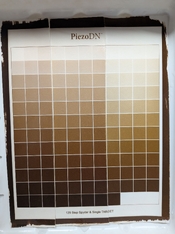
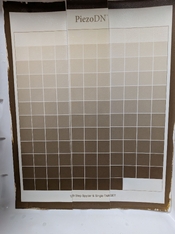
I've found myself doing a lot of testing to perfect my kallitype process and understand the effects of different variables in that process. Right now I'm trying to find the best way to clear my prints after development. I just did the following test and got some interesting results. See picture attached.
Test:
Test sheet developed per my standard process then cut into three strips. Each strip went straight into its own clearing bath and was cleared for 10 minutes at room temp (~60F). The strips were rinsed then fixed for 2 minutes.
Developer: Sodium Acetate 100g + tartaric acid 3g per liter
Developer temp: 110F
Development length: 10 minutes
Paper: Legion Revere Platinum
Bath 1 (left strip): 1% solution of disodium EDTA
Bath 2 (middle strip): 1% solution of tetrasodium EDTA
Bath 3 (right strip): 3% solution of citric acid
Tap water pH: UNKNOWN
Observed Results:
-The citric acid was by far the most effective at clearing the yellow stain from the print. Curiously it changes the color of the print from neutral black/grey to brown. The citric acid appeared to bleach the highlights, especially after fixing.
-The tetrasodium EDTA was ineffective at clearing the print under these conditions. No color change detected. No bleaching of the highlights before or during the fix.
-The disodium EDTA was more effect than the tetrasodium EDTA, but less effective than the citric acid at clearing the yellow stain under these conditions. Minimal to no bleaching was detected and there is a small amount of color shift to brown. There was significantly more yellow stain prior to fixing.
-tetrasodium EDTA followed by platinum or palladium toners (contains citric acid) clears yellow stain and does not bleach as much highlight
Questions for the community and myself:
1. The citric acid color change is throwing into question if I have been adequately toning my prints in palladium. I usually tone until I see a complete color change (brown for Pd) plus several more minutes to be sure (about 10 minutes total). But has the color change I've been witnessing from the citric acid that makes up the toner solution? This might explain the seemingly high capacity of my toner. Platinum toning likely does not have this problem since the final color turns neutral black/grey after a brief change to browns (likely the citric acid).
2. Is my tap water pH to blame for some of these results? It is dry this time of year to collect distilled water was my dehumidifier. Instead I've been using tap water. I've order a pH test strip kit to check. I thought I got better results with the tetrasodium previously which could be explained by using distilled water, but I don't know for sure.
3. Why does Bostick and Sullivan sell the Tetrasodium EDTA as part of their kallitype kits? Tetrasodium EDTA is alkaline which should making clearing iron ions harder if not impossible according to available information. Disodium EDTA is acidic and should make for a better clearing agent. I sent an inquiry to B&S asking why tetrasodium EDTA is supplied instead of bisodium. They replied stating that "bisodium EDTA is very expensive and the results in the end are the same" and that the print must be develped well for effective clearing (5-10 minutes per their instructions). The disodium I purchased was cheaper than B&S tetrasodium, but that could something with their suppliers. As far as developing the print "well" I have never been able to get clear highlights without toning (likely the citric acid in the toner helping).
4. Is there any reason to use anything other than citric acid?
5. Is my sodium acetate developer to blame for some of my results? I've started testing sodium citrate for ease of use. I've only tested it with citric acid for clearing, but it appears to clear more easily and does not change color or bleach during clearing. It states very brown through the whole process.
6. Why does the citric acid clearing bath change the color of the print? Warmer colors typically means finer silver crystals. Is the acidity of the clearing bath somehow influencing a change when using sodium acetate developers? This would also explain the bleaching.
7. Can sodium acetate developed prints be adequately cleared without influencing a color change?

Test:
Test sheet developed per my standard process then cut into three strips. Each strip went straight into its own clearing bath and was cleared for 10 minutes at room temp (~60F). The strips were rinsed then fixed for 2 minutes.
Developer: Sodium Acetate 100g + tartaric acid 3g per liter
Developer temp: 110F
Development length: 10 minutes
Paper: Legion Revere Platinum
Bath 1 (left strip): 1% solution of disodium EDTA
Bath 2 (middle strip): 1% solution of tetrasodium EDTA
Bath 3 (right strip): 3% solution of citric acid
Tap water pH: UNKNOWN
Observed Results:
-The citric acid was by far the most effective at clearing the yellow stain from the print. Curiously it changes the color of the print from neutral black/grey to brown. The citric acid appeared to bleach the highlights, especially after fixing.
-The tetrasodium EDTA was ineffective at clearing the print under these conditions. No color change detected. No bleaching of the highlights before or during the fix.
-The disodium EDTA was more effect than the tetrasodium EDTA, but less effective than the citric acid at clearing the yellow stain under these conditions. Minimal to no bleaching was detected and there is a small amount of color shift to brown. There was significantly more yellow stain prior to fixing.
-tetrasodium EDTA followed by platinum or palladium toners (contains citric acid) clears yellow stain and does not bleach as much highlight
Questions for the community and myself:
1. The citric acid color change is throwing into question if I have been adequately toning my prints in palladium. I usually tone until I see a complete color change (brown for Pd) plus several more minutes to be sure (about 10 minutes total). But has the color change I've been witnessing from the citric acid that makes up the toner solution? This might explain the seemingly high capacity of my toner. Platinum toning likely does not have this problem since the final color turns neutral black/grey after a brief change to browns (likely the citric acid).
2. Is my tap water pH to blame for some of these results? It is dry this time of year to collect distilled water was my dehumidifier. Instead I've been using tap water. I've order a pH test strip kit to check. I thought I got better results with the tetrasodium previously which could be explained by using distilled water, but I don't know for sure.
3. Why does Bostick and Sullivan sell the Tetrasodium EDTA as part of their kallitype kits? Tetrasodium EDTA is alkaline which should making clearing iron ions harder if not impossible according to available information. Disodium EDTA is acidic and should make for a better clearing agent. I sent an inquiry to B&S asking why tetrasodium EDTA is supplied instead of bisodium. They replied stating that "bisodium EDTA is very expensive and the results in the end are the same" and that the print must be develped well for effective clearing (5-10 minutes per their instructions). The disodium I purchased was cheaper than B&S tetrasodium, but that could something with their suppliers. As far as developing the print "well" I have never been able to get clear highlights without toning (likely the citric acid in the toner helping).
4. Is there any reason to use anything other than citric acid?
5. Is my sodium acetate developer to blame for some of my results? I've started testing sodium citrate for ease of use. I've only tested it with citric acid for clearing, but it appears to clear more easily and does not change color or bleach during clearing. It states very brown through the whole process.
6. Why does the citric acid clearing bath change the color of the print? Warmer colors typically means finer silver crystals. Is the acidity of the clearing bath somehow influencing a change when using sodium acetate developers? This would also explain the bleaching.
7. Can sodium acetate developed prints be adequately cleared without influencing a color change?


 ..), my procedure is based on Sandy King's protocol: double coat with FeOX and AgNO3, develop in 20% Na Acetate, rinse with water with a pinch of citric acid, than clearing in 3% citric acid, rinse again, tone with Palladium (single shot), wash with plain water and 2 bath fix in basic Hypo. Cannot say I have observed bleaching.