
• Welcome to Photrio!
    Registration is fast and free. Join today to unlock search, see fewer ads, and access all forum features.
    Click here to sign up

Cleaning Up After A Darkroom Session - What do you do?

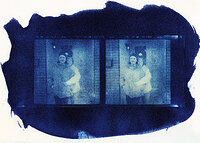
Cyanotype stereo card

A
Cyanotype stereo card

  • 0
  • 0
  • 0
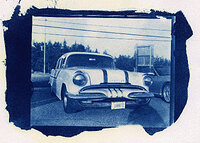
IMG_0025.jpeg

A
IMG_0025.jpeg

  • 0
  • 1
  • 0

Forum statistics

Threads
203,125
Messages
2,850,234
Members
101,690
Latest member
nisherii
Recent bookmarks
0
Fortunately enough I have a permanent darkroom in the basement. When it comes to print development I use two identical trays for each solution. One tray holds the liquid and the other one is used as a floating lid. In this way I can just leave everything as it is until next printing session. In order to prevent excessive smell and dried in chemicals, I just rinse the bottom of the floating tray with cold water when I pick it up.
This has worked perfectly and I have been able to keep chemicals printing ready for over a month.

Karl-Gustaf
 
I rinse, detergent wash, rinse again, dry, and put away everything at the end of a darkroom session. But it's not really a chore because I have to wait 45 minutes for my archival washer to do its work and it helps pass the time. And if something goes wrong I know for sure it isn't chemical contamination from dirty trays or measuring jugs.
 
I just don't make a mess to begin with... I live by the wet/dry sides and keep it that way.
I worked in "romantic" situations where fixer crystals were on the phone, and enlarger knobs... nothing romantic about that.
A clean darkroom, is a productive one. I mix powdered chemistry on the back patio.
 
I never use soap either. It can only lead to problems as most of them can be very hard to rinse completely. Just rinse the graudates out with warm water and put them in a dish rack.

I look at it this way; whatever microscopic amount of anything that may be left in a graduate after rinsing is in the parts per billions; compared to how much cross contamination that occurs in the development tank when processing film, that is nothing.

Here here... I concur. I use cleanser once a year to clean the main sink, and that's about it.
 
Make your cleaning worth it. Make a lot of prints. Why make a messy kitchen for one dish while you can make a whole meal with left overs.
 
The only time I use soap is for the fixer tray, which gets a build-up of a grey deposit over a printing session. A little soap and a non-stick pan type scouring pad seem to be the most effective way of shifting this.
Steve
 
I use water to rinse off my trays, and every so often break out a great product called Gumption, to clean stains that build up over time. Smear some on a Chux superwipe (specifically used in the darkroom for this), and then rinse off. Great stuff! If you want to clean the kitchen pots and pans with this (or even that grotty steering wheel and knobs on that old car you're restoring) it works wonders - actually it's primary use *is* cleaning pots and pans. :smile:

I rinse my developing jugs as I go - easily done, whilst developing and fixing, so clean up takes me about 10 mins all up for film processing, and maybe a little longer for print processing - I make sure to clean the bench-top very well. Stains don't sit well with me, so I'd rather take a little extra time and be sure they're clean and chemical free.
 
The only time I use soap is for the fixer tray, which gets a build-up of a grey deposit over a printing session. A little soap and a non-stick pan type scouring pad seem to be the most effective way of shifting this.
Steve

I don't think fixer leaves gray deposits unless it is exhausted or is left in the tray for a very long time (weeks?). I get silver deposits in the developer tray (after many many uses), but never the fixer tray. My fixer trays are white and stay white. I don't scrub anything, except with a soft cloth and rarely that. Never soap for photographic water solutions.

Probably the soap film and the scouring pad have something to do with the grey deposit.
 
I don't think fixer leaves gray deposits unless it is exhausted or is left in the tray for a very long time (weeks?). Probably the soap film and the scouring pad have something to do with the grey deposit.

Neither of the first two apply. The scouring pad is the type that's kind to non-stick pans and so doesn't roughen the surface of the dish. It could be the particular combination of process and chemicals and maybe even the type of plastic the dish is made of. Either way, it's no more than a minor irritation in the run of things!
 
Since I have a dedicated darkroom all I have to do is pour the chemicals from the trays back in to the jugs, rinse them out, and leave them in the sink. I might put the negatives away, but since it's pretty low-dust in there, I often just leave them out. It's a great thing having a dedicated darkroom.
 
I don't have my own darkroom. I have been using the university's for the past 35 years. I haul all my stuff out of my office, print all night, and then at 6 or 7am clean everything and put it back in my office before the 8am classes. Takes about an hour to clean up. PITA
 
Rinse and drain trays, clean up spills, wash out bottles, turn off all electricity. Good housekeeping is best done when I am fresh later.

Plain water and set thing so they drain off.
 
Photrio.com contains affiliate links to products. We may receive a commission for purchases made through these links.
To read our full affiliate disclosure statement please click Here.

PHOTRIO PARTNERS EQUALLY FUNDING OUR COMMUNITY:


Ilford ADOX Freestyle Photographic Stearman Press Weldon Color Lab Blue Moon Camera & Machine
Top Bottom
