• Welcome to Photrio!
    Registration is fast and free. Join today to unlock search, see fewer ads, and access all forum features.
    Click here to sign up

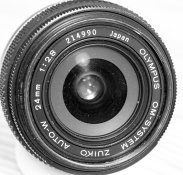
Cleaning lens fungus.

man arguing 1972

A
man arguing 1972

  • 4
  • 0
  • 27
Got milk

H
Got milk

  • 2
  • 0
  • 17

Recent Classifieds

Forum statistics

Threads
203,012
Messages
2,848,636
Members
101,599
Latest member
martto
Recent bookmarks
1

baachitraka

Member
Joined
Apr 6, 2011
Messages
3,651
Location
Bremen, Germany.
Format
Multi Format
I got a suggestion to immerse the lens in Hydrogenperoxide for an hour to clean/remove the fungus. I do not know how dangerous it is to do that.

 
You may take a look here:
educate-yourself.org/cancer/benefitsofhydrogenperozide17jul03.shtml
 
I've used hydrogen peroxide, vinegar, ammonia and my old favorite - lighter fluid - to clean fungus and other things off lenses without any damage.

I've even tried putting coated lens elements through my dishwasher without any noticable damage to the coating - but that I really wouldn't generally recommend... :wink:

Not many things hurt a modern coating, if used gently.
The only time I damaged a lens while cleaning it was the internal coating of an old DDR Meyer lens, which had the consistency of gelatine...
 
I am really scared to remove the front element. Can I immerse the entire lens in H2O2? I know it sounds not so clever.
 
I'm looking for an instruction manual to remove the front element of Zuiko 24mm f/2.8? Any help...
 
I'm looking for an instruction manual to remove the front element of Zuiko 24mm f/2.8? Any help...

I don't know that particular lens, but the majority of front lenses are held in place by a retaining ring.
While you *can* use scissors or some other tool to get it open, I really recommend using the proper tool. The exception is if you have a big enough rubber stopper and the retaining ring isn't too tight.

Also, I wouldn't try to take the front element out the first time on a €140 lens. Get hold of some €5 junk lens and practice taking that apart first.
Even with the proper tool, it's easy to damage or deform the retaining ring or even badly scratch the lens if you slip.

Also putting the lens back takes some care, since it should be properly centered.
Using a vibrating mobile phone and tightening by small degrees can sometimes help with centering...

Good luck! :smile:
 
No I will not touch it, rather I find somebody who can clean it. I do not know how much it cost...
 
What defines a "modern" coating? I have 40 year old lenses, do they count as modern?

Thanks.

No clear definitions, but I've seen several 1950's and early 1960's vintage lenses with coatings far softer than is usual (typically of German manufacture, though I have no Japanese lenses from that time).

That doesn't mean that many of that age aren't *hard* or that all "modern" lenses have tough coatings, depends on the manufacturer, ect.
 
Depends on how bad it is most of the time it just comes off easy. But I was cleaning my 50 1.4 AIS , the fungus etched itself on the glass. 2nd from last element.

Lighter fluid? Doesn't work.
Alcohol? Doesn't Work.
Soap? Doesn't Work
Buffing with Tooth Paste? Doesn't work.
Dremel with a buffing pad and buffing compound? Took the coating off, still etched.

Good luck! And lets hope the fungus is not between two glued together element, that's even worst.
 
No clear definitions, but I've seen several 1950's and early 1960's vintage lenses with coatings far softer than is usual (typically of German manufacture, though I have no Japanese lenses from that time).

That doesn't mean that many of that age aren't *hard* or that all "modern" lenses have tough coatings, depends on the manufacturer, ect.

The very early coatings were verydelicate. Some lenses had only the inner surfaces coated, as the coating wouldn't stand cleaning. By WWII they had, for the military at least, learned how to make fairly durable coatings.
 
condition of the lens.
 

Attachments

  • Zuiko24-1.jpg
    Zuiko24-1.jpg
    409.2 KB · Views: 324
"Hello fungus my old friend..."

or

OUCH! :sad:

It's pretty widespread.
Is there more deeper inside (in the photo the inside looks a bit murky)?
It may or may not clean up well: it depends on whether the fungus has etched the lens or the coating. Hard to tell without trying...
 
Its just on the surface, I believe. May be I take it to India and put it under scorching Sun for entire summer.
 
You have to send that lens to an exprt; if not buy an EXC at Keh; honest and cheap
 
I found someone from England is doing the lens cleaning(fungus) for 45 pounds.
 
My concern here is how may other lenses are going to get infected while you are failing to get this lens cleaned. Fungi spread and if the conditions are right in one lens, they probably are in the others as well. Unless it is worth a great deal of money (i.e. more than all your other lenses put together) I would bin it and buy a new one.
 
This lens is in isolation and I always put my cameras in separate plastic boxes with lots of silica gel in it. Recently, I am taking care of my enlarger lens in the same way.
 
I found someone from England is doing the lens cleaning(fungus) for 45 pounds.

Even if the lens is cleaned of fungus, can you be sure that the coatings are restored to "spec"?
 
Even if the lens is cleaned of fungus, can you be sure that the coatings are restored to "spec"?

I don't know. I can ask that gentleman about this.
 
I've bought a couple of Zeiss lenses from the late 1970s with light fungus infections on multiple elements and have used Pond's cold cream to excellent effect. I removed the elements, smothered them with the cold cream and left them overnight. In the morning, I wiped the cream away and the glass was clear - I used a conventional lens cleaner (for my spectacles) to get rid of the last remnants of the cold cream and re-assembled the lenses. Fortunately, the fungus infestation was in the form of fine tendrils and so the cold cream worked - I suspect that any severe infestation which would etch the coatings or glass would be far more problematic.
 
Some of the Minolta lenses used soft INTERNAL coatings into the '70's. That was easy to remove, intentionally or not.
 
I got a reply for the gentleman, that cleaning does not affect the coating and cost 35 British pounds.
 
Photrio.com contains affiliate links to products. We may receive a commission for purchases made through these links.
To read our full affiliate disclosure statement please click Here.

PHOTRIO PARTNERS EQUALLY FUNDING OUR COMMUNITY:



Ilford ADOX Freestyle Photographic Stearman Press Weldon Color Lab Blue Moon Camera & Machine
Top Bottom