

• Welcome to Photrio!
    Registration is fast and free. Join today to unlock search, see fewer ads, and access all forum features.
    Click here to sign up

Cinestill Double-X film: how important to use D-96?

Grill

H
Grill

  • 4
  • 0
  • 54
Cemetery Chapel

H
Cemetery Chapel

  • 3
  • 0
  • 76

Recent Classifieds

Forum statistics

Threads
202,782
Messages
2,845,495
Members
101,521
Latest member
johnneff
Recent bookmarks
0

Colin Corneau

Member
Allowing Ads
Joined
Nov 20, 2007
Messages
2,365
Location
Winnipeg MB Canada
Format
35mm RF
So I couldn't resist temptation (who can, when it comes to film) when I came across Double-X film in a camera store recently. I even found a *perfect* cinematic model and setting to shoot 2 rolls on.

But I could only get the D-96 One-Shot developer. I know this film can take regular developers, but wondered if more experienced hands than I can comment on how important it is to use the 'recommended' developer as opposed to good old Rodinal or DD-X etc., to get the most from this film and its particular characteristics.

Any advice welcome!
 
I use HC-110 and my results are fine. From what I gather D-96 will give somewhat finer grain.

AF210630.jpg

Leica IIIc, 50mm f/1.5 Sonnar with Y2 filter, Double-X (HC-110, 1+49 (dilution E), 8min, 20C)
 
I used ID 11 and my negs are looking good, but having used a homebrewed D 96 clone with Neopan SS and assorted other films before, I'm looking forward to seeing what it does with the XX.
 
Don't know if it's "better", but D96 is the recommended developer for all motion picture film stock. I use it for Ferrania P30 and have been very pleased with the results. Plus, it's very easy to mix from scratch.
 
From what I've read, D96 is only recommended for movie stocks when used in movies (where low contrast negatives are the norm). I've shot two rolls of double X, just to see what all the fuss was about.

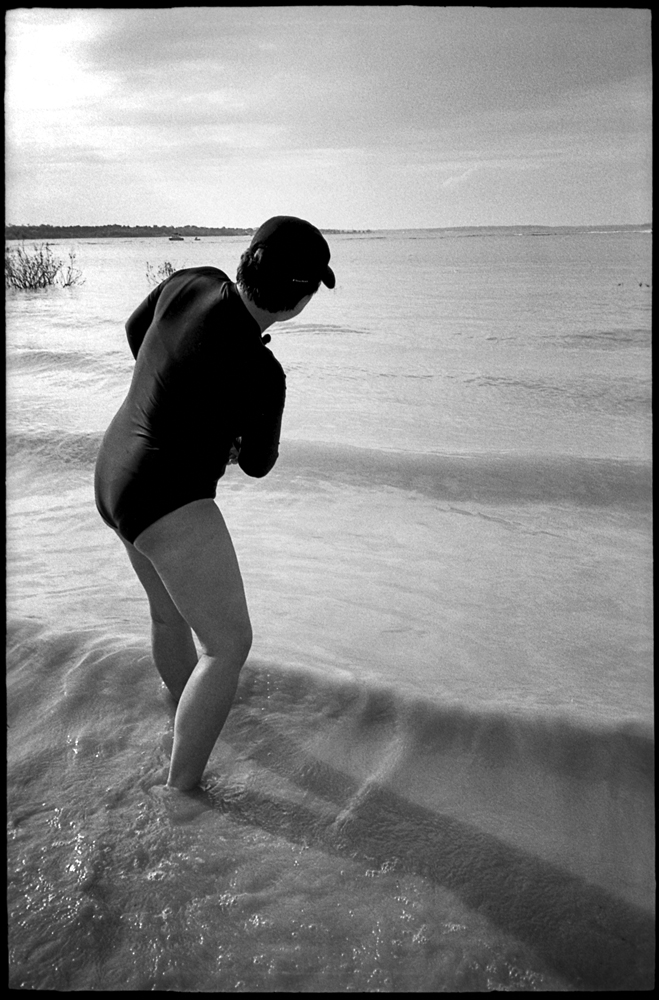
The first roll I developed in PMK 1:2:50 (as recommended in the massive development chart). The result was bullet-proof (i.e. very dense and contrasty) negatives. The images were recoverable, with some effort, but if using PMK again I'd use the regular 1:2:100 dillution and 1.5x the time I used for 1:2:50 (and adjust until negatives look good). Here's a sample from that first roll:
2bHMKr1.jpg


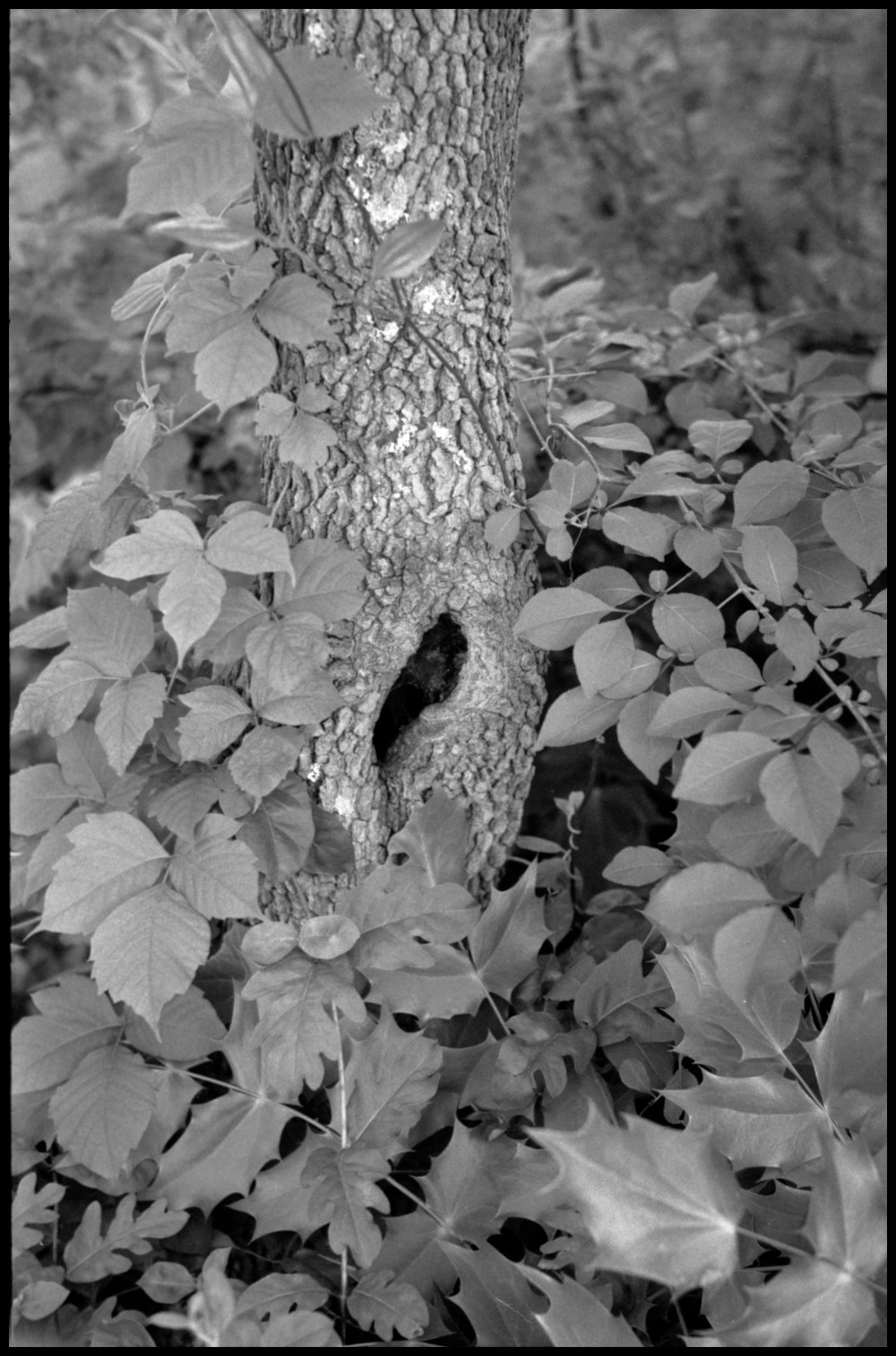
My second roll was developed in 510-Pyro 1:200 (semi-stand), and the negatives look a lot better. A bit grainier, perhaps, but much easier to work with. Here's an image from that 2nd roll:
full

Both rolls were shot in a Canon SureShot A-1, which set the ISO from the DX code (so both were shot at 250).

I think it's ok film, and with some work to dial it in I could probably get very good results from it. But since I already have Fomapan 400 dialed in as an ISO 200 film, Double X makes little sense for me.
 
I used Kodak D-76, and home-mixed D-96 on 35mm. My overall impression was that the tonality, grain, and sharpness was a bit better with D-96. On 120, I went straight to D-96.

As I keep a couple of chemicals around, it's easy for me to mix a batch of D-96. But if you're not equipped to mix from scratch, you might as well use any standard developer, and you will have good results. It's not a D-96-or-nothing situation (as is the case with some specialized films like CMS 20).

Use what you have, and if you're willing to try other developers, go ahead, you won't break anything!
 
Double-X in D-76 1:1, shot in a Nikon 1 touch.

k6m0opa.jpg


I like the grain.
 
I believe the D96 will give better grain. I saw a side by side comparison where you can see D-76 side by side, and the “obvious winner” is the D96. Both looked good but D-96 looked better. And cinematographers would be shooting for best.

I used D76 1:1 because I had trouble finding D-96.

The time to develop (to 0.62) varies between developers. And I think rapid development is an important driver for the choice of D-96. But not for me.
 
Well, I jumped into the pool with both feet and used the D-96 One-Shot.

I. LOVE IT.

Part of it was the scene, the light, the model and the camera/lens, sure...but these 2 rolls show a really lovely grain and a soft -- but not blurry or grey or muddy -- contrast that is *really* pleasing to my eye, at least on the light table.
From what I can tell at a first glance, the highlights are tamed but still shine (and maybe even glow) and there seems to be a really nice attention to the lower midtones and shadows.

Maybe I'm reading too much hopes into this, but the negatives look very nice. Can't wait to share.
 
You should (I would like it if you did) try another with D-76 1:1

The only difference I would expect is the “character” of the grain. Expect D-76 to be crunchier, grittier, dirtier. But not by much.
 
The one roll of Double-X that I've shot so far was processed in Df96 monobath, and I was very, very pleased with the results. Honestly, I don't think there's a developer that works well with cubic grain films that won't produce good results from Double-X.

full
 
I've been shooting a lot of Double-X this year. I bought 100' of it, and now that that's getting low, two more 100' spools now off chilling.

When I got it, I also got some D96 from FPP, and also had D76 and XTOL hanging around. So I used D96, as well as D76 via recipes in the Massive Development chart, but I also started experimenting with using XTOL, and using it pulled to 100 ISO as well as pushing to 1600. Double-X at 1600 developed in XTOL is very nice. My avatar here is taken that way. All my recipes are now on Massive Development, and if you go to Flickr, with the same user name, you can see my test rolls, too, to get an idea of what you might like.

Bottom line -- Yes, you can use D96. You can use D76, Rodinol, or XTOL, too. Others as well.
 
Easton Stilt Girl 21mm Rokkor QH XX 2 by Nokton48, on Flickr

Second Exposure. I yelled out " ONE TWO THREE" and got it just right this time Difficult to catch at the "decisive moment". SRT with mirror lockup engaged, 21mm Rokkor QH Eastman XX 5222 Minolta Yellow filter D23 1:1 This lens has replaced my 19mm Canon RF lens. I think I like it just as well.
 
So I couldn't resist temptation (who can, when it comes to film) when I came across Double-X film in a camera store recently. I even found a *perfect* cinematic model and setting to shoot 2 rolls on.

But I could only get the D-96 One-Shot developer. I know this film can take regular developers, but wondered if more experienced hands than I can comment on how important it is to use the 'recommended' developer as opposed to good old Rodinal or DD-X etc., to get the most from this film and its particular characteristics.

Any advice welcome!
D76 will give less grain and more tonality than Rodinal but, Rodinal will work fine as it does with most films. D76 is a perfect allround developer and a great compromise in sharpness, grain and tonality, compared to other spezialized developers, Rodinal is hard to beat when it comes to sharpness.
 
I'm just starting to work with Rodinal, myself. I'm looking forward to it.

I want to repeat, though, how good XTOL is with Double-X. Particularly when pushed, it's much less grainy than either D96 or D76, and looks rather nice. XTOL also works well on pulling Double-X to ISO100. I'm in California, where there's lots of bright sun and my old cameras only go up to 1/1000 shutter, so it's hard to get wide aperture much of the time, so I played with pulling it back, too. The more I work with Double-X, the more I think it is a truly fine all-around film.

I'll report back on my Rodinal experiments, and I'm also seriously experimenting with Acufine, as well.
 
Also, I've been shooting it at EI 200 and maybe I should rethink it. This film is definitely faster than ISO 200 and I suspect will work really well @EI400
It is, of course, lower in contrast than the still films.
So any speed measurements will be affected by adjusting development to increase that contrast.
 
The one roll of Double-X that I've shot so far was processed in Df96 monobath, and I was very, very pleased with the results. Honestly, I don't think there's a developer that works well with cubic grain films that won't produce good results from Double-X.

full

Donald: that looks like poison ivy in that mix :smile:
 
Donald: that looks like poison ivy in that mix :smile:

Probably is. We've certainly got it around here. Fortunately, I seem to be part of the 2-3% of humans who don't have a serious reaction to it (or I'm far luckier than my lottery results suggest).
 
I've been shooting a lot of Double-X this year. I bought 100' of it, and now that that's getting low, two more 100' spools now off chilling.

When I got it, I also got some D96 from FPP, and also had D76 and XTOL hanging around. So I used D96, as well as D76 via recipes in the Massive Development chart, but I also started experimenting with using XTOL, and using it pulled to 100 ISO as well as pushing to 1600. Double-X at 1600 developed in XTOL is very nice. My avatar here is taken that way. All my recipes are now on Massive Development, and if you go to Flickr, with the same user name, you can see my test rolls, too, to get an idea of what you might like.

Bottom line -- Yes, you can use D96. You can use D76, Rodinol, or XTOL, too. Others as well.
Do you notice any difference in the “beauty” of the grain?
 
Photrio.com contains affiliate links to products. We may receive a commission for purchases made through these links.
To read our full affiliate disclosure statement please click Here.

PHOTRIO PARTNERS EQUALLY FUNDING OUR COMMUNITY:


Ilford ADOX Freestyle Photographic Stearman Press Weldon Color Lab Blue Moon Camera & Machine
Top Bottom