

• Welcome to Photrio!
    Registration is fast and free. Join today to unlock search, see fewer ads, and access all forum features.
    Click here to sign up

Cheap night vision device for darkroom use

Afternoon Calm

D
Afternoon Calm

  • 3
  • 0
  • 56
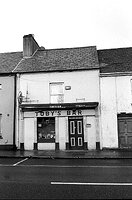
Toby's Bar

H
Toby's Bar

  • Tel
  • Apr 25, 2026
  • 1
  • 0
  • 70

Recent Classifieds

Forum statistics

Threads
203,502
Messages
2,855,659
Members
101,871
Latest member
bluefox
Recent bookmarks
0
Eric Rose said:
$80!! I'll believe it when I see it.

It seems to be a little CCD camera hooked into a viewfinder like those found on camcorders.
It has a few IR LEDS mounted round the lens.
$80 would be reasonable for a device like that - you could probably build something similar for a similar amount of cash...
You could filter the viewfinder with a couple of layers of red gel for paper or dark green for film (to provide a bit of protection from light leaking round the eyecup, or if you dropped it :wink: ) - it should be pretty safe for anything other than IR film.
 
I'm not sure what this thread is about, so I'll ask a question: Is it possible to view the progress of a developing (non IR) negative in total darkness with a night vision scope using the IR illuminator?

I sometimes use a very dilute film developer for "compensating development", w/infrequent agitation, and I'm still guessing about the total development time. I haven't nailed it down yet - results vary.

Thanks,
Paul
 
panastasia: there are threads about doing development by inspection with IR in the archives. I recommend a search.
 
David; Yes. You don't really need a fancy low lux camera though... A cheap b&w board mounted camera would be perfectly adequate.
They don't usually fit IR block filters to b&w CCTV cameras as standard, so you don't generally have to modify the camera to see IR.

Paul; Yes. You'd want to watch out for light leaks round the eyepiece though, lest you inadvertently solarize your film :wink:
 
panastasia: there are threads about doing development by inspection with IR in the archives. I recommend a search.

Thanks David, I'll do that.

Paul
 
I shot the emulsion making sequences of the DVD using the IR capability of the camcorder. Yes, you can use such devices for developing by inspection. In fact, we used an IR lamp on a helmet and IR goggles at Kodak to work on some items in total darkness. At the time, these devices cost several thousand dollars.

I think that this little gadget may be great for all of us.

PE
 
Looks interesting but there are a couple of things that need to be checked out before one would call this a home run. First is the minimum focus distance. The infrared monocle that I use in my darkroom focuses at a minimum distance of about 1.5 inches. Much of your work in the darkoom will be at about your arm distance so I would think that a minimum focus distance of 12 inches or less would be mandatory. Second suggestion is to secure the actual wavelength from the emitted IR light produced by this device. That will tell you if you need to be concerned about fogging film.

All IR devices are produced for another application from gamers to weekend warriors. I must say that I use mine all the time from loading holders to processing sheet film.

Cheers!
 
Michael;

Another thought I should have mentioned. The green phosphor light can leak around the eye and is bright enough to fog film. Military grade units mask this green light, but the cheaper units do not and will fog film. The phosphor light is right on the peak green sensitivity of many films.

PE
 
I shot the emulsion making sequences of the DVD using the IR capability of the camcorder. Yes, you can use such devices for developing by inspection. In fact, we used an IR lamp on a helmet and IR goggles at Kodak to work on some items in total darkness. At the time, these devices cost several thousand dollars.

I think that this little gadget may be great for all of us.

PE

I have a Russian made night vision scope that gives a very sharp central portion of the image. Now that I think of it, this was one of my reasons for buying it (not very expensive). I was only guessing that it might be usefully in the darkroom - thanks for letting me know that my idea was correct.

I forgot I still had the thing and never really put it to the test. It seems as though I had some doubts about it being used for that because I never heard any discussion, until now.
 
I noticed Amazon.com has the EyeClops Night Vision Goggles for $59.99.

I'm tempted to get one to make loading B&W film into reels easier. I have nerve damage in one of my hands and something it would help to see what I'm doing.
 
I've just come across this thread and have been looking getting one of these "Eyeclops" goggles. Has anyone actually tried this and how is it working?
 
Wallmart $50!

believe it.
 
I use an ATN-Viper in the darkroom to develop sheet film, so much fun I hardly want to develop roll film anymore because I don't get to watch it.

I did a sensitometrically-based fog test with TMY-2 and found the stock light would fog the film in 15 minutes so I "attenuated" it with a couple pieces of gray TMY-2 (cutout from the dirt background of a bad rodeo picture). E-6 is transparent to infrared, so black color slides can't be used for the purpose.

I don't find any trouble with the green light leaking around my eyepiece, it's well-designed.

But, I suppose I should do a real safelight test like I've been preaching with motorcycle engines and covering half the sheet of film. At least with a negative / positive process, fog on the film isn't as destructive to the final image as it is for prints.

I imagine the Eyeclops would work "fine" but the issue I would have with it is all the batteries.
 
Bill, is the "stock light' the IR light from the scope? I'm also not sure what you mean by 'attenuated" with the grey TMY-2.
It seems to be that the Ececlops might not focus too well close-up. Where the Viper focuses as close as 1 ft.
Seem like a good choice?

david
 
With attenuation Bill refers to mounting a neutral grey filter in front of that "stock light" (seemingly that IR-light).
As he is on the cheap side he substituted the grey filter by pieces cut off from developed b&w film with some density.

That Eyclops seems to be two-focus only.
 
Last edited by a moderator:
I use a Viper and am quite happy with it. The lens cap has a pinhole which I use most of the time for the added depth of field. I can get it to focus at about 18" - beside using it to load sheet film holders, I use it to check development. I use dip tanks so I can pull a sheet out and see if I need to adjust the developing time. I have yet to notice any fogging issues - I am using it without any filter on the IR light.
 
When I think about how much night vision goggles cost a few years ago, now they sell them as kids toys.
 
I expect it wouldn't be much help in a darkroom situation because of glow coming from the eyepiece.
There are IR goggles that are really kid's toys but will work surprisingly well as long as the mask fits tightly
and you're not fogging your film with escaping visible light..
They can also be augmented with IR LED's (?) hanging above your sink/wet side or elsewhere as needed..
The goggles are actually monoculars so depth perception can be a little funny. Covering the end with some
foil with a pinhole helps.
 
One thought I had was to remove the IR filter in a smartphone and use it with a virtual reality headset.

fwir, many phones get bricked in the attempt to remove the IR filter. There might be a cottage industry for someone who can supply phones minus the IR filter at a reasonable price. Not just for the darkroom, some auteurs want to make IR movies on the cheap.
 
Photrio.com contains affiliate links to products. We may receive a commission for purchases made through these links.
To read our full affiliate disclosure statement please click Here.

PHOTRIO PARTNERS EQUALLY FUNDING OUR COMMUNITY:


Ilford ADOX Freestyle Photographic Stearman Press Weldon Color Lab Blue Moon Camera & Machine
Top Bottom
