• Welcome to Photrio!
    Registration is fast and free. Join today to unlock search, see fewer ads, and access all forum features.
    Click here to sign up

changing ISO setting

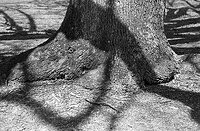
Tree with Big Shadows

Tree with Big Shadows

  • 2
  • 0
  • 52
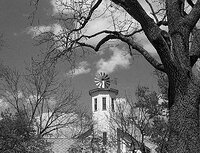
Everal Barn

A
Everal Barn

  • 1
  • 0
  • 52

Forum statistics

Threads
203,455
Messages
2,854,976
Members
101,851
Latest member
Si_Voltage
Recent bookmarks
0

glicerolis

Member
Allowing Ads
Joined
Aug 11, 2015
Messages
10
Format
35mm
Hello!

Firstly I am sorry for my bad knowledge of film photography as I have been shooting film only for a week:smile:

I am using olympus trip 35

question: I took out kodak gold 200 out of my trip when I finished it and put in kodak ektar 100. Only after a few exposures I remembered that I have to change the ISO setting from 200 to 100. Now I changed it to 100 and I have almost the whole film left to shoot. Is that a problem that I didn't set it to 100 before the first exposure? Is it going to affect my film in any way?

Thanks!
 
The first few pics you took will be 1-stop underexposed. The rest will be fine. That difference may or may not affect your first few pictures; it depends on the dynamic range of the scene and a few other factors -- process normally and hope for the best. Ektar 100 tends to be a bit picky on exposure but it might be OK.
 
p.s. Welcome to the forum; welcome to film; and welcome to making minor mistakes... we all do it from time to time!
 
You should not notice any difference on prints or scans.

Unless they were contra jour shots...
 
Thank you very much! I am very excited about film and it's great to see that people are still doing it until the present day :smile:
 
P.S. Should I mention at the photo lab that those first few exposures were mistakenly overexposed? I am just worried that the photolab worker will look at the first exposure and misunderstand that something is wrong with the roll and will try to brighten all the other exposures(which I would not be happy about haha)

Thanks!
 
most labs scan to print digitally via laser or led to light sensitive paper these days. Their software will auto correct them as best it can so there is little point mentioning it. A few labs will have an operator checking each neg before it prints and adjusting manually. Depends how much you are paying them.
 
Oh, I believe I pay them about a euro or something like that for developing. So I guess they won't pay attention, what is good at this point. I looked up at their website - they're using Noritsu QSF-V30 if that tells you something (I am almost sure that it doesn't :D ) Thanks for letting me know anyway.
 
noritsu is a very common make of lab scan and print kit. The software will auto correct them for you. I doubt you'll even notice they were underexpsoed. I could be wrong but I don't think so.

Well it'll be obvious on the negs but not in the prints if they are printing them for you.
 
Last edited by a moderator:
Yeah, they will be also printing them for me. I guess I'll just give them the roll and won't tell anything.
 
Welcome to APUG

The first few shot will be off by one f/stop but for color prints and black & white prints that will be well within the tolerance range for good prints. Do not worry about it. Enjoy!!
 
P.S. Should I mention at the photo lab that those first few exposures were mistakenly overexposed? I am just worried that the photolab worker will look at the first exposure and misunderstand that something is wrong with the roll and will try to brighten all the other exposures(which I would not be happy about haha)

Thanks!

Welcome to APUG. Boy you look a lot like a young Bob Dylan :wink:. Hope you enjoy it here.

Just for clarity:

1) the ISO (in its day, ASA) setting on your camera does not directly affect the film. Instead, it affects how the meter reads the light. When you or your camera responds to that reading, you or your camera control how much light hits the film, and for how long. A higher ISO setting means more sensitive to light, so the exposure settings chosen by you or the camera will respond with less light actually hitting the film;
2) if you set the ISO setting higher than the film is designed for, your response will end up in less exposure - under-exposure; however
3) the difference between 200 and 100 is just one stop, so for colour negative film, even one as relatively "picky" as Ektar 100, the final results should still be quite good.

And just for fun - the shot below was taken with a Trip 35. I titled it "Estuary Windfall - $2.10". The explanation for the last part of the title is that is what I paid for the camera at a thrift store.
 

Attachments

  • Estuary Windfall.jpg
    Estuary Windfall.jpg
    460.8 KB · Views: 116
Thanks a lot, Matt! Indeed, trip 35 is unexpectedly great!

Now as I think about my roll once more, wouldn't it be better to cut out just that part of a roll (with wrong ISO set) with scissors? Those first exposures are not worth to be developed actually. Is it ok to do that?
 
why bother and how do you know where to cut. You can't unroll it in any light or dark for that matter and see anything or where to cut.
 
Don't bother with any of this. Just give them the film and bring home the pictures. The underexposed frames will be fine. You've already spent more time thinking about it than it is worth.
 
You're absolutely right:smile: Sometimes I get too over-alarmed about things and that is my problem. Anyway, thanks for help, all of you.
 
Don't bother with any of this. Just give them the film and bring home the pictures. The underexposed frames will be fine. You've already spent more time thinking about it than it is worth.

amen
 
Photrio.com contains affiliate links to products. We may receive a commission for purchases made through these links.
To read our full affiliate disclosure statement please click Here.

PHOTRIO PARTNERS EQUALLY FUNDING OUR COMMUNITY:


Ilford ADOX Freestyle Photographic Stearman Press Weldon Color Lab Blue Moon Camera & Machine
Top Bottom