
• Welcome to Photrio!
    Registration is fast and free. Join today to unlock search, see fewer ads, and access all forum features.
    Click here to sign up

Can we super glue Patterson Tanks despite submerging them in C-41 chemistry?

Recent Classifieds

Forum statistics

Threads
202,672
Messages
2,843,876
Members
101,453
Latest member
lubowe
Recent bookmarks
0

Certain Exposures

Member
Allowing Ads
Joined
Aug 31, 2023
Messages
321
Location
USA
Format
Analog
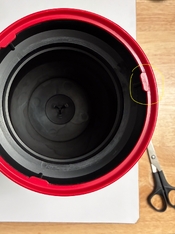
After years of diligent service, my Patterson tank showed its first sign of fatigue. One of the red prongs that holds down the light-tight funnel broke. I repaired it with a shoddy super glue job and a hair dryer.

The instructions read, "...not recommended for submersion in water." Well, darn.

I doubt I am the first person to try my luck with this. Nor will I be the last. Have you had luck with super-gluing your tank this way? I do wonder if there could be an unfortunate chemical reaction between the dried glue and hot C-41 chemistry. I have never tested super glue's mettle on an item that routinely bathes in 104-degree Fahrenheit liquids.

I am weighing the risk of the piece breaking, falling into the tank, and scratching every frame during my next development cycle. Nightmare.

Thanks in advance for any insight you may have.

I forgot to take the "before" pictures. Here are the "after" ones:
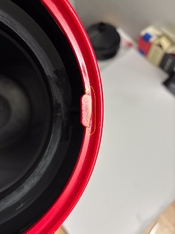
Broken Tank-2.jpgBroken Tank.jpg
 
Last edited:
I would replace the tank, but I think you can get away with the just 2 remaining as long as you are careful when turning the top on and off. In terms of glue, there are marine adhesives, tend to be expensive.
 
I think the Paterson tanks are made of polystyrene (HIPS), in which case I’d use a suitable solvent cement. There are many options.

Cyanoacrylate superglues are not great for this kind of stuff.
 
Yeah, the right glue will cost more than a tank, use the broken one for wash. Appeal to Paterson for a replacement.
 
The first step when gluing any kind of plastic should be identify what kind of plastic it is, if at all possible. A glue that works well with one type of plastic may not work at all with another type of plastic.

*If* the cyanoacrylate superglue is the right glue for your plastic tank, then I would worry less about the water warning. There are several adhesives that warn against continuous submersion, but which hold up OK if occasionally submerged for a short time.
 
Assuming those drums are either thin ABS or styrene, you want a solvent-style plastic plumbing pipe cement. Make sure the sections are held together tightly while the cement cures. Don't use Super Glue or a urethane glue like Gorilla glue.
 
Thanks, everyone. I purchased a new tank out of paranoia because I have to develop some important frames.

I will follow up again after I look into the details about the material the tank is made of and the glue I used. I plan to keep the broken tank for now.
 
My five reel tank center column separated. The shaft was glued together, I superglued it back and so far there have been any issues.
 
Jobo Expert drums are solvent welded. Of course they are using high quality (likely) German made glue, highly skilled employees, etc. I think Paterson tanks are a similar ABS blend.
OP you made the right decision.
 
Should the tanks turn out to be made from polystrene, have a look in a model making shop.
Polystyrene cement is available there in small bottles, and is used to assemble model plastic aeroplane kits.
 
The tank might work with only two prongs. Also of course these tanks are fairly common, so buying another one is wise.

I am not a big fan of "super" glue - it's convenient, but often not optimal. I like Gorilla glue even less. Depending on the application, solvent glues, epoxy, or contact cement often seem like better choices.
 
"Gorilla" now offers several types of glue. But the original version was a moisture-curing polyurethane glue for wood, although I have successfully used it for phenolic composites with a degree of micro-porosity. These need not only a bit of porosity, but humidity or a little water on the surface, plus tight clamping. Since ABS drum material can't be porous, this kind of glue doesn't work for that.

Don't bother with super glues or epoxies either. If you roughen the surface, a plumbers or marine epoxy will certainly hold; but you'd need to use it so thick that it might spoil the functionality of your drum.

ABS needs to be solvent welded. Ordinary multi-purpose plumber's plastic pipe cement works fine, but everything needs to be held tightly together while it fully dries overnight.
 
I don't think that tanks are styrene, it is less rigid than the tanks are. It's more likely ABS.
 
You may be right, but I found this page that says HIPS:


SmartSelect_20251201_113156_Firefox.jpg
 
I suspect the material of the tanks may have changed a couple of times over the years. Or, put differently - I can't imagine a 1970s Paterson tank being made of the exact same polymer as one manufactured today. Too much has changed in the realm of engineering plastics.
 
More likely, too much changed in terms of cheapifying the product : down-engineering for sake of low-bidder cost saving. Styrene breaks a lot more easily. But it might also have been chosen for stiffness in combination with thin walls.
 
To add complexity, the part that broke on the OP's tank belongs to the red ring piece, and that isn't necessarily made of the same plastic as the body of the tank. It might be, but we don't know. The Paterson copy probably refers to the tank body.

For injection molded parts like this, I think making the initial tooling is by far the most costly part of manufacture. After that, I don't know if they can just reformulate it by buying different plastic pellets and changing the cook time - maybe? My guess is that in these small market items, they don't change a lot over the lifetime of the product.

I have a HP Combi Plan 4x5 tank with a crack (taped up), and one internet source suggests it is also polystyrene, but I don't know for sure.

I think Bob Salomon said that HP discontinued the Combi Plan tank when the tooling wore out.
 
More likely a new model would just be contracted out to a new source. This is now done so routinely, easily, and cheaply in China that the factor of new "tooling" is insignificant. That kind of expense applied to things like casting dies for metal alloys at one time, but is irrelevant in a case like this.

Going back to Combi-Plan days, there were three generations of them, if I recall Bob Salomon's posts correctly. I don't even know where my outer tanks are - probably up on the storage loft. I use just the innards as a retainer for my already developed 4x5 film when in the final washing tank.
 
Hello everyone. Here is a quick update:

After years of diligent service, my Patterson tank showed its first sign of fatigue. One of the red prongs that holds down the light-tight funnel broke. I repaired it with a shoddy super glue job and a hair dryer.

The instructions read, "...not recommended for submersion in water." Well, darn.
I will follow up again after I look into the details about the material the tank is made of and the glue I used. I plan to keep the broken tank for now.

I figured it would be easiest to just test this and follow up when/if it eventually fails. I'll save this repaired tank's use for unimportant test rolls.

I just used it in C-41 chemistry for the first time since gluing it. It held up fine.

Note: I'll come back and list the exact type of super glue I used at some point.

Successful Use Count: 1
 
My loctite liquid super glue has held up for multiple tanks so far. When it falls apart I'll give an update.
 
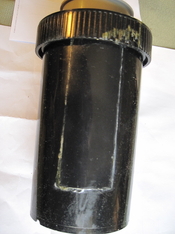
Here is an extreme case of repair using super glue. The seller wrapped the tank in brown paper only, and the Post Office handlers perhaps damaged the tank through rough handling. I received it in six pieces, the tank was split down one side. The patch on the side was cut out from a food tray.

Knowing that super glue is very toxic, I let the open tank sit for a week to let the toxic fumes dissipate. These fumes will ruin a film in seconds if the film comes within range of them. I've learned already with a camera repair to the rear of the bellows, and was a little too quick to expose a film after the repair. Fumes from the glue affected the emulsion leaving light grey swirling marks on the B&W film.

I've used the tank for sheet film since repairing it, it doesn't leak, it got me out of trouble while I searched around for a room-light 4x5 tank which I finally found and acquired plus 4"x5" and 31/4"x41/4" stainless holders.
 

Attachments

  • IMG_0105 copy.JPG
    IMG_0105 copy.JPG
    90.3 KB · Views: 50
We had tanks at the school I taught photo at that were missing a tab or two. As long as the tanks aren't inverted (my kids never did that. Figure 8 agitation!), there were no issues.
I have a 5 reel tank that developed... 😁... a hairline crack. I repaired with some epoxy from the local hardware store. A piece of duct tape sufficed until I got the glue.
 
I used generic super glue to repair a hairline crack in the side wall of a Super System IV Paterson Tank.
I applied the glue to the inside, sealed the outside of the crack with packing tape, and then did my best to pressurize the tank to help drive the glue into the crack.
The tape stayed in place for a long time.
The tank has been leak free during the years since.
Here is an extreme case of repair using super glue. The seller wrapped the tank in brown paper only, and the Post Office handlers perhaps damaged the tank through rough handling. I received it in six pieces, the tank was split down one side. The patch on the side was cut out from a food tray.

Knowing that super glue is very toxic, I let the open tank sit for a week to let the toxic fumes dissipate. These fumes will ruin a film in seconds if the film comes within range of them. I've learned already with a camera repair to the rear of the bellows, and was a little too quick to expose a film after the repair. Fumes from the glue affected the emulsion leaving light grey swirling marks on the B&W film.

I've used the tank for sheet film since repairing it, it doesn't leak, it got me out of trouble while I searched around for a room-light 4x5 tank which I finally found and acquired plus 4"x5" and 31/4"x41/4" stainless holders.

As that tank is the older model - around 40 years old or more - it doesn't owe you anything :smile:.
 
@film4Me That's a hefty repair!

@Andrew O'Neill So far my experience is the same, thankfully.

@MattKing Yes, I may be updating this post for a long time because:

Successful Use Count: 2

I developed some C-41 chemistry with glued tank. No concerns.

Note: I'll come back and list the exact type of super glue I used at some point.

I used a brand called 'The Original Super Glue' that comes in a yellow container with red text. The box only listed the ingredient ethyl cyanoacrylate.
 
Last edited:
Photrio.com contains affiliate links to products. We may receive a commission for purchases made through these links.
To read our full affiliate disclosure statement please click Here.

PHOTRIO PARTNERS EQUALLY FUNDING OUR COMMUNITY:


Ilford ADOX Freestyle Photographic Stearman Press Weldon Color Lab Blue Moon Camera & Machine
Top Bottom