
• Welcome to Photrio!
    Registration is fast and free. Join today to unlock search, see fewer ads, and access all forum features.
    Click here to sign up

Can these prints be from one negative?

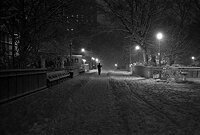
Tompkins Square Park

A
Tompkins Square Park

  • 4
  • 0
  • 65
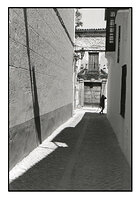
Siesta Time

A
Siesta Time

  • 1
  • 0
  • 49

Recent Classifieds

Forum statistics

Threads
202,859
Messages
2,846,677
Members
101,573
Latest member
IanSeehorn
Recent bookmarks
0

Quinten

Member
Allowing Ads
Joined
Mar 4, 2005
Messages
335
Location
Amsterdam
Format
Multi Format
Maybe it is my english wich isn't my first language but maybe he really means these two prints ( Dead Link Removed ) are from one negative.

It would be quite an example but I am in doubt since there is "so much" tone in those clouds on the second print wich seemed to be burned out on the first, while in the first the forground holds quite a bit of tone as well.

So my question is: Is this really possible?

cheers!
Quinten
 
Yes, i believe he means this print was made from one negative.
If the information is on the negative, then it is possible to print it on the paper; as you can see from the printing map, this was not an easy print to make.
 
Quinten said:
Is this really possible?

Yup...that and more!

Murray
 
Towards the end of his life Ansel Adams reprinted many of his negatives. The prints were much darker changing the entire look and feel of the subjects.
 
Yes - and its lots of fun getting there :smile:

By the way, thanks for the link. I like the format of the print log, and there seems to be other good stuff there too!

Matt
 
ann said:
Yes, i believe he means this print was made from one negative.
If the information is on the negative, then it is possible to print it on the paper; as you can see from the printing map, this was not an easy print to make.

I confess to finding it difficult to work out how this kind of burning and dodging is done without the risk of making as many problems as you solve. I have looked at the notes several times but still have difficulty following the exact sequence.

Would anyone who has been able to follow the sequence exactly be prepared to list the sequence in easy to follow steps. I have assumed that note one is for a 24 seconds overall print time. Notes 2 and 3 mean that during the 24 seconds the two blacked out areas were dodged for minus 6 and 7 second respectively so dodging started at 17 and then 18 seconds.

Presumably if the rest is additional burning then the dodged areas have to stay dodged and I'd have run out of hands! Clearly the printer was able to do it all with only the same number of hands as I have. So I am missing something and its not extra hands!

It would be great to be able to do this but I need help in understanding the exact sequence.

Thanks

Pentaxuser
 
I own a bunch of Rolfe Horn's prints. they are all amazing. His best skill is in the darkroom. I have always wondered how my shots would look if printed by him...
 
learning to dodge and burn a very complex print takes a lot of practice and attention to detail. Making a diagram of the print and mapping it out before hand , or as one test each section helps. then check them off as they are completed.

then you just start working on each section, one at a time. Some prints may need 10 to 15 different times.

You usual start with the base exposure and work from there. You need to work out the dodge times, working backwards substracting from the base time. Burns are easier as it is a matter of adding the time to the base or starting time.

A foot switch helps as it leaves both hands free. It is more complicated to explain than to do.
 
A foot switch, a metronome, a flexible card, cards with various sizes of holes in them, and countless work prints in the darkroom garbage can is all it takes.

Murray
 
Since I've rarely seen his name or books mentioned, I'm going to suggest taking a look at Eddie Ephraums' "Creative Elements". He demonstrates the possibilities of working with a negative and uses diagrams similar to Mr. Horn's example. And it's fun reading!
 
Of even greater interest to me than his darkroom manipulations which seem pretty straightforward albeit involved and complex, are his retouching examples in the 'finishing' section on his site. Those are the excercises that rival, using traditional techniques, the best (and admitedly easier) reasons to use photoshop. I would LOVE to find out more about how they were done. I think it's a vital but quickly disappearing art that, if not maintained, will make digital (i.e. photoshop) adjustments all but inevitable as the only method for such work. That would be tragic, as expert practitioners have immense resources to bring to bear that are becoming obsolete if they aren't already so.
 
jovo said:
Of even greater interest to me than his darkroom manipulations which seem pretty straightforward albeit involved and complex, are his retouching examples in the 'finishing' section on his site. Those are the excercises that rival, using traditional techniques, the best (and admitedly easier) reasons to use photoshop. I would LOVE to find out more about how they were done. I think it's a vital but quickly disappearing art that, if not maintained, will make digital (i.e. photoshop) adjustments all but inevitable as the only method for such work. That would be tragic, as expert practitioners have immense resources to bring to bear that are becoming obsolete if they aren't already so.

Indeed nothing will be possible outside photoshop. It's a great tool for sure but there is something about these traditional working methodes. How many of us know how to apply an unsharp mask the regulair way?
I am keen on learning these traditional techniques and I knew Photoshop quite well even before I ever developed my first negative. A print from the darkroom is still so much greater in my eyes.


cheers!
Quinten
 
I second the recommendation for Eddie Ephraums' books. I only wish that the illustrations were larger (I often find it hard to "see" what he is doing).

There is an Ansel Adams book out there that takes the same approach -- he describes what he did to each negative, and why, in terms of dodging and burning. Maybe someone could help me out with the name ... ?
 
It may be Examples, the making of 40 Photographs.

Try Larry Bartletts book on Black and white printing. this box has lots of how to examples.It is called Black and WHite Photographic Printing Workshop.

Les Mclean also has some great examples in his book on Creative Black and white photography.
 
Jordan said:
I second the recommendation for Eddie Ephraums' books. I only wish that the illustrations were larger (I often find it hard to "see" what he is doing).

There is an Ansel Adams book out there that takes the same approach -- he describes what he did to each negative, and why, in terms of dodging and burning. Maybe someone could help me out with the name ... ?

I believe it it was "the making of 40 photographs"

mike
 
Sometimes I get an urge to find out where Mr Horn lives, go there and give him a good smack on the head. Just out of general darkroom frustration.
 
N O Mennescio said:
Sometimes I get an urge to find out where Mr Horn lives, go there and give him a good smack on the head. Just out of general darkroom frustration.

It is the same feeling you get when you try painting by numbers and expect it to turn out like a Gainsborough but it doesn't although in theory it should!

Pentaxuser
 
All I can say is this can seriously print. Amazing work on every page. If they look this good on my crappy work screen they must be pheeeenomeenal in real life.

Yes, I meant to mispell that word
 
Photrio.com contains affiliate links to products. We may receive a commission for purchases made through these links.
To read our full affiliate disclosure statement please click Here.

PHOTRIO PARTNERS EQUALLY FUNDING OUR COMMUNITY:


Ilford ADOX Freestyle Photographic Stearman Press Weldon Color Lab Blue Moon Camera & Machine
Top Bottom
