

• Welcome to Photrio!
    Registration is fast and free. Join today to unlock search, see fewer ads, and access all forum features.
    Click here to sign up

Can I write on prints with permanent marker?

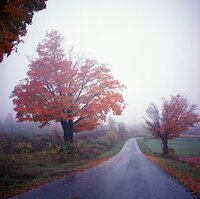
Rainy Day Trees

A
Rainy Day Trees

  • 4
  • 0
  • 59
One Way

A
One Way

  • 1
  • 1
  • 57

Forum statistics

Threads
203,152
Messages
2,850,617
Members
101,700
Latest member
Cpeason301
Recent bookmarks
1

BetterSense

Member
Allowing Ads
Joined
Aug 16, 2008
Messages
3,151
Location
North Caroli
Format
35mm
I'm using Ilford MGIV paper and I can't write on the back with pencil very well. My wife bought these pens that are supposed to be for photos but they take 384 hours to dry, and if I don't wait that long the ink ends up getting everywhere it's not supposed to be. Can I just use a Sharpie?
 
I wouldn't suggest it. I found some felt tip pens that were labeled as "archival," I use those instead. I have no idea exactly where they came from, but I'm sure you could find some at an art store.
 
I have had regular Sharpie marks bleed through a photograph after a decade or so in dark storage. I had the same problem, so I bought the hardest pencil that I could get my mits on, a 6H. I was hoping to obtain an 8H, but a 6H does the trick nicely. Usually harder pencils are considered to be used for technical drafting and so on, while much softer pencils (darker blacks) are much more popular with artists. Any decent art store should have every type of soft pencil and most, if not all, of the hard pencil grades.
 
Last edited by a moderator:
So is a harder pencil what you want? It seems like the back of this paper is too glossy to work with pencil, and I had thought a softer pencil would be better.
 
I looked up the paper and it says it has been treated to accept "pencil, most ball pens, non-water-soluble felt-tipped pens, fast drying stamp pad inks, and all printing inks formulated for polyethylene printing". If I interpret a Sharpie as a 'non-water-soluble felt-tipped pen' then it should be fine. Sharpie extra-fine writes very nicely and dries in seconds.
 
I suggest you try Pigma Micron pens from Sakura. They are permanent, light-fast, pigmented inks with a proven record and they can be had in several line thickness, starting from a very fine .20mm to .50mm. Other type Pigma ink pens are also available.
http://www.sakuraofamerica.com/Pen-Archival
 
I suggest you try Pigma Micron pens from Sakura. They are permanent, light-fast, pigmented inks with a proven record and they can be had in several line thickness, starting from a very fine .20mm to .50mm. Other type Pigma ink pens are also available.
http://www.sakuraofamerica.com/Pen-Archival

Those are exactly the ones that I use. I do recommend them, if only for peace of mind and the fact that they come in precise thicknesses.
 
You don't mention it, but I assume we're talking about resin coated paper here. If that's the case, a Sharpie is fine. It won't bleed through the plastic coating of the paper. I've marked the backs of a few scrap prints with a grid pattern done with a Sharpies. These now serve as alignment guides when setting up a print in the easel. Some of these are more than a few years old. No bleed through. Fiber based papers are a different story. Soft pencils work fine on the back and are safe.
 
I have had regular Sharpie marks bleed through a photograph after a decade or so in dark storage. I had the same problem, so I bought the hardest pencil that I could get my mits on, a 6H. I was hoping to obtain an 8H, but a 6H does the trick nicely. Usually harder pencils are considered to be used for technical drafting and so on, while much softer pencils (darker blacks) are much more popular with artists. Any decent art store should have every type of soft pencil and most, if not all, of the hard pencil grades.

I don't get it. 2H is usually hard enough to leave more of press mark than color. 6H on most surfaces behaves much like a sharpened stick.

If we're talking RC paper back side I find it hard to get anything visible in safelight with any pencil but the softest - 6B or 8B. Mind that there is no real standard - 6B from one manufacturer may actually differ from other. Like film you have to test it :smile:
 
I guess I need a little education here. I thought I heard in recent years that you shouldn't write on the backs of photos. We've all seen old photos that someone tried to scan that had bleed through from someone writing on the back with a ballpoint pen or something. I think I read the preferred method of labeling photos is to use something like "library tape" I think it's called, which is supposed to be removable and not cause permanent damage to the photo.

Are we talking about writing on photos after they are dry, or as soon as they are out of the fixer or wash while they are still wet?
 
I Are we talking about writing on photos after they are dry, or as soon as they are out of the fixer or wash while they are still wet?

Before they are exposed in my case., which include time and f-stop. I use a fine point sharpie. I have not seen any problems. I use RC for my judging of prints, the ones I like are done fiber. I label the fiber the same way until I get to the desired print. I then reprint the run without any markings.

TR
 
There's a very handy pencil called Stabilo which writes on paper, glass, plastic and metal. We used these at the newspaper where I used to work to mark photographs for cropping, etc. On a glossy surface the marks can be erased with a dampened cloth or paper towel.
 
I use the finest-tipped sharpie I can find, and write on the back of rc prints where the border would be. No bleeding after 8/9+ years and you definitely can't see it when mounted with a matt.
 
Photrio.com contains affiliate links to products. We may receive a commission for purchases made through these links.
To read our full affiliate disclosure statement please click Here.

PHOTRIO PARTNERS EQUALLY FUNDING OUR COMMUNITY:


Ilford ADOX Freestyle Photographic Stearman Press Weldon Color Lab Blue Moon Camera & Machine
Top Bottom
