Reciprocity failure test
To give you some real data and numbers to crunch, I once did a more or less "controlled" reciprocity failure test by exposing Fuji Neopan Acros 100, Kodak TMax 400 and TXP 320 (about equals TriX 400, but 4x5" LF).
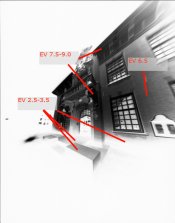
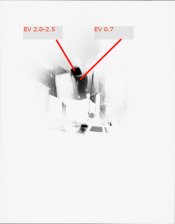
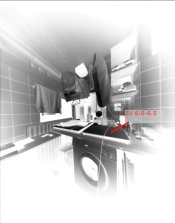
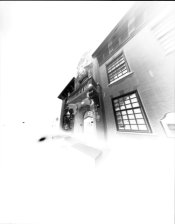
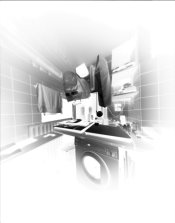
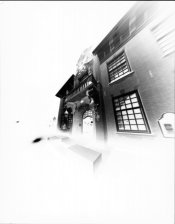
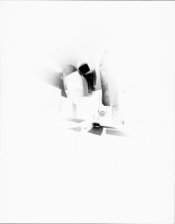
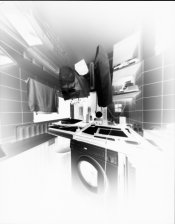
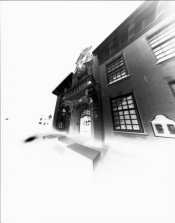
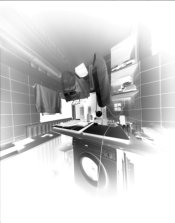
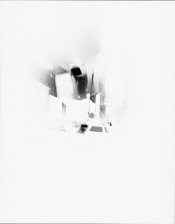
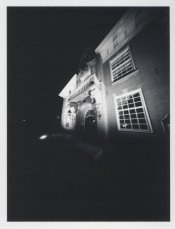
I exposed the sheets for 30 minutes, 2 and 8 hours. The 30 minutes outside from a well illuminated building, the 2 and 8 hours in my bathroom darkroom, with the 2 hour exposure using a 40W halogen lamp shining against the opposite wall of the one I was photographing, and the 8 hours used the Ilford safe light (top of the image) shining downward and a small white bicycle LED light lying on my easel below the enlarger heads shining upwards.
Please note, and this is not entirely ideal, that the images were created using a extreme wide angle Zero Image 4x5" LF pinhole camera with 25 mm "focal length" (depth of camera), which gives maybe something like a 120 degrees view.
This also means there is large light fall-off, in the order of probably some 4-5 stops going from the exact centre of the pinhole to the sides of the negatives.
Zero Image lists the pinhole camera as being F128, but this again is only valid in the exact centre of the image. To get a decent negative, that has some density at the borders of the negative, I usually expose it as an F256 minimum, sometimes even half a stop more. So F256 is probably a better baseline when judging it in relation to the resulting negatives presented here.
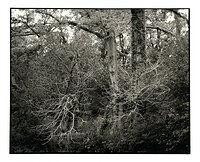
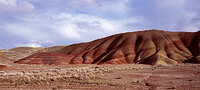
I will post the results for the three different films in three separate posts as scanned negatives, as APUG allows only 5 images per post.
Attached in
this post are approximate EV values measured in each situation, using a ISO 320 setting on my spot meter.
*** Please also note I probably overdeveloped the Fuji Neopan Acros 100 somewhat, and underdeveloped the other two films somewhat, maybe giving a false impression of Acros 100 having higher densities overall, while if you look at dark shadow detail, Kodak TMax 400 in the 2 and 8 hours exposures has more (e.g. lower part of washing machine and details in the radiator to the left of it). Another factor may be a differing amount of contrast increase with reciprocity failure, with Acros 100 having more contrast increase. IDK... ***
My estimate for a possible break-even point between TMax 400 and Acros 100 based on this, and some quick and dirty calculations and assumptions based on Kodak's and Fuji's film datasheets, is something in the 6-8 hour range. Below that, you will have shorter exposure times with TMax 400 to get to a predefined negative density, above that probably with Acros 100. But it is hard to determine exactly without some "Ralph Lambrecht" style rigorous testing. I did just a quick and dirty test here... (Well, "quick" is maybe not the right word considering the overnight exposures

)