• Welcome to Photrio!
    Registration is fast and free. Join today to unlock search, see fewer ads, and access all forum features.
    Click here to sign up

Buying an Analog Light Meter

Recent Classifieds

Forum statistics

Threads
202,878
Messages
2,846,941
Members
101,527
Latest member
Grumps
Recent bookmarks
2

Atari1977

Member
Allowing Ads
Joined
Dec 10, 2012
Messages
46
Format
Medium Format
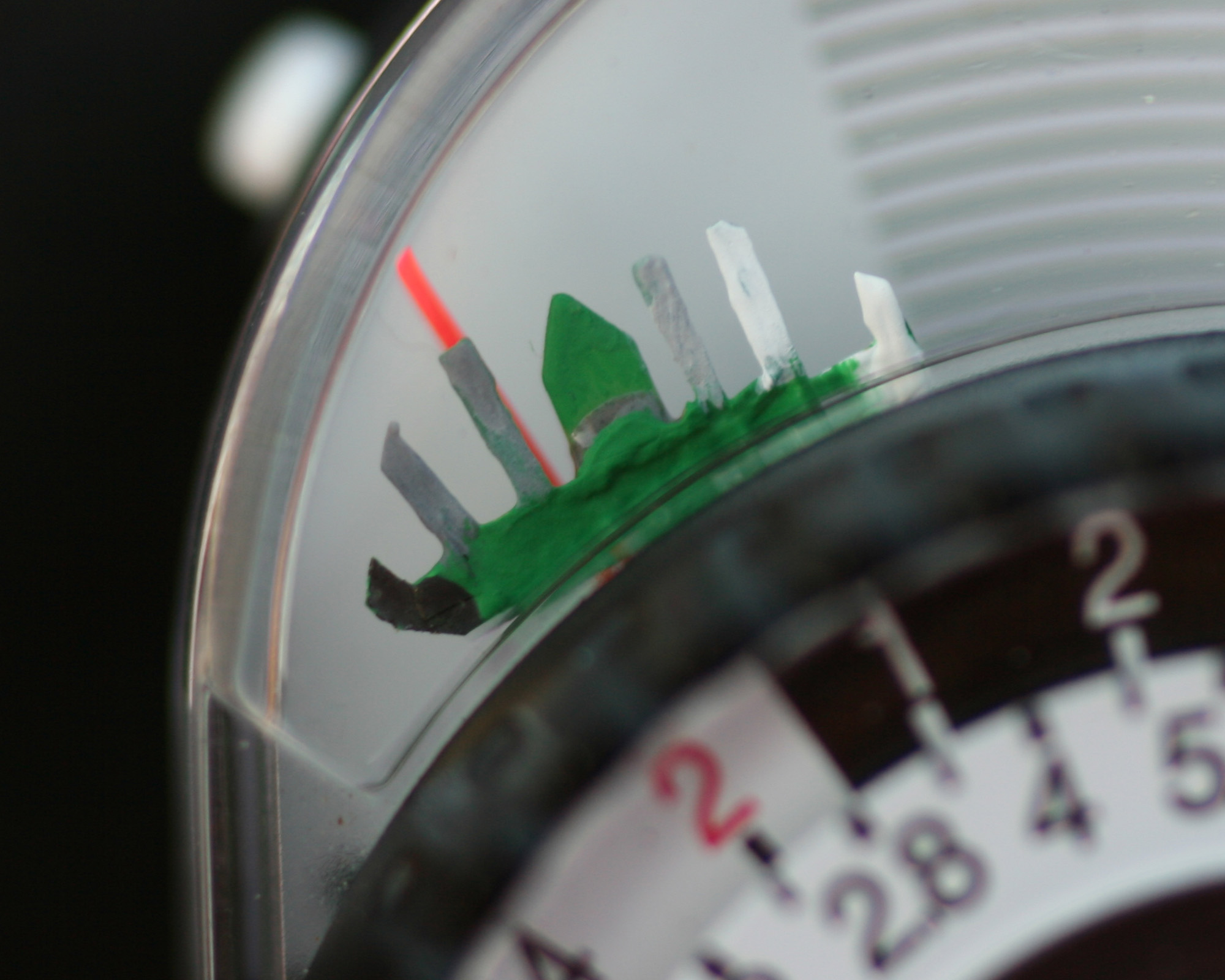
So I'm looking to buy a new light meter. Currently I use an old Soviet Sverdlosk 4 meter, which is actually fairly accurate, but it's got a few faults. One being that the only options for its batteries are motherboard batteries or a AA adapter that doubles its size. think an upgrade might be due. I'm a big fan analog light meters, so I would like to get one in a that style. I'm currently looking at the Sekonic L-208, which has the added feature of being able to be shoe mounted. Is this a good meter, or are there others that I should be looking at. Also, I noticed that the L-208 does not have a viewfinder, so what is a good strategy for metering with it?
 
That Sekonic is pretty good. Unless I'm spot metering (in which I use my Sekonic L-508) I'll use an old classic: a GE PR-1. Cheap and they seem to never stop working.
 
I have the 208 and use it most of the time. (Minolta flashmeter IV is the alternative) I like it. It uses the 2032 battery, which is also a motherboard battery, but it lasts well; mine is about two years old now.

It's super lightweight which is my favorite thing about it. I don't even know it's around my neck or in my pocket. Some of the old meters are heavy. Despite it being light, it's also super rugged. I don't know how but it is.

The shoe thing is impractical.
 
It uses the 2032 battery, which is also a motherboard battery, but it lasts well; mine is about two years old now.

When I said motherboard battery, I meant the kind that's usually soldered onto the board. The Sverdlosk's original mercury batteries haven't been made since the Soviet Union collapsed.
 
I have the 208 and use it most of the time. (Minolta flashmeter IV is the alternative) I like it. It uses the 2032 battery, which is also a motherboard battery, but it lasts well; mine is about two years old now.

It's super lightweight which is my favorite thing about it. I don't even know it's around my neck or in my pocket. Some of the old meters are heavy. Despite it being light, it's also super rugged. I don't know how but it is.

The shoe thing is impractical.

Well the shoe mount appealed to me because I'm getting into the Hasselblad V system and it should fit nicely on the grip I bought. So when you use the 208, how do you determine what you are metering if there is no viewfinder?
 
Watching this with interest, I also use a Sverdlovsk and I don't quite like the way it handles. I have a spot meter for tripod-based landscape photography already so the viewfinder on the sverdlovsk isn't really convenient. What I need is a compact, "palmable" light meter for reflective and incident, small enough to put in your pocket, preferably cheap as well. I've been looking at the L-208 as well as the Gossen Digisix/Digiflash (with a Digiflash I could sell my current Prolinca PFM flash meter, which is a bit limited...).

As for metering without a viewfinder, you simply have to get a feel for the measuring angle of the meter and then point it in the general direction of your subject. Depeding on lighting conditions (as well as the meter itself and the subject) you might want to tilt it down a little to avoid getting too much of the sky "in view", as that would underexpose your scene.
 
That's what it is! I saw one of these in a country antiques store (Dunolly, Victoria), battered, worn, faded and having seen much service, origin unknown and with a name that was unreasable but looked Cyrillic to me (having seen this post, it is a Russian job). I would suggest now diversifying in equipment and skills and upgrading to a spot/incident/reflective meter. The amount you would need to learn, to understand, would be considerable initially, but with experience you will be turning out exposures that are bang-on perfect, with no loss of detail or muggy shadows — but you have to learn how to do this.
 
The 208 is a nice small meter, but I've heard of problems over time regarding the durability. If you're rough w/ equipment it may not be the best, but I have no personal experience on this. What I use are a Sekonic L 188 for nearly everything that requires a hand held meter that's not in real low light. It's tiny, amazingly simple and easy to read, and very light. About 30 bucks or less.

For more critical low light situations I use a bigger, but still manageable (about the size of a pack of smokes) Gossen SBC Super Pilot which has a silicon cell and offers very accurate metering in low light. There seems to be several different versions of the SBC Super Pilot, but here's one that's exactly like mine. It's very rugged, super accurate, easy to read, and has a bridge circuit so it can take 1.35V or 1.5V batteries.

http://www.jollinger.com/photo/meters/meters/sekonic_l188.html

Dead Link Removed
 
Gossen Profisix

-) unique and intuitive way of "placing" luminances

-) high sensitive
 
Last edited by a moderator:
That's what it is! I saw one of these in a country antiques store (Dunolly, Victoria), battered, worn, faded and having seen much service, origin unknown and with a name that was unreasable but looked Cyrillic to me (having seen this post, it is a Russian job). I would suggest now diversifying in equipment and skills and upgrading to a spot/incident/reflective meter. The amount you would need to learn, to understand, would be considerable initially, but with experience you will be turning out exposures that are bang-on perfect, with no loss of detail or muggy shadows — but you have to learn how to do this.

I got mine off of ebay, needed one that was cheap and had measurements for movie cameras and this one came up. It's alright, though my main problem with it now is that it's very difficult to get a reading in the bright light. Not because it's insensitive, but because you can't see the LED that tells you to stop turning the wheel. I do large format photography as well, and for that I use a Pentax V spot meter.
 
Well the shoe mount appealed to me because I'm getting into the Hasselblad V system and it should fit nicely on the grip I bought. So when you use the 208, how do you determine what you are metering if there is no viewfinder?

It's an incident meter. I verfiry ISO is set correctly and aim it in the opposite direction as the camera. Within 30 degrees aim is good enough. I press the button to take a reading. The needle moves to it's position, and I spin the dial so the other needle matches and I get all my aperture/shutter combinations.
 
It's an incident meter. I verfiry ISO is set correctly and aim it in the opposite direction as the camera. Within 30 degrees aim is good enough. I press the button to take a reading. The needle moves to it's position, and I spin the dial so the other needle matches and I get all my aperture/shutter combinations.

I assume the same applies when using its reflective metering function. Obviously it'll take some practice to get it right.
 
I walk up to things in reflective mode, try not to cast a shadow, take a close-up reading and line up the needle with the Zone that I want to place that reading on.

It's real easy to make a Zone System sticker for the Pentax Spotmeter V... Not quite as easy with the Sekonic, but it can be done...

IMG_8135s.jpg
 
Another vote for the L-208. It's small, accurate and I haven't had any problems with reliability. I use it in both reflected and incident modes. It's easy to keep in your pocket and I haven't had to change the battery in over 2 years. Especially when I'm shooting with Leicas or other small meterless cameras it's very easy to use to occasionally adjust/confirm my settings based on the lighting conditions. For a shoe-mount meter I also use the VCII meter, but if I'm shooting with wider/longer lenses that need an external VF, I use the L-208. For medium format with a tripod, or low light situations I have a Gossen Luna-Pro which meters down to EV -1. It's obviously a lot bigger and heavier than the Sekonic, but is very sensitive and has a wide metering range. If you shoot different formats and for varying situations, you may find that not just one meter will suit all your needs.
 
Sturdy Lightmeter

I don't know if they are widely available elsewhere in the world, but I still have my Weston Euromaster selenium cell meter. It has a large (approx 2 sq inches +) of selenium cell and a clip on invercone. Whilst it may not be as sensitive as some of the later battery powered meters is is very, very accurate. They have 2 levels of light acceptance, and on very bright light there is a baffle that can be swung down infront of the cell and the scale changes automatically

They are still fully serviceable and if it does go belly up, (unlikely) new cells are still available. The model before that was the Weston V which is just as good but has a more cluttered dial but has a zone table on the dial ready to use.

I have had mine for close on 20 years now and is as good as the day I bought it, second hand even then. Spend no more than $50-$70 or the Pounds equivalent. I rarely use it now but wouldn't part with it for twice that amount.

I have a friend who uses a Weston 111 which must be 60 or more years old and after 2 cleanings and services is is still working well so their reliability go without saying.

Look at this link


www.westonmeter.org.uk/‎
 
Having used a Weston master V for many years I sadly dropped it and broke the glass, I found a Master IV which was cheaper than getting my V repaired, I have other meters, but use the weston for it's accuracy,I second all that BM Bikerider has said about them, I have yet to be let down by a weston,
 
So I'm looking to buy a new light meter. Currently I use an old Soviet Sverdlosk 4 meter, which is actually fairly accurate, but it's got a few faults. One being that the only options for its batteries are motherboard batteries or a AA adapter that doubles its size. think an upgrade might be due. I'm a big fan analog light meters, so I would like to get one in a that style. I'm currently looking at the Sekonic L-208, which has the added feature of being able to be shoe mounted. Is this a good meter, or are there others that I should be looking at. Also, I noticed that the L-208 does not have a viewfinder, so what is a good strategy for metering with it?

Pentax Spotmeter V can be had for little money if not mint. Transforms your metering, making Zone system very simple. I love mine.

RR
 
Pentax Spotmeter V can be had for little money if not mint. Transforms your metering, making Zone system very simple. I love mine.

RR
I do have a Pentax V, I use it for my large format photography. I'm really looking for a better reflective/incident light meter.
 
Another vote for the L-208. It's small, accurate and I haven't had any problems with reliability. I use it in both reflected and incident modes. It's easy to keep in your pocket and I haven't had to change the battery in over 2 years. Especially when I'm shooting with Leicas or other small meterless cameras it's very easy to use to occasionally adjust/confirm my settings based on the lighting conditions. For a shoe-mount meter I also use the VCII meter, but if I'm shooting with wider/longer lenses that need an external VF, I use the L-208. For medium format with a tripod, or low light situations I have a Gossen Luna-Pro which meters down to EV -1. It's obviously a lot bigger and heavier than the Sekonic, but is very sensitive and has a wide metering range. If you shoot different formats and for varying situations, you may find that not just one meter will suit all your needs.
So for the Gossen Luna-Pro, what's your solution for the fact that it originally used mercury batteries that are no longer available?
 
The later Luna Pro SBC and F use regular 9v batteries. I like my SBC a lot. With the variable angle attachment it can even double for some "almost spot" metering, but one thing these meters are not is small. They're a handful.


Sent from my iPhone using Tapatalk
 
So for the Gossen Luna-Pro, what's your solution for the fact that it originally used mercury batteries that are no longer available?

Hearing aid cells, the zinc-air sort. I've posted about this many times, the search function will no doubt find you one of my posts. They work just dandy.
 
So for the Gossen Luna-Pro, what's your solution for the fact that it originally used mercury batteries that are no longer available?

Gossen also makes an adapter for modern batteries.
 
The MS 76/SR-44's that are in my adapter have been good for over 5 years.
 
Photrio.com contains affiliate links to products. We may receive a commission for purchases made through these links.
To read our full affiliate disclosure statement please click Here.

PHOTRIO PARTNERS EQUALLY FUNDING OUR COMMUNITY:


Ilford ADOX Freestyle Photographic Stearman Press Weldon Color Lab Blue Moon Camera & Machine
Top Bottom