
• Welcome to Photrio!
    Registration is fast and free. Join today to unlock search, see fewer ads, and access all forum features.
    Click here to sign up

Buiding a darkroom again

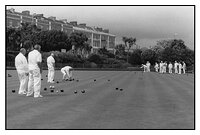
The bowling green

A
The bowling green

  • 0
  • 0
  • 13
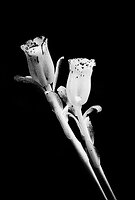
Indian ghost pipe plant.

H
Indian ghost pipe plant.

  • 3
  • 1
  • 28

Forum statistics

Threads
202,942
Messages
2,847,852
Members
101,549
Latest member
mennojim
Recent bookmarks
0

Nancy123

Member
Allowing Ads
Joined
Jan 21, 2014
Messages
229
Location
San Francisco Bay Area
Format
35mm
Hello everyone. I'm really excited about building another darkroom. I moved a couple of years ago and left a supreme darkroom space behind. But my new one will be nice, too, if a bit smaller. I'm looking for ideas on making it primo in case I'm missing something I've never thought of before. I'll be putting a Delta 1 6-foot commercial plastic sink from B&H in a custom plywood workspace. Does anyone know if that sink is pretty good or not? I will have an exhaust system and a music system. I have everything for making prints already. Been doing this for decades but didn't always have good darkrooms. Some were dry, in closets, and a few temporarily in bathrooms.

Any ideas for making this the best darkroom ever? I can do just about anything I want with it!
 
Good Luck with New Darkroom

Good luck with your new darkroom.

Sound system ... sweet!

If you've been doing this for decades, I am sure you've already consider the following:

> Dimmable light switch(es) to control output of safelight(s);
> Soft/cushy floor (big rubber tiles);
> Reinforced/sturdy wall(s) if you are going to wall mount your enlarger(s);
> Light-trapping entrance/exit (no door) to enter/leave the darkroom;

I have no experience with the sink you mention (from B&H)
 
How much space do you have?

When I was building my darkroom (~18 years ago now!) I ended up putting in two smaller sinks rather than one large one. I had a long, somewhat narrow space on one end of my basement in which I had a room framed off. I put a dry-side workbench with a storage shelf below on one of the long sides, a sink at one narrow end, a wet-side workbench (with shelves above and below) occupying part of the long wall to the right of that, then another sink in the middle of that long wall, then another dry workbench with a shelf underneath. This allows me a fair amount of working flexibility on the wet side. The sink at the end serves for mixing chemicals, washing utensils and hands and otherwise for general utility purposes. The sink on the side gets my Jobo when I'm processing sheet film, or toning and wash trays when I'm printing. The wet-side workbench between the two sinks gets my develop/stop/fix trays when I'm printing, my tanks when I'm developing roll film, and my Versalab print washer when I'm doing a long FB wash at the end of a printing session; the Versalab is fed from and drains into the sink in the middle of the long wall. I also load Jobo drums and reload film holders on the wet-side workbench when I'm developing sheet film. Process timers and safelight sit on the shelf that hangs above the wet-side workbench, within easy reach but safely away from the wet stuff.

Oh, yes: the sinks are black plastic ones, sitting on metal frames - IIRC they're Delta 1's, but it's been a long time.

Good luck, and enjoy! :smile:
 
Last edited by a moderator:
I really like having a sink that you can get to from two sides.

Make sure that when you determine safelight placement you won't find yourself working in your own shadow.
 
All great suggestions so far! Thank you very much!! Jack, I'd never thought about dimmable light switches before but will do that. Two sinks is a really good idea, Oren Grad. And I know I've worked in my safelight shadow before, so I'll watch that, Matt. Thanks again for your input, each of you! :smile:
 
Have you found these APUG threads yet? Lots of examples of amazing darkroom ideas...

(there was a url link here which no longer exists)

(there was a url link here which no longer exists)

Ken
 
I would make sure all electrical outlets are GFCI protected, if you are going to have dry side and wet side in the same room. (most likely the case)

You might consider having outlets installed above the table-top level. In my own darkroom, I have a master switch that will turn EVERYTHING off. Quite handy, actually.
 
I would make sure all electrical outlets are GFCI protected, if you are going to have dry side and wet side in the same room. (most likely the case)

+1. This is essential for safety.

You might consider having outlets installed above the table-top level.

Most of the outlets in my darkroom are above table-top level too. I figured one could never have enough electrical outlets, so I had multiple outlets installed at intervals along the wall anywhere there was a workbench. This has worked out really well as my needs have evolved, and again, allows flexibility for many different equipment configurations while avoiding any need to run potentially dangerous extension cords in awkward places.
 
made several sinks from water resist plywood and one from mdf board. just use marine paint after and caulk the edges
best,peter
 
My new darkroom is almost complete, just needs the water and waste pipes fitted and the blackout curtains. It happens to be featured in this weeks Amateur Photogrpher magazine (UK) as part of a piece on Ilford's Local Darkroom scheme.

I have two sets of lights one is a fluorescent strip light, the other two clusters of 3 spot lights. The fluorescent light is on a normal light switch and is for use when not actually printing, too slow to come on and they glow for a while when turned off. The spotlights are on a pull cord accessible from most of the darkroom (it runs horizontally). Two spotlights illuminate the sink area which is great for inspecting prints in the fixer or first wash tray.

My darkroom is in a solid breeze block & stone building at the end of my garden, it's approx 12 foot x 12½ foot so plenty of room, the previous 2 owners of my house were both electricians so it has a good power supply. Insulation has been important so I lined the floor and walls with expanded polystyrene, the flooring boards were laid on top followed by the vinyl flooring, the walls plaster boarded and the roof along with plenty of roofing insulation, It takes little heating even when frosty outside

There's room for 4 enlargers and a long wet bench & large sink, it has 3 safelights, Nova & Jobo processors, room for print finishing. I've been documenting it as I ve progressed and must get around to putting it all together.

Ian
 
I would make sure all electrical outlets are GFCI protected, if you are going to have dry side and wet side in the same room. (most likely the case)

You might consider having outlets installed above the table-top level. In my own darkroom, I have a master switch that will turn EVERYTHING off. Quite handy, actually.

To that point, if you run the electrical in conduit (outside the wall in metal tubes) rather than inside the walls you give yourself the flexibility to easily change the configuration. At a minimum have outlets every two feet; it sucks to have that "wow, if I moved my enlarger over here I could..." thought and not have an outlet!
 
But my new one will be nice, too, if a bit smaller.

I did the same thing about 5 years ago, but I went from small to large! The inevitable is, of course, that the next time I move (and we will) it will probably get smaller again. :sad:


I'll be putting a Delta 1 6-foot commercial plastic sink from B&H in a custom plywood workspace. Does anyone know if that sink is pretty good or not?

The Delta 1 sinks are fine. One reminder I always make in these types of threads: If you build the stand for the sink yourself, make it so that the bottom of the sink is at a comfortable height for the trays, i.e., "counter height". This will save your back in the long run. The ready made stands for most sinks are too low.

Here's a link to the blog of the construction of my darkroom, for what it's worth.

http://newdr.blogspot.com

The darkroom portraits thread (linked above) is also valuable. Good luck and have fun.
 
Seconding the light-trap entrance thing. That, and an exhaust fan at the far end of the darkroom, keeps air circulating constantly, eliminating such nasty things like mildew and noxious fumes. I take offense at the suggestion that a darkroom dog is not required equipment, however. Pet hair is much more controllable than household dust, and the aforementioned light-trap entrance makes it easy for said dog to come in and out as he prefers.
 
If possible, have a fan based air exhaust right over the sink, and close to the trays, so that chemical vapours are drawn away from you and out. The air intake can be at the other end of the darkroom. If you can filter that intake, it will really help with dust.
 
I built a 60 sq ft darkroom over 30 years ago and I still use it to this day. As my darkroom process grow and change, I need more space. If you're short on space, think of what you need to do in the dark first and other processes that can be done in daylight else where. My darkroom is a walled off garage and I have storage in the garage. I've also have started doing Ziatypes and cyanotypes and I have my UV exposure box in the garage. But safety and comfort always comes first.
 
My last darkroom had the 8' delta sink, and in my current darkroom I have a 6' delta sink, as well as a 5' Arkay stainless sink. One issue with the current setup is for larger prints, I can't fit a 16x20 tray in the sink with the 20" side of the tray across the sink - and as a result, it is much harder to process larger prints with my current setup.
Other than that, the delta sinks are fine.
 
Another vote for building your own sink. Put wheels under everything possible, and wall mount the enlarger.

My darkroom is a year old and already I want to rebuild it, but these are three things I would not change.
 
I'm amazed at all the thoughtful responses here. Thanks again to everyone (and future posters) for the great ideas. I will take them all into consideration! :smile:
 
Photrio.com contains affiliate links to products. We may receive a commission for purchases made through these links.
To read our full affiliate disclosure statement please click Here.

PHOTRIO PARTNERS EQUALLY FUNDING OUR COMMUNITY:


Ilford ADOX Freestyle Photographic Stearman Press Weldon Color Lab Blue Moon Camera & Machine
Top Bottom
