
• Welcome to Photrio!
    Registration is fast and free. Join today to unlock search, see fewer ads, and access all forum features.
    Click here to sign up

Bromide Drag or Surge?

Indian ghost pipe plant.

H
Indian ghost pipe plant.

  • 1
  • 0
  • 21
2026-01-136.jpg

A
2026-01-136.jpg

  • 0
  • 0
  • 27

Recent Classifieds

Forum statistics

Threads
202,935
Messages
2,847,786
Members
101,545
Latest member
jbrseattle
Recent bookmarks
0

Born2Late

Member
Allowing Ads
Joined
Dec 15, 2012
Messages
448
Location
Southern Ind
Format
35mm
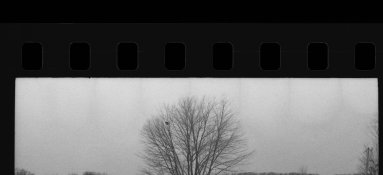
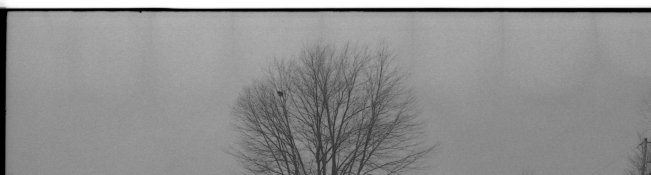
I have been collecting film cameras for a while and wheneverI acquire a new (new to me) one I replace the light seals if necessary andcorrect any other issues that I am capable of. After the tune up, I shoot atest roll for evaluation. On the most recent camera / roll, I have one frame (#20of 25) with an anomaly. This photo was taken with a solid overcast and has afair amount of sky at the top of the image. Showing in the photo, lighter thanthe background or darker on the negative is a series of "U" shapedareas directly under each sprocket hole. They are larger in width and heightthan the sprocket holes with only a narrow band of normal background densitybetween each. While they are easily seen, there are no sharp edges. The top andbottom of the film are clear which should rule out light leaks. I have experienced this occasionally before, but this seems a bit more pronounced.

Film and development: HP5+ film, 2 minute presoak, XTOLdeveloper 1:1, 64.5degrees F, 5 second initial agitation (inversion in SS tank,Hewes reel), 5 second agitation every 30 seconds after. Development time was14:02

My initial reaction was that bromide drag was the cause, butnow I'm leaning toward developer surge from filling or agitation

I would appreciate any input

Thanks
 
If the marks are in-line with the sprocket holes it's most likely from surging. Bromide drag would be unlikely with the developing recipe you've outlined.

But as snapguy says, a photo would be helpful.

If you're processing in a two-reel tank with just one reel that would be one possible cause. Another is too vigorous agitation.
 
Stale or too cold fixer is more probable cause...

Try refixing immediately if you get it...
 
Here are scans of the portion of the image in question. I'm afraid the marks are a bit faint. I hope they are visible enough for a determination. Developer and fixer are both very fresh. Thanks.

attachment.php
attachment.php
 

Attachments

  • Roll 262 - 027.jpg
    Roll 262 - 027.jpg
    341.4 KB · Views: 2,365
  • Roll 262 - 026.jpg
    Roll 262 - 026.jpg
    238.2 KB · Views: 946
Looking at the images I would suggest over-enthusiastic agitation causing surging but your description of your agitation regime would suggest not. Do you 'invert and twist', or just turn the talk over and back?

Sent from my GT-N7000 using Tapatalk 2
 
Invert and twist.

Looking at the images I would suggest over-enthusiastic agitation causing surging but your description of your agitation regime would suggest not. Do you 'invert and twist', or just turn the talk over and back?

Sent from my GT-N7000 using Tapatalk 2
 
That's some pretty serious lines, one can see the curvature of the sprocket holes..

If you are inverting and twisting right from the beginning (which I believe is the correct way to hand process) then you have me stumped as the marks are very significant.I would first off get rid of the pre soak
are you inverting and twisting during that stage??
 
For what it's worth, I've gotten similar marks on color film developed at drug store minilab.
 
From your description of the development I suspect the initial agitation should be longer. From what I have seen in other directions ( and practise myself ) it should be at least 30 seconds.

Karl-Gustaf
 
I am not agitating during the pre soak.

That's some pretty serious lines, one can see the curvature of the sprocket holes..

If you are inverting and twisting right from the beginning (which I believe is the correct way to hand process) then you have me stumped as the marks are very significant.I would first off get rid of the pre soak
are you inverting and twisting during that stage??
 
Looks like surge marks to me. 5 seconds in 30 is excessive in my book, but a lot depends on the tank and developer in use. I had similar marks when using a dilute developer (HC-110 H) in semi stand development and it was the tank (Jobo). I cured it by using a second empty reel in the bottom of the 2 reel tank and loading the one with film in above it. I now do that every time and the marks have never recurred...
 
I'm using a single stainless tank. I thought about trying what you described. Thanks.

Looks like surge marks to me. 5 seconds in 30 is excessive in my book, but a lot depends on the tank and developer in use. I had similar marks when using a dilute developer (HC-110 H) in semi stand development and it was the tank (Jobo). I cured it by using a second empty reel in the bottom of the 2 reel tank and loading the one with film in above it. I now do that every time and the marks have never recurred...
 
I have encountered these marks in semi-stand dev. I ended up using 3 empty reals with the fourth one loaded with very dilute developer. It abated.
 
I wonder if you are using distilled water as a presoak, If not I believe the problem is happening at this stage. I use distilled water if I am concerned about getting fresh chemistry to all areas
of the emulsion fast, and I use constant agitation for the first 15-20 seconds and do rap the tank hard to disloge any airbells.. the dark lines are minus development meaning developer did
not get to those regions as fast as the surrounding.

I encountered minus density marks in neutral areas of scenes for a period of time.. finally we switched the developer formulation to use distilled water and even though we were using a tried
and true jobo system, we started manually agitating with invert and twist for the very first stage of process and it got rid of the minus density.

I also think that since I live in a larger city, the water (makeup- mineral content ) changed .
 
Thanks for all of the responses.

While there were some common themes in the responses, there was no real consensus. So it appears that I will have to do some experimentation.


Last night I processed another roll, increasing the initial agitation to 30 seconds and adding a little more of a twist (or roll if you will). The problem became much more pronounced and again it was in the last part of the roll, which would be to the outside of the reel. This would indicate to me that I should use less, or more gentle agitation. I'll try this and if the problems remain try a different developer or dilution.

Thanks again
 
...While there were some common themes in the responses, there was no real consensus. So it appears that I will have to do some experimentation...

That's pretty much what I have concluded in the many discussions that come up for agitation issues. What works great for one person doesn't seem to for someone else. And occasionally, what has worked for years, suddenly doesn't.
My conclusion is that the key is to make a change in your agitation scheme, and evaluate the results.
 
How about the process right after development? Did you use a stop bath? How much time passed before the stop bath entered the tank after you poured out the developer?
 
If the artifice extends into the rebates you are not fixing properly...
 
Bromide Drag or Surge Followup

I wanted to post a follow up. I have tried a number of suggestions and it looks like it is coming down to agitation, either too much or too energetic. I was able to significantly reduce the problem that I was having by changing from the inversion method, to sliding my tank back and forth as described in Kodak's literature. It did not completely eliminate the problem though. Something that has recently occurred to me is that the amount of developer in the tank (fluid level) could be a large contributing factor. Perhaps filling the tank more would reduce the turbulence during agitation and eliminate the problem.

So the question I would like to pose now is how full do you fill your tanks with developer?

Thanks
 
I was able to significantly reduce the problem that I was having by changing from the inversion method, to sliding my tank back and forth as described in Kodak's literature.

..

So the question I would like to pose now is how full do you fill your tanks with developer?

Thanks

Just so you know, the agitation schemes that involve sliding a tank back and forth are only really intended as a less desirable replacement for inversion agitation, in those circumstances where inversion isn't possible.

I always make sure that there is an air space between the top of the fluid and the bottom of the lid.

And the fluid shouldn't surge, but rather tumble randomly through the film when you agitate. Like in a front loading washing machine (but not during the spin cycle!).

I hope that helps give you a mental picture.
 
Your suggestion is a good one. While I do agitate at the prescribed rate, about one inversion cycle per second, that may be too fast. I recently got into 4x5 and I'm using a MOD5x4 reel for developing. The inversion cycles have to be very slow or the film gets dislodged from the reel (really more like a rack). It takes me about 5 seconds to invert and return. I have to say that I haven't had this same problem with the 4x5 negatives. While I'm experimenting I'll add slower inversions to the mix.

Thanks

Just so you know, the agitation schemes that involve sliding a tank back and forth are only really intended as a less desirable replacement for inversion agitation, in those circumstances where inversion isn't possible.

I always make sure that there is an air space between the top of the fluid and the bottom of the lid.

And the fluid shouldn't surge, but rather tumble randomly through the film when you agitate. Like in a front loading washing machine (but not during the spin cycle!).

I hope that helps give you a mental picture.
 
I don't know, a 1 second inversion cycle seems quite fast to me.

If by cycle you mean to both invert and then return the tank to vertical.
 
An inversion cycle in 1 second should not really cause problems. In fact that is what Kodak typically recommends. Try a spacer reel above the loaded reel in the tank to prevent the loaded reel from sliding up and down, which in some cases can cause surge marks. Don't over-complicate it. Simply follow either Kodak's or Ilford's recommendations. If you still get surge marks, agitate more gently (not necessarily more slowly).

+1 to that. From looking at these scans again, I have the strong impression that not all of your film roll is immersed in developer all the time: you have stronger development below the space between sprocket holes.
 
Photrio.com contains affiliate links to products. We may receive a commission for purchases made through these links.
To read our full affiliate disclosure statement please click Here.

PHOTRIO PARTNERS EQUALLY FUNDING OUR COMMUNITY:


Ilford ADOX Freestyle Photographic Stearman Press Weldon Color Lab Blue Moon Camera & Machine
Top Bottom