• Welcome to Photrio!
    Registration is fast and free. Join today to unlock search, see fewer ads, and access all forum features.
    Click here to sign up

Breaking news: Analog wins. Film at 11.

Recent Classifieds

Forum statistics

Threads
203,596
Messages
2,856,900
Members
101,917
Latest member
Swarls
Recent bookmarks
0
Watcj Hawaii Five 0 on netflix sometime. The phograpy and colors are astounding. What a testimony to film it is. Then go watch some TV show rerun from the 80s where they were shot with video tape/ Cant barely make out the main characters. Nothing beats film. Nothing.
"Seinfeld", among others, was filmed in 35mm using Panavision equipment.
 
RA-4 prints (from the 70s) fade in a major way.
There, I fixed it for you shutterlight. Even though I don't think RA-4 existed in the 70's.

My parents wedding album is from '65. The color is a little weaker than I would imagine it was back in '65, then again I wasn't around in '65. The prints still look pretty damn good, sharp as a tack, for being pedestrian wedding photos which are 50 years old. I don't know how Shore processed his prints way back in the 70s, but I doubt it was up to current standards. They still exist though even if they faded. That is the difference that people don't understand. Photos on a hard drive that has a problem only exist if someone wants to take it upon themselves to fix the drive. Faded prints exist to anyone with an eyeball.

I would suspect that the reprinting of Shore's work has more to do with competition and revisionism than fading. I saw some of those prints a few years ago. They were quite nice. Better in person than on the internet or in books.

I have also seen some of Eggleston's dye transfers and they weren't anything to marvel at. I was rather surprised by that too after all the hullabaloo surrounding them.

No, RA-4 prints from today fade. I've seen it. They just don't hold up in the same way, nor can they. That's not a criticism, just an observation. You can like or dislike dye transfer prints, but they are etched in stone by comparison.

Also, did you see Shore's prints from the 1970s, or the reprints?
 
"Seinfeld", among others, was filmed in 35mm using Panavision equipment.

First person account of (there was a url link here which no longer exists)...

Ken
 
First person account of Jerry Seinfeld explaining why they chose film...

An interesting read, Ken. Like many there is a reason for the "connection", this was another nice example. Thanks for sharing this notable reason here.
 
Ok Professor, better put your tinfoil hat on. I'm not talking Flickr or Smugsmug or whatever other dinky free thing you read about in last week's rag. I'm talking actual cloud based backup solutions. Anyway, you probably know all about these too so no need to explain further. :confused:]

Actually no, you clearly have no idea what you're talking about.

Back up solutions for all digital data can be a real PITA. Paper tapes, Hollerith cards, tape [print through and fade problems], memory drums [fade problems and now parts], metal disks, floppy disks, ... nothing is perfect and they all require due diligence. Even used SECDED.

Cloud based solutions unfortunately are subject to hacking and theft. Further if you read the contracts, you loose your copyright privileges and control of the images. Suppose you took nude photographs of a girl friend. Later you marry her. Both your careers take off. Someone finds those photographs and spreads them all over the internet. Do you think this will cause you a problem?

The only cloud solution that is worthy of being considered would be one that is a server farm completely under your own control. At this time that is hardly cost effective versus existing analog methods.

Analog also has its problems: water damage, fire, dust, scratches, ... RC paper is not as archival as fiber paper. Color prints are less fade resistant that black & white but keeping them out of the sunlight and using UV glass helps. Some slides from the 1960s are showing signs of fading [Dynachrome and some Anscochrome, not Ektachrome nor even the dreaded Kodachrome].

Neither analog nor digital are completely archival, but generally in the long run analog is more archival than digital today.

Yes, I know what I am talking about and it is based on a lot of experience, analysis, physics, engineering and science and not on what I had for breakfast or the way I would like the world to be.

 
Further if you read the contracts, you loose your copyright privileges and control of the images.

Examples?

You're mixing up backup services with social cloud services, and anyhow this is simply not true for Flickr or Facebook. You do give them the right to show your images to other people, otherwise there wouldn't be much point in using a social service. But they also let you restrict who can see the pictures, and withdraw them at any time. You keep full copyright.

https://www.facebook.com/legal/terms

http://blog.flickr.net/en/2011/05/13/at-flickr-your-photos-are-always-yours/

If you want better lockdown of your data, you can encrypt your data before backing up, and put the key in your will.
 
You're mixing up backup services with social cloud services, and anyhow this is simply not true for Flickr or Facebook. You do give them the right to show your images to other people, otherwise there wouldn't be much point in using a social service. But they also let you restrict who can see the pictures, and withdraw them at any time. You keep full copyright.

https://www.facebook.com/legal/terms

http://blog.flickr.net/en/2011/05/13/at-flickr-your-photos-are-always-yours/

If you want better lockdown of your data, you can encrypt your data before backing up, and put the key in your will.

Good to know, but I choose to use single frame 35mm, double frame 35mm, 120 and 4"x5" film for now and until and unless I have not choice. My MF and LF cameras could use digital backs should I choose to. My 35mm not so. I will stick with film. Besides I have a color and black & white darkroom.
 
Cloud storage has the right to sell copies of your photographs for their profit and you do not get any of the profit. Also by storing photographs on the cloud you sign away your copyrights. Try reading the contracts that most people just click "OK" without reading.
Cloud based solutions unfortunately are subject to hacking and theft. Further if you read the contracts, you loose your copyright privileges and control of the images.

Apparently this discussion is no longer based on "experience and facts".

Please show us a cloud storage contract (not a "social media site" user agreement) that takes away your copyright or control of the images. For that matter, show us a social media site user agreement that takes away your copyright. Did someone tell you this, or did you "read it on the internet"?
 
Last edited by a moderator:
Yes. Some media are better than others. Yet, I have a tintype and other photos that are well over 100 years old. I'm fond of any media that doesn't require me to power up an electronic device and run an application in order to view an image.

That's what prints are for, whether from film or digital. Do you print all of your negatives?
 
That's what prints are for, whether from film or digital. Do you print all of your negatives?

Only a small fraction of my negatives are printed, based on my preferences. However, many of my negatives are safely stored away in a bank vault and will be perfectly viewable 100 or more years from now. Someone simply has to open the box, hold the negatives up to the light and choose what to print or not. But at least it's there. The thousands of digital photos I also have on my laptop and external media probably won't be readable 20 years from now - I'll have only what I managed to print even though I want much more to survive.
 
Neither analog nor digital are completely archival, but generally in the long run analog is more archival than digital today.

Yes, I know what I am talking about and it is based on a lot of experience, analysis, physics, engineering and science and not on what I had for breakfast or the way I would like the world to be.

Ok you know I really like your posts, they are very knowledgeable when you talk film. But this digital thing you just don't get. You may have worked on the space program in the 60s or whatever else but this is 2015 and we are talking cloud storage. So better stick to what you know, because when it comes to cloud the more you say the more it shows all you know about it is what you read on the newspaper. When I say cloud I don't mean Facebook and I don't mean some celebrity having password123 on their Apple account. So let's just leave it at that.

I'll agree to disagree about what is more archival and more practical. For me film is probably more archival if you don't want to deal with it. Digital is probably more archival if you do deal with it. Cost-wise...well come on, my lab bill last year was $3000+ and that doesn't even include buying the film. Spending $100 on storage is nothing.
 
I'll agree to disagree about what is more archival and more practical. For me film is probably more archival if you don't want to deal with it. Digital is probably more archival if you do deal with it. Cost-wise...well come on, my lab bill last year was $3000+ and that doesn't even include buying the film. Spending $100 on storage is nothing.

Different universes. I have a darkroom and I can develop and print both black & white and color. You do not have a darkroom therefore unless you can get processing at Costco you will be paying much more for processing.
 
Different universes. I have a darkroom and I can develop and print both black & white and color. You do not have a darkroom therefore unless you can get processing at Costco you will be paying much more for processing.

As much as I would love to have my own darkroom I simply do not have the time for it. So what I pay the lab may not be cheap but is a small price to pay for saving me all that time. Maybe once the kids are off and I'm retired I'll get a darkroom :smile: I can only hope that there will still be film around in 2040 for me to make this happen! With a bit of luck even my JPGs will still be readable :D
 
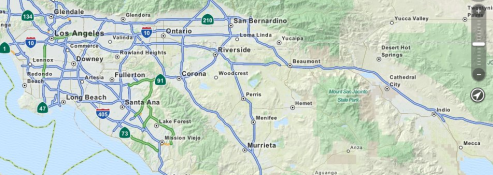
Darkrooms are very expensive space-wise. One needs to dedicate a room to hold the enlarger et al. Why don't you just drop by when you need to use my darkroom? Ontario is a little closer than San Bernadino and Perris [pronounced: Paris] is closer than Palm Springs, and Mecca is not all that far. So how far can London be?
attachment.php
 

Attachments

  • Capture.PNG
    Capture.PNG
    763.9 KB · Views: 265
Darkrooms are very expensive space-wise. One needs to dedicate a room to hold the enlarger et al. Why don't you just drop by when you need to use my darkroom? Ontario is a little closer than San Bernadino and Perris [pronounced: Paris] is closer than Palm Springs, and Mecca is not all that far. So how far can London be?

Thanks for the offer! The air miles calculator has LHR to LAX at only 5440 miles so I should be able to fit that sometime next week :cool:
 
My own 1/10 of a cent but here I am behind my computer reading this thread.
I turn to my left, stretch my arm, grab a box of 135 negs dated" 2006". I pick one, look at the b&w stripes and they're fine, absolutely fine as if I had processed the film last week-end.

Had I switched to digi in the 2000's I don't think I could have "looked back" at my archives from 2006 so easily. "Sheeeesh that bloody cd-r won't start".
 
The are two issues, first, is digital imaging capable of permanence, secondly, what factors influence that permanence? The first is easy, of course digital imaging is permanent. If the process of digital recording and maintenance were to be suspended in 2015 technology, we could make reasonable assumptions that digital would last "forever", or as long as people took photographs.

The second issue is almost impossible to answer, but we can make assumptions. Given the current rate of advance in digital recording, the first fifteen years of mass digital imaging will seem rudimentary in the extreme in twenty years, never mind a hundred. The process of image gathering, collection and storage will probably have changed, before we get to the commercial and political changes that influence how images are kept. Institutions like Flickr and Instagram, cloud storage companies, and the cards and drives we use to access media, will probably be viewed in the nostalgic light of a magic lantern show. Once a photographer is no longer around to update their digital archive into the latest form, the clock is ticking on its accessibility.

The best we can do is keep images in as many analogue forms as possible and leave a data trail to its digital and analogue origins. The immediacy of visually assessing the historical and aesthetic value of an image will ensure its survival, not rows of 0 and 1, text, sticks, disks or cards. There will simply be too much data in the world to bother with non-visual forms. Hard copy will be the currency of survival. Just my tuppence worth.
 
Siriusglass,

If you are pervase and shooting your girlfriends porn pictures for your boyfriends , you and the girl will hit another shit in the life. I guarantee.

Obviously you are unable to distinguish between an example and reality. In the future, read more carefully.
 
Yes. Some media are better than others. Yet, I have a tintype and other photos that are well over 100 years old. I'm fond of any media that doesn't require me to power up an electronic device and run an application in order to view an image.

Slide projectors, while requiring electricity to operate, are neither electronic nor require an "application" in order to view the image. :D Anyone that doesn't have one should get one and shoot some slide film!
 
Photrio.com contains affiliate links to products. We may receive a commission for purchases made through these links.
To read our full affiliate disclosure statement please click Here.

PHOTRIO PARTNERS EQUALLY FUNDING OUR COMMUNITY:


Ilford ADOX Freestyle Photographic Stearman Press Weldon Color Lab Blue Moon Camera & Machine
Top Bottom