
• Welcome to Photrio!
    Registration is fast and free. Join today to unlock search, see fewer ads, and access all forum features.
    Click here to sign up

Bostick & Sullivan-- new developments in Alt Photo

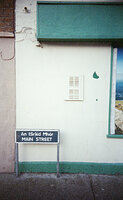
An tSráid Mhór

A
An tSráid Mhór

  • 0
  • 0
  • 8
IMG_1285.jpeg

D
IMG_1285.jpeg

  • 0
  • 0
  • 24

Forum statistics

Threads
203,124
Messages
2,850,171
Members
101,688
Latest member
linie4
Recent bookmarks
0

richsul

Member
Allowing Ads
Joined
Jul 27, 2005
Messages
17
Format
8x10 Format
Ok, you'll have to do some detective work as I am not allowed to post links until I have five posts but you should be able to find them. Don't go to the old blog go to the new one that at the carbon works.

If not email me and I'll email back the link to the blog.


Fumed Silica

Techniques developed at B+S: A finely divided quarts powder that that in liquid form or dry can be applied to art paper to improve dmax and resolution. Josh Partridge of the Cunningham Trust is now using it to print his grandmother's work.

The Athenatype

This is a silver process that uses guanidine ferric oxalate. A strong POP image, develops in water, does not bleach back in the fix, and is predictable in outcome.

Included in this doc.

The making of guanidine ferric oxalate and coating with silica

Selenium-tungstate toner for metallic silver images

This toner looks and acts like a gold toner. The colors run from a rich brown to neutral black to blue black with no yellow staining of the highlights that is typical of selenium toners. Made with a thiosulfate free selenium solution and a tungsten carrier. Stunning colors at a tenth the price of gold.

We fully document, formulas and all, a new toner replacing gold, silica quartz sizing enhancer, and a new easy to use POP water developed, predictable silver process among other interesting items.

Other new things include:

A complete description of the making of Autochrome plates. Yes, how to make them, not just how to develop any you have laying down.

A 1908 doctoral dissertation of the Lippmann Process. How to make full color images on a glass plate of a single layer of panchromatic emulsion. Lippmann got the only Nobel Prize ever awarded for a photographic process in 1908.

Lots of other goodies as well as a few rants from me.

--Dick Sullivan HonFRPS
 
Hi Dick, just introduced myself over at your forum this last week. That article you posted regarding toning cyanotypes with copper was quite interesting and I foresee experimentation with that soon. This new selenium-tungstate toner; do you have any prints in your shop done with this process? I'd love to take a look.
 
Great Blog and good name, "Swings and Tilts".
I'm also interested in the fumed silica. One art supplier I checked wanted only $12 for a quart but $40 to ship.
 
Richard,
Are you gonna talk about all this at A.I.P.I.S. ? I fogot how to read. I can only write. I also forgot how to listen, only talh. Peraps signe language?
Bill
 
Not to be a wet blanket (and I say this with a smile) but the Autochrome instructions are nothing more than a basic description of their design. I was hoping for something really in depth.

Quote, "Yes, how to make them"

You got my hopes up!! :pinch:
 
Yes we have a variety of samples. Not all are good prints due to the fact that we are constantly experimenting.


Hi Dick, just introduced myself over at your forum this last week. That article you posted regarding toning cyanotypes with copper was quite interesting and I foresee experimentation with that soon. This new selenium-tungstate toner; do you have any prints in your shop done with this process? I'd love to take a look.
 
We sell it and are working on a wet colloidal solution with other things in it like acidification, surfactants etc.
 
Prior to coating.

Wow- very cool stuff! I will definitely have to give some of this a try. Question- do you apply the fumed silica prior to coating, or to a finished, developed and fixed print? Can you use it with any alt process, or does it work best only with specific processes?
 
Dick--I think it's great that you're exploring new and improved alternative processes. I've been following some of this on the carbon forum and bought some fumed silica to experiment with after you first posted your results. I highly recommend a good quality respirator for anyone experimenting with the dry powder and look forward to the availability of an aqueous preparation. The selenium tungstate toner is intriguing--it's frustrating to negate the advantages an inexpensive process like salt printing with expensive gold toner. Hope you can get this into your store soon.
 
O

Fumed Silica

Techniques developed at B+S: A finely divided quarts powder that that in liquid form or dry can be applied to art paper to improve dmax and resolution. Josh Partridge of the Cunningham Trust is now using it to print his grandmother's work.

Hi Richard

Thanks for posting this do you have any dmax numbers that you and Josh are getting using fumed silica. Or even scans of prints with and without using this new technique.
 
I believe there is one of Josh's in the Fumed Silica notes at the very end. It is a curve. He uses LAB Color. I may have others he sent via email and I'll look for them. In Lab Color he the best he had gotten was a 17 on normal paper like CO320 or Platine. With silica he was able to get a 25 but backed off to a 22 as he was getting too many brush marks with the overload of silica.
 
Oops. I think I posted them in the previous post. Look there.

--Dick
 
I've added a link to the original patent.

Not that that will help much. Patents are designed to protect the idea not allow someone to duplicate it. Early ones are worse, but there is some technical details in this one. Lumiere was in direct competition with Edison.
 
The look, especially if you use a lot of silica, is a black velvet look. The blacks are very velvety.

Josh said he talked to a physicist (I think his brother) and the phenomenon as he described it was that as the light hits the print it is immediately diffused by the quarts and does not bounce straight back so it appears blacker. I suppose its the same with black velvet.

If anyone out there is doing watercolors, I'd love to hear back on how it works with that medium.
 
I've added mortensen's wet paper negative mthod

Check it out. It's pretty amazing.
 
I believe there is one of Josh's in the Fumed Silica notes at the very end. It is a curve. He uses LAB Color. I may have others he sent via email and I'll look for them. In Lab Color he the best he had gotten was a 17 on normal paper like CO320 or Platine. With silica he was able to get a 25 but backed off to a 22 as he was getting too many brush marks with the overload of silica.

Okay had a look at the notes but cant see any image scans, no problem i know its best to see in person. In relation to dmax, what scale are you refering to 17,22, 25, is that steps? Personally i understand dmax readings as 1.3 1.4 or 1.5, etc.. can you tell me what your numbers equate to in relation to a densitometer reading.

thanks
 
Dick,
Could you please give us the exact name and source of the fumed silica you have been using? I AM NOT NIT-PICKING ! there are 1) different size particle, some for stir-in, some should be milled. 2) There are Organo-treated (hydrophobic)fumed silicas! Untreated fumed silica is very hydroscopic. I think that which you are using is very relevant.
Great worck, by the way. I never woulda thought about trating the paper with DRY fumed silica.
Bill
 
So would this silica also work when applying emulsions like the Rockland or Rollei Black Magic? Seems intriguing.
 
We use the most common hydrophilic version, nothing fancy.
 
Photrio.com contains affiliate links to products. We may receive a commission for purchases made through these links.
To read our full affiliate disclosure statement please click Here.

PHOTRIO PARTNERS EQUALLY FUNDING OUR COMMUNITY:


Ilford ADOX Freestyle Photographic Stearman Press Weldon Color Lab Blue Moon Camera & Machine
Top Bottom
