

• Welcome to Photrio!
    Registration is fast and free. Join today to unlock search, see fewer ads, and access all forum features.
    Click here to sign up

Book recommendations for learning modern developer formulas

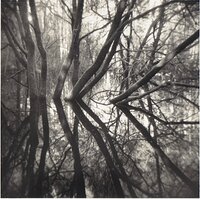
Flooded woodland

Flooded woodland

  • 14
  • 0
  • 84
Babylon

D
Babylon

  • 3
  • 1
  • 77

Recent Classifieds

Forum statistics

Threads
202,840
Messages
2,846,302
Members
101,559
Latest member
gnafin61
Recent bookmarks
1
There's maybe a misconception here, as editor of the BJP weekly magazine and also the BJP Annual he published formulae contributed by other people and that includes Ilford & Kodak as well as the alternative colour developers (and others steps) from a German chemist Ernst G* (almost certainly working for one of the larger photo companies) as the formulae all worked well.

What most mean by the Crawley formulae are his own FX series of B&W developers first published in 6 articles in the then weekly BJP at the end of 1960 and January 1961, and only a few were revised. These were in the BJP Annuals into the 1990's.

As to the Perutz formulae, when Crawley started editing the BJP Almanac they were on the cusp of being taken over, still making their own films and the formulae stayed in the Annuals while the older films were still around. Then in 1964 Agfa or rather the newly merged Agfa Gevaert took Perutz over and their Perutz brand films used the regular Agfa processes.

Ian


I said 'his' formulas, didn't I? Those are the 'FX' formulas.
 
I said 'his' formulas, didn't I? Those are the 'FX' formulas.

No, what you actually said is:

Crawley revised his formulas over the years. Some of the ones optimised for Perutz films, for example, were dropped.

That's why I clarified, Crawley's articles "Notes on Present Day Monochrome Emulsions and their Development" (1960-1961) make no references to developers optimised for Perutz films, nor do subsequent précis versions of the article in the B&W processing sections of BJP Almanac and later annuals. Perutz B&W films are only mention in Grain categories and lists of development times.

Geoffrey Crawley never worked on Colour formulae, they were mainly contributed by C. L. Thomson and Ernest. Ch. Gehret and first published as articles in the weekly BJP before being added to the next Almanac/Annual. Ernest Ch. Gehret was a photo-chemist.

Ian
 
Last edited:
Just finished Michael Axel's "Iridescent Light: The Art of Stand Development" which was published by something called "Leicaglow.com" - a site my network can't reach at the moment. Short text, but as an ebook, price wasn't bad at $7. Link to the book is here: http://www.blurb.com/bookstore/detail/533375 . Book focuses on its subject and gives an account of 30 or 40 years with the technique. As one of the two "au currant" popular blog subjects on development (the other some form of pyro), it adds a little rationality to the usual buzz that often runs much shorter on details than it should.

I would think one of the least covered subjects on development but perhaps one of the more useful would be a short book on common failures, how to identify them, their effects on your images, their causes, and how to redress and/or avoid them. I've made a few ;0. Most of the time they've been less catastrophic than expected (or deserved). The process is far more forgiving than it sounds.
 
If one is interested in monobaths there is also Grant Haist's The Monobath Manual. A slim but rather concise description of this type of specialized developer.
 
Before this thread floats away from the original subject, I would like to thank everybody contributing suggestions. I am eyeing some offerings of used Dr. Haist books running about $100 at Amazon, all listed as originating in the UK. I was wondering if anyone of the proud owners would be kind enough to post the table of contents of vol.1 (at Amazon?) as image. And here comes my final question. Does anyone know about aldoses, such as glucose, galactose or other, being used as developing agents? Thank you again and I am going to ask my remaining questions in the films section or in a new thread, anyway.
 
I paid about $100US +/- for each volume for used copies. If I had not been so slow about buying them I could have gotten Dr. Haist's books from him.
 
And here comes my final question. Does anyone know about aldoses, such as glucose, galactose or other, being used as developing agents? Thank you again and I am going to ask my remaining questions in the films section or in a new thread, anyway.
See post 395 and the following here regarding sugars:
(there was a url link here which no longer exists)
 
Just finished Michael Axel's "Iridescent Light: The Art of Stand Development" which was published by something called "Leicaglow.com" - a site my network can't reach at the moment. Short text, but as an ebook, price wasn't bad at $7. Link to the book is here: http://www.blurb.com/bookstore/detail/533375 . Book focuses on its subject and gives an account of 30 or 40 years with the technique. As one of the two "au currant" popular blog subjects on development (the other some form of pyro), it adds a little rationality to the usual buzz that often runs much shorter on details than it should.

I would think one of the least covered subjects on development but perhaps one of the more useful would be a short book on common failures, how to identify them, their effects on your images, their causes, and how to redress and/or avoid them. I've made a few ;0. Most of the time they've been less catastrophic than expected (or deserved). The process is far more forgiving than it sounds.

Making a book such as you recommend, on common errors and failures in the DR is harder than you might think. Each example would have to be visually shown and some combinations of errors as well. This gets expensive fast and the ROI is low.

PE
 
Making a book such as you recommend, on common errors and failures in the DR is harder than you might think. Each example would have to be visually shown and some combinations of errors as well. This gets expensive fast and the ROI is low.

PE

Why Do you not think about to do so P.E.?
I might identify a little "inside-knowlege" in your reply. (in concern to
publishing issues ).

Have you informed about ?
And please don't missinterpret this as
ironic comment - shure you will not think
so.
But on the other hand I have an Idea of
some publisher who whant to make the big money and perhaps they contacted
you in the past (Day and Night).
I think it will work in the other direction
you will have the choice to a publisher
with sympathy.
Think about.............

with regards
 
Big money????

Ok perhaps this is a special interest theme but who not - not the very big
money.
I know some who write a book:mad:...
never beliefe if that could be possible
but they did.

with regards
 
Ok perhaps this is a special interest theme but who not - not the very big
money.
I know some who write a book:mad:...
never beliefe if that could be possible
but they did.

with regards

As PE said: Special interest ====> low ROI
 
Trendland, I have already written one book. It has a special audience and its sales are slow and low. No one wanted to publish it so I went with самизда́т, but not really clandestine. It was just self published. So, I know the difficulties. And, my up-front investment was high. I am now writing a second book. My friend, Bob Shanebrook, has also written two books.

PE
 
Ok perhaps this is a special interest theme but who not - not the very big
money.
I know some who write a book:mad:...
never beliefe if that could be possible
but they did.

with regards

How many books have you published??


I published one. Until you have walked in the shoes on the path, do not be quick to criticize.
 
For anyone who wants to self-publish a book, I'll recommend createspace.com . I published my software book there, and you can look at it in amazon (search for IDAR Method Overton). My sister published a book there as well. They're fine. Your investment is zero, and you own the copyright, making it a good way to sell specialized (i.e., low volume) books.

Mark Overton

Trendland, I have already written one book. It has a special audience and its sales are slow and low. No one wanted to publish it so I went with самизда́т, but not really clandestine. It was just self published. So, I know the difficulties. And, my up-front investment was high. I am now writing a second book. My friend, Bob Shanebrook, has also written two books.

PE
 
Trendland, I have already written one book. It has a special audience and its sales are slow and low. No one wanted to publish it so I went with самизда́т, but not really clandestine. It was just self published. So, I know the difficulties. And, my up-front investment was high. I am now writing a second book. My friend, Bob Shanebrook, has also written two books.

PE

Glad about to hear this PE.:D!
Self publishing was indeed also my idea
in case of less demand from publishers.
But I must say I havn't recognised it shall be indeed a very special interesst
issue. Most books from scientists today with higher circulation goes in direction
to popular science. We all know many examples to this.
"How to learn truely magnificant panorama photos in 14 days with CanonEOS vol. 1 - 3 ":laugh:.
But for some it is just a mix of a part
popular and a part of very specific contens of a book.
And many of them are working with a
co. author ecact of this.
But who I am telling this PE. - glad to hear about.
Stony ways are not made to prevent our
intentions to do - they are made because
we should ask ourselfs how much we want it realy.
And they are made to prevent the intentions of others.

Therefore my sincerely best wishes.

with regards

PS. I was thinking about perhaps you
have done it in the past before (write a
book) - but I don't trust to ask :cry:.....
 
How many books have you published??


I published one. Until you have walked in the shoes on the path, do not be quick to criticize.

I published some special interest Video Films in cooperation with a french company (F.L.O.) "Flying Legend Organisation" in the middle - late 90th.
The theme was a part of my hobby therefore I don't saw this as a kind of work (Oldtimer Aircrafts).
Well - publishing the films and the costs
of this weren't the problem but the production costs of the films with Sony
BETACAM and the mastering etc. was
a little more expensive.
But I got a big part of my money back :smile:

with regards
 
No, what you actually said is:


That's why I clarified, Crawley's articles "Notes on Present Day Monochrome Emulsions and their Development" (1960-1961) make no references to developers optimised for Perutz films, nor do subsequent précis versions of the article in the B&W processing sections of BJP Almanac and later annuals. Perutz B&W films are only mention in Grain categories and lists of development times.

Geoffrey Crawley never worked on Colour formulae, they were mainly contributed by C. L. Thomson and Ernest. Ch. Gehret and first published as articles in the weekly BJP before being added to the next Almanac/Annual. Ernest Ch. Gehret was a photo-chemist.

Ian


In the descriptions of the early 'FX' formulas in the BJP annuals, reference was made to specific film brands (Perutz, Agfa, Ilford, Kodak). This involved slight changes in the alkali systems (FX-4 vs FX-7). I never said anything about Crawley working on colour processes.
 
Last edited:
In the descriptions of the early 'FX' formulas in the BJP annuals, reference was made to specific film brands (Perutz, Agfa, Ilford, Kodak). This involved slight changes in the alkali systems (FX-4 vs FX-7). I never said anything about Crawley working on colour processes.

The reference is not really to specific brands, there is longer more specific list in one BJP Almanac, it's to what Crawley calls "Grain structure groups" but then he states that "The contrast groupings A, B, C indicate the relative tendency of certain emulsions to build up contrast rapidly; the Grain Structure Groups divide the available films according to the way they respond to different types of alkalinity and developers: this can affect definition and in some cases quality."

Actually his grouping makes little sense, in earlier 1960/61 articles he also has a "Contrast Group" which is different but more logical.

The by 1967 there's no mention of Perutz B&W films in the BJP B&W Processing section as production stopped in in 1963, and FX7 was still listed in 1968. Crawley lists Pertutz films in Grain Structure Group 1 and states that FX7 was better optimised for Group 2 & 3 films than FX4. I wouldn't use either FX4 or FX7 there's no point in Metol as well as Phenidone along with the Hydroquinone.

Crawley revised his formulas over the years. Some of the ones optimised for Perutz films, for example, were dropped.

Sorry I just don't read it that way as I can't see a link, which is why I assumed you meant the colour processing for Perutz.

Ian
 
Last edited:
How many books have you published??


I published one. Until you have walked in the shoes on the path, do not be quick to criticize.

I published some special interest Video Films in cooperation with a french company (F.L.O.) "Flying Legend Organisation" in the middle - late 90th.
The theme was a part of my hobby therefore I don't saw this as a kind of work (Oldtimer Aircrafts).
Well - publishing the films and the costs
of this weren't the problem but the production costs of the films with Sony
BETACAM and the mastering etc. was
a little more expensive.
But I got a big part of my money back :smile:

with regards

Publishing videos in not even in the same universe as publishing a book.
 
Publishing videos in not even in the same universe as publishing a book.
Well, in a world of "alternate" facts, maybe "alternate" universes are a coming thing!
 
The reference is not really to specific brands, there is longer more specific list in one BJP Almanac, it's to what Crawley calls "Grain structure groups" but then he states that "The contrast groupings A, B, C indicate the relative tendency of certain emulsions to build up contrast rapidly; the Grain Structure Groups divide the available films according to the way they respond to different types of alkalinity and developers: this can affect definition and in some cases quality."

Actually his grouping makes little sense, in earlier 1960/61 articles he also has a "Contrast Group" which is different but more logical.

The by 1967 there's no mention of Perutz B&W films in the BJP B&W Processing section as production stopped in in 1963, and FX7 was still listed in 1968. Crawley lists Pertutz films in Grain Structure Group 1 and states that FX7 was better optimised for Group 2 & 3 films than FX4. I wouldn't use either FX4 or FX7 there's no point in Metol as well as Phenidone along with the Hydroquinone.


Sorry I just don't read it that way as I can't see a link, which is why I assumed you meant the colour processing for Perutz.

Ian


No, it had to do with iodide content of certain film brands. I read all this years ago in the BJP Annuals.
 
There is more than Iodide content. There is Iodide position. Many films have a core that contains Iodide, while other films have it at the surface. A third type has it both ways more or less and another type has it graded up or down in the crystal. All of these behave differently wrt development.

PE
 
There is more than Iodide content. There is Iodide position. Many films have a core that contains Iodide, while other films have it at the surface. A third type has it both ways more or less and another type has it graded up or down in the crystal. All of these behave differently wrt development.

PE


OK, but 'iodide' is mentioned.
 
Photrio.com contains affiliate links to products. We may receive a commission for purchases made through these links.
To read our full affiliate disclosure statement please click Here.

PHOTRIO PARTNERS EQUALLY FUNDING OUR COMMUNITY:


Ilford ADOX Freestyle Photographic Stearman Press Weldon Color Lab Blue Moon Camera & Machine
Top Bottom
