
• Welcome to Photrio!
    Registration is fast and free. Join today to unlock search, see fewer ads, and access all forum features.
    Click here to sign up

Bleach and Tone

half stop lighter er.jpg

A
half stop lighter er.jpg

  • jhw
  • Jan 12, 2026
  • 7
  • 3
  • 75
sentinels of the door

A
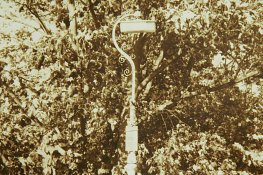
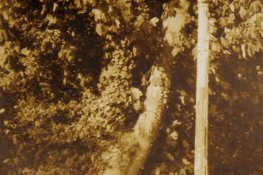
sentinels of the door

  • 4
  • 0
  • 75

Recent Classifieds

Forum statistics

Threads
201,710
Messages
2,828,907
Members
100,901
Latest member
markzhou
Recent bookmarks
0
Joined
Jan 21, 2003
Messages
15,715
Location
Switzerland
Format
Multi Format
So today I have printed, bleached, and toned about two handfuls of prints.

Papers used: Ilford MGWT, Forte Polygrade V, Fotokemika Varycon, and Fotokemika Emaks G2.
Developer: Ilford Multigrade
Bleach: Potassium Ferricyanide
Toner: Kodak Sepia II and Selenium

Interesting fact. Forte tones very mildly, needs a lot of bleach time in a strong bleach, like 1+5 solution for about 2 minutes. Gets a pretty nice glow in the highlights with Sepia, but selenium on top adds little.
Ilford Warmtone is crazy stuff. Tones like a world champ with sepia if a mild bleach is used, about 1+10-15 and two minutes in the toner. Looks great. Add some strong selenium toner on top of it, and the highlights really start to glow, as if they were radioactive or something. Stunning!
Fotokemika Emaks: The most beautiful honey golden highlights I've ever seen with sepia. Weak bleach and tone for about 45 seconds. Stunning!
Fotokemika Varycon: One word: Subtle. If you want any WOW out of this paper you gotta really work it, but after you work it, you are rewarded. It needs a lot of everything. Needs a lot of contrast in the neg, needs strong bleach, needs lots of toner to get any glow in the highlights, and needs to really be cooked in the selenium to get anywhere, but oh boy when you've got it nailed, this paper is really beautiful!

Now for my question. After all of this experimentation I'd like to understand what difference different types of bleach does to the toning. I only know of pot ferri, and I get it from the Kodak sepia toner packages.

I know this answer: Read Tim Rudman's book. Well, I am not allowed to spend any money on photography any time soon, so I could use some advice... :smile:

Thanks,

- Thomas
 

dancqu

Member
Allowing Ads
Joined
Sep 7, 2002
Messages
3,649
Location
Willamette V
Format
Medium Format
Now for my question. After all of this experimentation I'd like
to understand what difference different types of bleach does
to the toning. I only know of pot ferri, and I get it from the
Kodak sepia toner packages. - Thomas

Your question concerns only the ferricyanide and not the
bromide? Ferricyanide is THE bleach. The bromide is optional.
Togeather the mentioned Kodak product is a bleach and
rehalogenate + sodium sulfide redeveloper.

AFAIK the halide is not essential. I may be corrected. Dan
 

Ian Grant

Subscriber
Allowing Ads
Joined
Aug 2, 2004
Messages
23,408
Location
West Midland
Format
Multi Format
The halide used in the bleach can make a big difference. If you use Sodium Chloride or Iodide you get a different colour on toning. Chloride produces much greater warmth compared to Bromide. Iodide only gives a slight colour variation compared to bromide.

Also a Dichromate /HCl bleach can be interesting too, but remember this may have a slight intensifying effect as well. Split toning using IT-8 which is a Dichromate/HCl bleach followed by a Pyrocatechin re-developer could be very interesting. This gives quite a density boost due to the combination the chrome intensification and the staining from the Pyrocatechin. The formula is in the DCB 3rd Edition.

Ian
 

jim appleyard

Subscriber
Allowing Ads
Joined
Nov 21, 2004
Messages
2,421
Location
glens falls, ny USA
Format
Multi Format
Perhaps Rudman's book is at your local library??? It is worth buying however.

Put it on your X-Mas list. Surely Santa visits your house! :smile:
 

Mark Layne

Subscriber
Allowing Ads
Joined
Jun 9, 2003
Messages
967
Location
Nova Scotia
Format
Medium Format
Perhaps Rudman's book is at your local library??? It is worth buying however.

Put it on your X-Mas list. Surely Santa visits your house! :smile:

Reindeer are afraid to go to Scandinavia.
Varicon seems to be a continuation of the DuPont Varilour formula and you may notice a tendency for silver to migrate to the surface and create a silver sheen, particularly when playing around with secondary treatments such as toners.
Mark
 
OP
OP
Thomas Bertilsson
Joined
Jan 21, 2003
Messages
15,715
Location
Switzerland
Format
Multi Format
Dan, from what I can remember being mentioned, toners react differently to different bleaches.
Ian, I am sorry, but much of your language I cannot understand. Too much technical terms for my feeble brain I'm afraid... :smile: Sodium Chloride or Iodide instead of what? Or are those actually the bleaches?
Jim - already checked that but thanks for the suggestion. Still on square 1.
Mark - Interesting observation - I never thought Scandinavia was on the Canadian border.... :D I really like the Varycon paper, but am unsure of the sheen you're mentioning. I fail to observe it while comparing toned / untoned prints. Will the migrated silver present any adverse effect to the print archivally wise?

Thanks guys. I guess what I really need is this:

1. Bleach recipes
2. What effect do the different bleaches have to various toners

Ian touched on both already, but since I get my pot ferri from the Sepia toner Kodak sells - it goes to prove that I don't mix things myself, I don't even have a scale. But I will. And there are several things about bleaches that I need to understand that are on a very rudimentary level.

- Thomas
 

Ian Grant

Subscriber
Allowing Ads
Joined
Aug 2, 2004
Messages
23,408
Location
West Midland
Format
Multi Format
Have a look on Unblinkingeye there's quite a bit of information there.

Buy Steve Anchell's new 3rd Edition of "THe Darkroom Cookbook" it's due out any time now, that will give you plenty of Formulae and explain the chemicals.

Ian
 

Bob F.

Member
Allowing Ads
Joined
Oct 4, 2004
Messages
3,977
Location
London
Format
Multi Format
To clarify for those who have not read Tim's book ( :wink: ). The "bleach" is more properly called a "rehalogenizing bleach" as it actually consists of two components: pot-ferri and a halogen: most commonly potassium bromide. When you bleach a print for toning you are actually rehalogenizing: turning the elemental silver in the image in to a silver halide (in this case, silver bromide).
The "classic" bleach is potassium ferricyanide (10g) + potassium bromide (5g-10g) in 1 litre of water. Multiply the chemicals by ten to make a 1 litre stock solution that you mix with water to use. The amounts are not critical: teaspoon measures are fine. If the bleach is too slow, add more of each and if too fast, dilute with more water.

By changing the halogen as suggested above to potassium chloride, potassium iodide or a mixture, you get different results. As Ian writes, using a different bleaching agent than pot-ferri may also give different effects.
 
Last edited by a moderator:
OP
OP
Thomas Bertilsson
Joined
Jan 21, 2003
Messages
15,715
Location
Switzerland
Format
Multi Format
Thanks, Bob! That's really helpful advice! I'm going to buy a scale after I offload all the cameras I don't need... And Tim's book.

- Thomas
 

snallan

Member
Allowing Ads
Joined
Sep 28, 2007
Messages
518
Location
Cambridge, U
Format
Multi Format
Hi Thomas,

Following on to the advice above, here are a couple of examples of different bleaches. They will vary markedly with type of paper and development used, but these will give you an idea of the effects achievable. I have used a thiocarbamide sepia toner, made up to produce a light brown sepia (unfortunately I don't have any sulphide sepias available at the moment).

The first shows the effect in a ferri/bromide bleach (the normal type supplied in kits), the second after bleaching with a ferri/chloride bleach, and the third, in a completely different, cupric sulphate bleach.

Notice how much richer the browns are with the chloride, and cupric sulphate bleaches, and how with this paper the chloride bleach is quite cool. This is using Ilford MGIV FB paper
 

Attachments

  • sepia_bromide_bleach.jpg
    sepia_bromide_bleach.jpg
    113.4 KB · Views: 257
  • sepia_chloride_bleach.jpg
    sepia_chloride_bleach.jpg
    131 KB · Views: 262
  • sepia_cupric_sulphate_bleach.jpg
    sepia_cupric_sulphate_bleach.jpg
    66.4 KB · Views: 256
Last edited by a moderator:
OP
OP
Thomas Bertilsson
Joined
Jan 21, 2003
Messages
15,715
Location
Switzerland
Format
Multi Format
Steve, those are very interesting results, and it's EXACTLY the kind of information I'm looking for. Thank you ever so much!

Can you share any info on how to mix the different bleaches? PM me if you want to.

- Thomas
 

CBG

Member
Allowing Ads
Joined
Nov 21, 2004
Messages
889
Format
Multi Format
Thomas,

Were you mixing the Kodak Sepia II and Selenium together to use them as a single solution or using them separate sequentially?

And in what strength were you using them? Any detail you can add would help people make use of your interesting combination.

Thanks!

C
 

CBG

Member
Allowing Ads
Joined
Nov 21, 2004
Messages
889
Format
Multi Format
A couple of cupric / copper based bleaches I have "harvested" off the internet follow.
I have not used them so proceed with appropriate caution.
------------------
Cupric Sulfate Bleach from Ann Clancy A bleach for redevelopment.

Cupric sulfate (Copper Sulfate) 50g
Sulfuric Acid concentrated* 6.5 mL
Sodium Chloride 100g
Cold water to 1000 mL


always add acid to water

-------------------------------

PE offers a information on copper based bleaches:
my same caution applies (though in this case, PE is a sterling source).

Bleach Baths from Cupric Sulfate

Variation A

490mL Distilled Water
5g Cupric Sulphate
10mL Sulphuric Acid (98%)

Variation B

490mL Distilled Water
10g Cupric Sulphate
25g Potassium Hydrogen Sulfate

Variation C

490mL Distilled Water
5g Potassium Dichromate
10mL Sulphuric Acid (98%)

Cupric Sulfate is a well known bleach for films. There are many patents on it in the literature. I have worked with it myself. The problems are threefold; the first is that the bleach will not work if there is not enough acid, and the second is that the copper salts can stain the film or paper and cannot be removed and the third is that these bleaches are very slow in most cases. There are also blix formulas.

Concentrated sulfuric acid (Oleum) is pretty much unobtainable. You can get dilute sulfuric acid at auto stores (about 37%) and from the Formulary (about 48%). The 48% is the highest that can be shipped now in the US without a special license.

A drop of oleum on the skin does not cause immediate burns due to lack of water. It needs water to react. So, immediately start a huge flow of cold water in the nearest tap and wash it off as quickly as possible with as much water as possible. Do not leave it on the skin for over 30". When you wash it off, you will feel an instant burning sensation and a lot of heat, as the reaction starts. If you wash with enough water, fast enough, no harm will be done in most cases. Once rinsed well, put some sodium bicarbonate on the affected area for about 1/2 minute and then re-rinse in cold water. If the skin is broken, call a doctor or go to emergency immediately. Do not get it in the eyes.

PE

-----------------------------
Another bleach of origin I did not record:
Water (40°C) 750 ml
Copper sulfate 50 g
Sulphric acid (10%) 65 ml
Sodium chloride 50 g
Water to make 1000 ml

---------------------


C
 

snallan

Member
Allowing Ads
Joined
Sep 28, 2007
Messages
518
Location
Cambridge, U
Format
Multi Format
Hi Thomas, the cupric sulphate bleach I am using is like the first variant given by CBG, but instead of sulphuric acid I am using sodium hydrogen sulphate (sodium metabisulphate, sold as "Dry Acid" for adjusting the pH of swimming pools); this is safer to use than concentrated acid (also easier for me to get hold of), and I use it at an equivalence of around 5.5g == 1ml of concentrated acid. I.E. in the Ann Clancy variant above, I would use about 35g of sodium metabisulphate in place of the 6.5ml of conc sulphuric acid.

For the ferri bleaches I have a 10% stock solution of potassium ferricyanide, which I dilute and add halide as required. For my standard bleaches I dilute the stock ferri 1+3 with water, then add around 10g per litre of the required halide, either sodium chloride (I use salt for the regeneration of ion exchange resins in water softeners, rather than table salt), potassium bromide, or potassium iodide. At this concentration, a print will be fully bleached in about 1.5 - 2 minutes, but provides reasonable control for split toning.

If you need the bleach to work faster, mix it 1+2, or even 1+1; if you want more control for subtle bleaching of the highlights dilute it further, I will occassionaly use it as dilute as 1+39. There is also a series of four photographs in my gallery showing the effect of partial bleaching, and full bleach/redevelopment on subsequent selenium toning.
 
Last edited by a moderator:

dancqu

Member
Allowing Ads
Joined
Sep 7, 2002
Messages
3,649
Location
Willamette V
Format
Medium Format
Hi Thomas, the cupric sulphate bleach I am using
is like the first variant given by CBG, but instead of
sulphuric acid I am using sodium hydrogen sulphate
(sodium metabisulphate, sold as "Dry Acid" ...

My bottle of the granulated is marked sodium bisulfate.
A pyro may be made of it by heating; the meta? The
bisulfate is often a substitute for the acid.
It is safe to handle.

As I've mentioned there is the bleach then what follows.
All of the bleaches are oxidizers. FerrrIcyanide converts
the silver image to silver ferrOcyanide. Although no one
has taken credit for testing, I believe that the silver
ferrOcyanide image can be toned. No halide or ???
needed.

With the cooler weather I can make it back to the
darkroom. I'll take the credit myself.
 

snallan

Member
Allowing Ads
Joined
Sep 28, 2007
Messages
518
Location
Cambridge, U
Format
Multi Format
My bottle of the granulated is marked sodium bisulfate.
A pyro may be made of it by heating; the meta?

You are correct Dan, serves me right for battering away on the keyboard before fully engaging my brain! :D

As I've mentioned there is the bleach then what follows.
All of the bleaches are oxidizers. FerrrIcyanide converts
the silver image to silver ferrOcyanide. Although no one
has taken credit for testing, I believe that the silver
ferrOcyanide image can be toned. No halide or ???
needed.

I also believe that is correct. Instead of using Farmer's reducer, it is possible to bleach with ferri, then fix, with the option to redevelop the image if you bleach too far, that redevelopment can be performed with a suitable toner to give a permanent toned image.

The addition of the halides just provides a varying electronic environment for toning/redevelopment of the silver ferrocyanide, therefore affecting the final form of the toned/redeveloped silver.
 
OP
OP
Thomas Bertilsson
Joined
Jan 21, 2003
Messages
15,715
Location
Switzerland
Format
Multi Format
C,

I've used the bleach separately. I mix up the stock solution the way it's described on the package and then I dilute anywhere from 1:5 to 1:20 depending on how much of the sepia tone I want the paper to develop, and it also varies a lot from paper to paper how much it tones.

Ilford MGWT - crazy stuff. Tones very heavily and is beautiful. 1:15 bleach.
Fotokemika Varycon - subtle. Needs a kick in the ass to react, but once there - oh my! 1:5 bleach.
Fotokemika Emaks - honey golden sepia tone. Extremely beautiful. 1:10 bleach.
Forte Polygrade - almost unpleasing sepia tone, very dull looking. But if you get the contrast really stark in your printing, you can get the highlights to glow very nicely. 1:10 bleach.

Those are dilutions for about 2 minutes bleach, after which I soak the print in a water bath to rinse, then hypo clear, then water again with a couple of water exchanges. Then I tone in the sepia for about one minute, but the effect is rather immediate. The re-development is very rapid.

If you add selenium afterwards at about 1:10 or so, the golden highlights, especially on the Ilford, really start to kick in with a wonderful split red/golden tone that is kick butt in a cloudy sky.

My practical observations include that this is a lot easier than it seems, but that hygiene is important. Wear nitrile gloves, work with caution, and preferably in a VERY well ventilated darkroom or outdoors if possible. But oh boy is it fun. I recommend trying one single paper to begin with and learn it, much like when you start printing or start using/developing film. It takes a while to learn the inns and outs.

- Thomas

Thomas,

Were you mixing the Kodak Sepia II and Selenium together to use them as a single solution or using them separate sequentially?

And in what strength were you using them? Any detail you can add would help people make use of your interesting combination.

Thanks!

C
 
OP
OP
Thomas Bertilsson
Joined
Jan 21, 2003
Messages
15,715
Location
Switzerland
Format
Multi Format
Thanks! I might give these a try.

- Thomas

A couple of cupric / copper based bleaches I have "harvested" off the internet follow.
I have not used them so proceed with appropriate caution.
------------------
Cupric Sulfate Bleach from Ann Clancy A bleach for redevelopment.

Cupric sulfate (Copper Sulfate) 50g
Sulfuric Acid concentrated* 6.5 mL
Sodium Chloride 100g
Cold water to 1000 mL


always add acid to water

-------------------------------

PE offers a information on copper based bleaches:
my same caution applies (though in this case, PE is a sterling source).

Bleach Baths from Cupric Sulfate

Variation A

490mL Distilled Water
5g Cupric Sulphate
10mL Sulphuric Acid (98%)

Variation B

490mL Distilled Water
10g Cupric Sulphate
25g Potassium Hydrogen Sulfate

Variation C

490mL Distilled Water
5g Potassium Dichromate
10mL Sulphuric Acid (98%)

Cupric Sulfate is a well known bleach for films. There are many patents on it in the literature. I have worked with it myself. The problems are threefold; the first is that the bleach will not work if there is not enough acid, and the second is that the copper salts can stain the film or paper and cannot be removed and the third is that these bleaches are very slow in most cases. There are also blix formulas.

Concentrated sulfuric acid (Oleum) is pretty much unobtainable. You can get dilute sulfuric acid at auto stores (about 37%) and from the Formulary (about 48%). The 48% is the highest that can be shipped now in the US without a special license.

A drop of oleum on the skin does not cause immediate burns due to lack of water. It needs water to react. So, immediately start a huge flow of cold water in the nearest tap and wash it off as quickly as possible with as much water as possible. Do not leave it on the skin for over 30". When you wash it off, you will feel an instant burning sensation and a lot of heat, as the reaction starts. If you wash with enough water, fast enough, no harm will be done in most cases. Once rinsed well, put some sodium bicarbonate on the affected area for about 1/2 minute and then re-rinse in cold water. If the skin is broken, call a doctor or go to emergency immediately. Do not get it in the eyes.

PE

-----------------------------
Another bleach of origin I did not record:
Water (40°C) 750 ml
Copper sulfate 50 g
Sulphric acid (10%) 65 ml
Sodium chloride 50 g
Water to make 1000 ml

---------------------


C
 

dancqu

Member
Allowing Ads
Joined
Sep 7, 2002
Messages
3,649
Location
Willamette V
Format
Medium Format
[QUOTES=snallan;684450]
"I also believe that is correct. Instead of using Farmer's
reducer, it is possible to bleach with ferri, then fix, with
the option to redevelop the image if you bleach too far,
that redevelopment can be performed with a suitable
toner to give a permanent toned image."

Well I wasn't sure but thought it reasonable. I don't
recall any one ever having mentioned the results of
toning after a bleach only. Bleach with a halide or
a halide immediatly following is the norm.

"The addition of the halides just provides a varying
electronic environment for toning/redevelopment of
the silver ferrocyanide, therefore affecting the final
form of the toned/redeveloped silver."

Could be that the toning of the 'ferrO' image does
not give good results. BTW, what other than sulfur
and selenium will give good results toning the 'ferrO'
or rehalogenated image? Dan
 

snallan

Member
Allowing Ads
Joined
Sep 28, 2007
Messages
518
Location
Cambridge, U
Format
Multi Format
Could be that the toning of the 'ferrO' image does
not give good results. BTW, what other than sulfur
and selenium will give good results toning the 'ferrO'
or rehalogenated image? Dan

I only ever experimented with non-halogenated bleach baths when toning, and don't use them for regular toning. Thiocarbamide sepia, and selenium definitely tone the silver in the ferrocyanide form, I didn't try other toners.

The thiocarbamide sepia toner acts incredibly quickly, toning a print in 15 - 20 seconds (due to the presence of the hydroxide ion? Possibly).

The selenium was a bit problematic, it does tone the the silver, but I remember getting a lot of leaching of the toned silver from the image, leaving a weak image, and murky toner. Possibly due to a similar process that forms the "soluble" prussian blue in some of the cyanotype processes. Varying the concentration of the selenium toner might give different effects, but this was really just a bit of experimenting for fun. :D
 

dancqu

Member
Allowing Ads
Joined
Sep 7, 2002
Messages
3,649
Location
Willamette V
Format
Medium Format
The thiocarbamide sepia toner acts incredibly quickly,
toning a print in 15 - 20 seconds (due to the presence
of the hydroxide ion? Possibly).

The selenium was a bit problematic, it does tone the the
silver, but I remember getting a lot of leaching of the toned
silver from the image, leaving a weak image, and murky
toner. Possibly due to ...

Possibly due to the fixer in that selenium toner? Silver
ferrOcyanide is NOT a least soluble salt of silver.

I've some P. ferrI. and sodium sulfide and will run some paper
through with and without a halide post treatment. There are
likely other salts of silver which could be tested. Dan
 

snallan

Member
Allowing Ads
Joined
Sep 28, 2007
Messages
518
Location
Cambridge, U
Format
Multi Format
Possibly due to the fixer in that selenium toner? Silver ferrOcyanide is NOT a least soluble salt of silver.

That is a good point, it would be interesting to try a selenium toner that did not contain thiosulphate. I'll have to see if I can source some selenium powder to try a home brew.

I've some P. ferrI. and sodium sulfide and will run some paper through with and without a halide post treatment. There are
likely other salts of silver which could be tested. Dan

I'd be interested to hear your results with the sulphide toning with straight ferri. The use of other salts sounds like an interesting area for experimentation, I shall have to think about that one.
 
OP
OP
Thomas Bertilsson
Joined
Jan 21, 2003
Messages
15,715
Location
Switzerland
Format
Multi Format
These prints have a few weeks on them, but I thought I'd come back here and post some of my results.

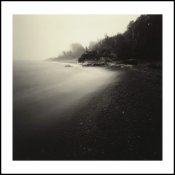
First image, By The Water 006 - Fotokemika Emaks and Sepia II toned with Kodak kit chemistry.
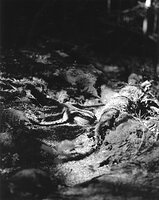
Second image, By The Water 012 - Fotokemika Emaks and Sepia II toned and then selenium (1+10)
Both bleached with the kit bleach at a 1+8 dilution, one minute in sepia and about 2 minutes of selenium for the latter in addition to sepia.

I will post a series of recipes here for various bleaches as soon as I have compiled a list of what I like.

Thanks a lot to everybody that contributed thus far.

- Thomas
 

Attachments

  • By_The_Water_006.jpg
    By_The_Water_006.jpg
    108.2 KB · Views: 173
  • By_The_Water_012.jpg
    By_The_Water_012.jpg
    144.1 KB · Views: 172
Photrio.com contains affiliate links to products. We may receive a commission for purchases made through these links.
To read our full affiliate disclosure statement please click Here.

PHOTRIO PARTNERS EQUALLY FUNDING OUR COMMUNITY:


Ilford ADOX Freestyle Photographic Stearman Press Weldon Color Lab Blue Moon Camera & Machine
Top Bottom