• Welcome to Photrio!
    Registration is fast and free. Join today to unlock search, see fewer ads, and access all forum features.
    Click here to sign up

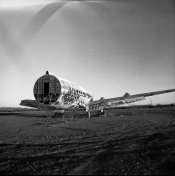
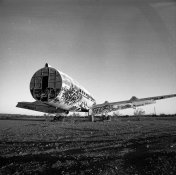
Bizarre pattern on Tri-X

Spring break

H
Spring break

  • 6
  • 4
  • 75

Recent Classifieds

Forum statistics

Threads
202,854
Messages
2,846,616
Members
101,572
Latest member
apltd
Recent bookmarks
0

Chadinko

Member
Allowing Ads
Joined
Feb 3, 2016
Messages
188
Location
Phoenix, AZ
Format
Multi Format
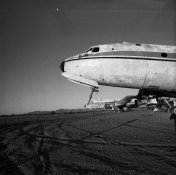
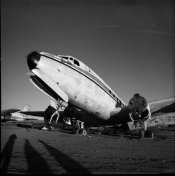
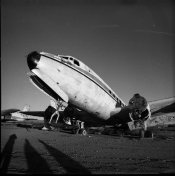
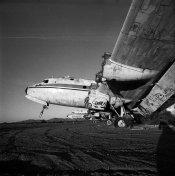
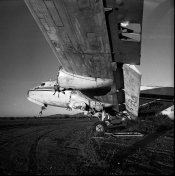
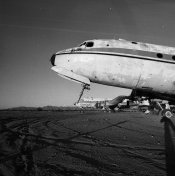
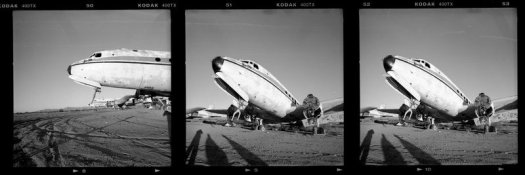
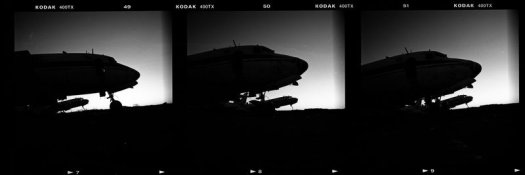
I don't usually shoot Tri-X 400, but I was out with a friend and only had 100 on me and she gave me a couple of rolls of Tri-X 400 in 120 size. Developed them today, and there's a REALLY weird pattern on one of the rolls of negatives. It appears that it's consistent throughout the roll.

Normally I'd look at something like this and think "camera problems," but the pattern, while consistent in shape, varies in location on the frame, and consecutive rolls of Fomapan 100 do not show it. Neither do previous rolls of Fomapan (it's pretty much all I use, because it's cheap) -- they are all pretty much perfect.

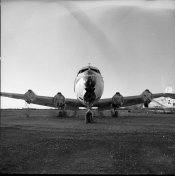
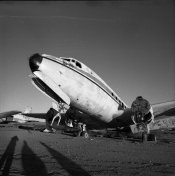
I've thrown these negs on my filthy-dirty scanner and scanned them direct, with no manual adjustments. You can see the pattern in the sky. These are consecutive images on the 120 roll. Sorry for the nastiness on the scanner platen.. I didn't feel like cleaning it at 1 AM.

Any ideas what it might be? Here are the technicals.

Camera: Norita 66 Medium-format SLR. body #2, which was repaired by Ross Yerkes at the beginning of the year.
Lens: 40MM f/4, which was serviced two months ago by a local camera shop and has been working perfectly.
Waist-level finder.
Developed in Ilfosol 3, standard developing times, in a metal Nikor tank.

I'm stumped.
 

Attachments

  • img651.jpg
    img651.jpg
    137.7 KB · Views: 467
  • img650.jpg
    img650.jpg
    146.7 KB · Views: 426
  • img649.jpg
    img649.jpg
    114.2 KB · Views: 441
  • img648.jpg
    img648.jpg
    108.7 KB · Views: 430
  • img647.jpg
    img647.jpg
    119.9 KB · Views: 420
  • img646.jpg
    img646.jpg
    108.5 KB · Views: 423
  • img646.jpg
    img646.jpg
    108.5 KB · Views: 430
  • img645.jpg
    img645.jpg
    134.4 KB · Views: 421
  • img644.jpg
    img644.jpg
    141.7 KB · Views: 417
  • img643.jpg
    img643.jpg
    128.3 KB · Views: 424
My gut says it is a development time problem, like something misaligned on the reel. But that's just a wild guess. Doesn't look like a light leak.
 
I'm also leaning toward x-ray damage or a light-strike caused by the film not being wound tight enough on the reel before processing.

Doremus
 
I am not entirely convinced of the xray damage theory. If the wavy bands were caused by xray, they should show as higher density areas in the negative, lower density areas in the positive. In the examples posted here it's the other way round. I see some general signs of irregular and "sloppy" development (e.g., trapped air, crud and dust on the negatives) and also light leaking onto the film, these irregularities may have contributed to what we see here. (As always ....) it would be most helpful for analyzing the problems if the OP could post some picture of the the actual negative (strips), so we can see if the areas of irregular density extend beyond the borders of the picture frames.
 
Dear mnemosyne,

Your assumption is that the spiral is an area of higher x-ray exposure when it could simply be an area of lower exposure. You could get that pattern if something blocking the x-ray left it. As noted by twelvetone12 it looks exactly like a few of the examples on the Kodak page.

Neal Wydra
 
Seems to be much more prevalent when the light source is to the side and minimal when the sun is to your back. Were you using a lens shade? I'm going with lens flare coupled with higher speed film. The problem appears at the top of the positive (bottom of the camera/neg).
 
Last edited:
The banding looks to me like X-ray scanning artefacts.
 
Just finally had a chance to take a peek at that Kodak site. It surely does look like airport scanner damage. I don't know the history of this film; two rolls were given me by a friend because I needed a higher ASA film for some lower-light fun (I normally shoot 100). It's a good thing these aren't images that cannot be reshot. It's really not that big a deal, because I can always go back if I want to shoot more of those planes.

I'll be the first to admit I don't always take the precautions necessary for completely clean deveoping, and the bathroom I use is currently kind of a disaster. It doesn't QUITE look like bombed-out Beirut but it's close :smile: The other roll of Tri-X doesn't seem to have the markings that this one does, and I don't think it's an agitation issue or improper developing, as the other films I developed last night -- four rolls of 120 Arista 100 from my baby Speed Graphic, 2.25 x 3.25 and 4x5 sheet film -- are just fine. The markings are too regular for it to be an agitation problem as well, I believe. It's pretty weird, but looking at the Kodak page it makes perfect sense that it's gone through an x-ray somewhere and was damaged that way.
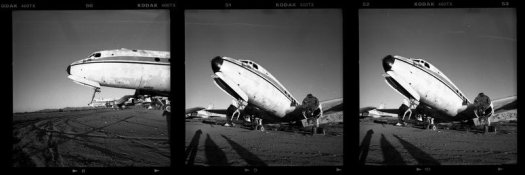
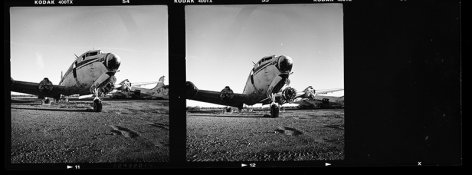
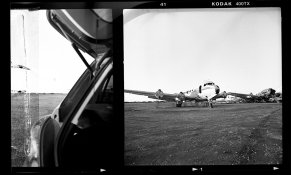
Here are some scans of the strips themselves. The last image -- img655 -- is from the other roll of Tri-X, developed in the same 2-roll Nikor tank at the same time. You can see, besides the fact I haven't cleaned my scanner in weeks, there's an issue with the shutter curtain timing on the camera (it's intermittent, and doesn't happen often enough to warrant sending it back in), but I don't see any of the markings the first roll has.
 

Attachments

  • img656.jpg
    img656.jpg
    55.1 KB · Views: 213
  • img658-2.jpg
    img658-2.jpg
    141.5 KB · Views: 225
  • img659.jpg
    img659.jpg
    202 KB · Views: 222
  • img6562.jpg
    img6562.jpg
    43.8 KB · Views: 222
  • img655.jpg
    img655.jpg
    21.8 KB · Views: 212
Just declare that banding as part of your concept towards photographing derelict planes...
 
Some of what I see on the rolls looks like residue from wetting agent, or calcium deposits.

The first frame that has the arc - I'm thinking it's the phenomenon of dry air (Arizona), and sparks being created by static when the tape that adheres the film emulsion strip to the backing paper is removed.
 
Just declare that banding as part of your concept towards photographing derelict planes...

That "distressed" look -- I LIKE it. That'll be my story and I'll stick with it. Thanks. :smile:

Some of what I see on the rolls looks like residue from wetting agent, or calcium deposits.

The first frame that has the arc - I'm thinking it's the phenomenon of dry air (Arizona), and sparks being created by static when the tape that adheres the film emulsion strip to the backing paper is removed.

All the frames on that roll have an arc, and if you look closely it's the same arc in slightly different placement on the frame. If it were the dry air and static electricity, then I would have seen it before, since dry air is what Arizona does best.

The residue is certainly there, though. I gotta clean them off; I must not have squeegeed it off very well. I'll have to run some negative cleaner over it if I decide to do anything with the negatives.
 
All the frames on that roll have an arc, and if you look closely it's the same arc in slightly different placement on the frame. If it were the dry air and static electricity, then I would have seen it before, since dry air is what Arizona does best.

The residue is certainly there, though. I gotta clean them off; I must not have squeegeed it off very well. I'll have to run some negative cleaner over it if I decide to do anything with the negatives.

I see the arcs in your other frames now too, my judgment was based on your first post. That still doesn't exclude the possibility, even if it is less likely.
 
I see the arcs in your other frames now too, my judgment was based on your first post. That still doesn't exclude the possibility, even if it is less likely.

I've never even considered arcing a possibility, though I suppose it really is; I've heard of artists making images using arcing energy on photosensitive paper or film. I've never seen arcing damage film before. It'd be interesting to try to see if I could get it to do that. It's fun to experiment with those things you're told never to do and see what REALLY happens, like magnetizing a hard drive. Those things have rare earth magnets in the drives themselves, so sticking a magnet near it is not going to hurt it. I've even attached an electromagnet to a hard drive and POW and it did no damage. So I might just try to get an arc to damage some film, just for fun. Maybe pat the cat for an hour or so before developing. or hold on to a roll in my hand as I get out of the car and touch the car body. Hmm.

Interestingly, in the same sense of experimental fun I left a roll of 35mm Kentmere 100 in my car for a couple of weeks in the summertime, when it was 115-118 degrees here, and when I processed it there didn't seem to be any real problem with it. Weird.
 
This is not arcing.
Electrostatic discharges on film look like lightnings with their ramifications.
 
When I had an electrostatic discharge it appeared as a line of black spots on the negative. It's dry here in Tucson too.
 
So, revisiting this: I don't think your problem is this weird mark on a gifted roll of film. That's just a distraction. Your real problem is maintaining a clean space for producing great images. If another roll of fresh film doesn't exhibit those marks, don't spend your time bothering to solve the puzzle. Spend your time cleaning up your workspace! :smile:
 
I had similar banding with film exposed to x-ray at an airport a long time ago...
 
When I had an electrostatic discharge it appeared as a line of black spots on the negative. It's dry here in Tucson too.

There are 3 graphically different forms of discharge artefacts. The ramification one is the one I have seen most.
It could be that your dot pattern often was not realized as being caused by discharge and thus not being brought to my attention that often.
 
this only happened to this one roll of film and never again?

just looks like a light leak because of how consistant it is.
 
So, revisiting this: I don't think your problem is this weird mark on a gifted roll of film. That's just a distraction. Your real problem is maintaining a clean space for producing great images. If another roll of fresh film doesn't exhibit those marks, don't spend your time bothering to solve the puzzle. Spend your time cleaning up your workspace! :smile:

Yup. I've been doing just that. I've mobilized the Corps of Engineers and the sappers to start clearing away the rubble, and soon there will be gleaming cleanliness where before only ruin and despair had existed. I think a huge part of the problem is I need to build a sealed drying rack for my film. I'm not sure my wife (a.k.a. Commander in Chief House) will appreciate a tall heated cabinet suddenly appearing in the bathroom, but we'll see.

When I had an electrostatic discharge it appeared as a line of black spots on the negative. It's dry here in Tucson too.

Weird, I've never seen that before. Or maybe it's occurred but I've never noticed it.

this only happened to this one roll of film and never again?

just looks like a light leak because of how consistant it is.

Only this one roll of film, out of the dozens I've run through it since getting it repaired. And this is the only roll that I can remember that I did not order myself or purchase over the counter. Well, this and the other roll of Tri-X, which does not show these markings. I shot more using this body that day, so I know for sure it's not the camera body leaking light.

Irregularities do occur with these Norita bodies, but never light leaks. With these cameras it's usually a shutter brake that goes wonky and results in underexposure of one edge of the film, as in img655 above. These things are so overbuilt that I believe I'd have to actually drill a hole in the body to get it to leak light.
 
I vote for light entering through the viewfinder.
 
I considered that possibility but discarded it because even though I was using the waist-level finder, I used the waist-level on all the rolls I shot that day (6 in total, I believe) and that one roll of Tri-X was the only one that exhibited that characteristic. The light was essentially the same throughout the time I was shooting with that camera so
I can't see a) how it would create such a regular pattern that was in differing places on the frame, and b) why the other five rolls would not show the pattern.
 
Photrio.com contains affiliate links to products. We may receive a commission for purchases made through these links.
To read our full affiliate disclosure statement please click Here.

PHOTRIO PARTNERS EQUALLY FUNDING OUR COMMUNITY:


Ilford ADOX Freestyle Photographic Stearman Press Weldon Color Lab Blue Moon Camera & Machine
Top Bottom