

We have all heard and experienced the T-Grain revolution started in the 80s, and now we are experiencing the 2 electron sensitization revolution.
Each step in this evolution (revolutions in themselves) improved grain and sharpness. Along with this is the new tellurium sensitization introduced by Fuji this last spring. I am personally torn by this one as it uses a rather toxic ingredient, bypassed by Kodak, but who am I to judge.
But now we are on the brink of perhaps another evolutionary step in this series of revolutions in analog photography that may or may not be exploited. This is based on discoveries by J. Maskasky at Kodak and several others at Fuji including T. Shiozawa. The work began in the mid 70s, about the same time as the development of T-Grains.
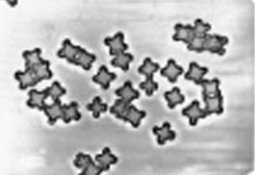
It is called epitaxy, and it consists of growing small silver halide crystals on each corner of a cube of silver halide.
This is what is done: basically, you grow a cubic bromide emulsion, the emulsion is then specially treated with silver nitrate and iodide and other chemicals to form additional small crystals at each of the 8 corners of the cube. These sites have the potential to be very light sensitive, and the technology can even be applied to t-grains or any emulsion in which individual grains are regular enough in size and shape. The emulsion is then sensitized by any of a variety of otherwise normal methods, and the result is a high speed, highly developable emulsion.
Much of the inherent speed comes from the use of an iodide epitaxy, but silver iodide is not very developable by itself, so it pumps the energy into the silver bromide cube and gives a resulting high speed easily developed emulsion.
So, if analog lives long enough for long term R&D, then this may be the next big step taken by the various film companies. For all I know, it might even be in use in some products now, but I've not been able to get any concrete information on it.
Then again, it might turn out to be a complete bust. Who knows. I thought you might be interested in knowing that there are a few things left in the R&D bag of tricks.
PE
Each step in this evolution (revolutions in themselves) improved grain and sharpness. Along with this is the new tellurium sensitization introduced by Fuji this last spring. I am personally torn by this one as it uses a rather toxic ingredient, bypassed by Kodak, but who am I to judge.
But now we are on the brink of perhaps another evolutionary step in this series of revolutions in analog photography that may or may not be exploited. This is based on discoveries by J. Maskasky at Kodak and several others at Fuji including T. Shiozawa. The work began in the mid 70s, about the same time as the development of T-Grains.
It is called epitaxy, and it consists of growing small silver halide crystals on each corner of a cube of silver halide.
This is what is done: basically, you grow a cubic bromide emulsion, the emulsion is then specially treated with silver nitrate and iodide and other chemicals to form additional small crystals at each of the 8 corners of the cube. These sites have the potential to be very light sensitive, and the technology can even be applied to t-grains or any emulsion in which individual grains are regular enough in size and shape. The emulsion is then sensitized by any of a variety of otherwise normal methods, and the result is a high speed, highly developable emulsion.
Much of the inherent speed comes from the use of an iodide epitaxy, but silver iodide is not very developable by itself, so it pumps the energy into the silver bromide cube and gives a resulting high speed easily developed emulsion.
So, if analog lives long enough for long term R&D, then this may be the next big step taken by the various film companies. For all I know, it might even be in use in some products now, but I've not been able to get any concrete information on it.
Then again, it might turn out to be a complete bust. Who knows. I thought you might be interested in knowing that there are a few things left in the R&D bag of tricks.
PE