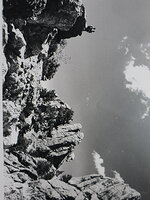
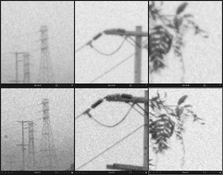
I’m not one to pixel-peep much, but my first impression is that there is a huge difference in this comparison you shared.
I recently talked myself into getting an IQSmart3 to scan all formats with one scanner and I’m really impressed, even coming from Coolscan scanners, despite the Creo being much slower per negative.
Most of the 'comparisons' done to try and stoke controversy don't like to try and compare at a more macro (rather than micro) level, because that's often where a first glance look (as would happen with a print comparison) immediately hand the win to a high end CCD or drum, especially compared to an Epson. They also have a tendency to never control out whether the camera and lens used to make the original neg was actually up to the job.
The biggest issue with both the Coolscan type of scanners and (even more so with) the more consumer grade flatbeds seems to have been not to do with the optics or sensors, but rather the costs involved in making something sufficiently precise, profitable and honest about the MTF
system performance, rather than the nominal pixel resolution. Unfortunately, 30 years ago, that meant an order of magnitude or more in price difference.
What I don't understand is that you are fixated on X5 when you will be scanning 120 only and negatives only.
Because (as high end CCD scanners go), it's very, very fast. Something like the Durst Sigma is even faster, and even it draws the line at 3200ppi for 120 (off the same sensor as the IQSmart 3). If a scanner is capable of delivering fundamentally sharp results where you can use all of those pixels, you are going to be able to do a lot more than with one that trails off rapidly above 1200ppi. How often do you print 20x24" off 120?
Oh, and you can extract up to 8000ppi from 120 negs pretty easily with a Flextight 949/X5, you just need to use your hands and photoshop to do the XY stitch.