• Welcome to Photrio!
    Registration is fast and free. Join today to unlock search, see fewer ads, and access all forum features.
    Click here to sign up

Best ISO & dev for T-max 3200

Recent Classifieds

Forum statistics

Threads
201,728
Messages
2,829,195
Members
100,916
Latest member
mikenickmann99
Recent bookmarks
0

CuS

Member
Allowing Ads
Joined
Oct 29, 2007
Messages
144
Format
35mm
I was given about 10 rolls of T-max (35mm) by a very nice person and I will use it this weekend in NYC.

I typically use Ilford 3200 or Neoplan 1600.

I use three of four developers which are:

HC-110;
Rodinal;
D-76; and
Diafine.

I will shoot these using my Bessa R3M (with lenses of f2 to 2.8).

Can anyone suggest the best ISO to shoot the film in camera (I'm guessing 1000 to 1250) and the best dev combo?

Thanks!
 

jim appleyard

Subscriber
Allowing Ads
Joined
Nov 21, 2004
Messages
2,421
Location
glens falls, ny USA
Format
Multi Format
I've seen where people have shot it @ 800-1280 using HC-110, D-76 & Rodinal, but 800-1000 is probably best for these devs.

I haven't done it in Diafine, but I'd guess 1600-3200. I'm sure others will check in on that one.
 

MMfoto

Member
Joined
Sep 11, 2004
Messages
488
Format
Super8
Diafine is OK, but I'd shoot EI800- 1600( high contrast scenes). But my experience with this combo is that it is very bad for low contrast scenes; the only UNPRINTABLE negs I've ever had came from a poorly lit scene with this combo @ ~1600.

Rodinal is OK too, REALLY brings out the sharpness of this film, but tonality is a little metallic, and grain looks good, but maybe too much for other than close ups.

The other two I have no experience with.

I'd recommend XTOL 1:2 for general use, or 1:1 deep tank (ie, lab D&D) if you want the finest grain with managble contrast.
 

pgomena

Member
Allowing Ads
Joined
Jun 25, 2003
Messages
1,391
Location
Portland, Or
The true ISO for this film is 800. T-Max developer is excellent. Follow the instructions as written. You can get very good results in the 800-1280 range as Jim Appleyard said above.

Diafine does not work very well. The film simply does not respond as well to the developer as Tri-X does.

Peter Gomena
 

jim appleyard

Subscriber
Allowing Ads
Joined
Nov 21, 2004
Messages
2,421
Location
glens falls, ny USA
Format
Multi Format
Correction: the box of Diafine (which I found with my name on it under the tree today) says the EI for T-Max 3200 should be 1250.
 

pgomena

Member
Allowing Ads
Joined
Jun 25, 2003
Messages
1,391
Location
Portland, Or
I should have said T-Max 3200 does not respond very well to Diafine when you are pushing film. It may work just fine in less extreme situations. What I meant to say was that T-Max 3200 (nominal ISO of 800) does not push to 3200 in Diafine as well as Tri-X (nominal ISO of 400) pushes to 1600 in Diafine. As Jim Appleyard notes above, the recommended EI for T-Max 3200 is 1250, only 2/3 stop speed increase.

Peter Gomena
 

Mark Antony

Member
Allowing Ads
Joined
Mar 27, 2007
Messages
789
Location
East Anglia,
Format
Multi Format
For fine grain TMZ looks good in T-Max developer, It gives best shadow detail at 800-1000 EI in my experience
59765841.jpg


Other choices would be HC110 D76/ID11 or even possibly Microphen.
I have a film test showing it with Rodinal here:
http://photo-utopia.blogspot.com/2007/07/kodak-t-max-3200.html
Mark
 

2F/2F

Member
Allowing Ads
Joined
Apr 29, 2008
Messages
8,031
Location
Los Angeles,
Format
Multi Format
Hi,

Film is not "shot at" an ISO. It is "shot at" an EI. The ISO is a physical property of the film, and is pretty well fixed at around 1000, give or take. The EI is not a physical property of anything, but what you tell your light meter you are using. What you are really asking is what EIs work best.

So, it can be assumed that it is an ISO 1000 film, and I think the data sheet actually says that 800 is better, for some reason that I do not remember. As far as what EIs to use, approach it the same way you would approach rerating any other film. Rate it at 1600, and you underexpose by a stop, rate it at 3200, and you underexpose by two stops, and so on. (It does the same thing as rating Tri-X 400 at 800 or 1600.) Then develop to suit.

All b/w developers will work with this film. If you want as much speed and contrast as possible, I would stay away from gentle developers like Perceptol. You should just go ahead and use whatever you already have on hand.
 
OP
OP

CuS

Member
Allowing Ads
Joined
Oct 29, 2007
Messages
144
Format
35mm
Thanks!

Thanks for all of your input!

I have decided to shoot at a 1250 ISO setting (thanks for the EI clarification) and dev in HC-110.

This film is 4 years old (but always frozen) so it has most likely lost a bit of speed.

Just got a 35mm F2.5 PII VC lens for my bessa - can't wait to give it a whirl!

I'll post my results when I return - thanks and keep shooting.
 

Tim Gray

Member
Allowing Ads
Joined
Sep 2, 2006
Messages
1,882
Location
OH
Format
35mm
TMZ is 800-1000 ISO depending on the dev, since some devs give it a true speed boost. However the difference from 800 to 1000 is not all that much. It pushes pretty well and I've never had *any* problems shooting it at 1600 in XTOL 1:1. That's what I normally shoot it at. If I need to, I put it at 3200 without reservation. A bit is lost in the shadows, but sometimes that stop gives you what you need to get a hand holdable shutter.

Anyway, it fogs pretty bad with age, even if it is cold stored. I have some that expired in 3/07 and been frozen the whole time, and its got a fair amount of fog. You might want to shoot it slower.
 

wogster

Member
Allowing Ads
Joined
Nov 10, 2008
Messages
1,272
Location
Bruce Penins
Format
35mm
Hi,

Film is not "shot at" an ISO. It is "shot at" an EI. The ISO is a physical property of the film, and is pretty well fixed at around 1000, give or take. The EI is not a physical property of anything, but what you tell your light meter you are using. What you are really asking is what EIs work best.

So, it can be assumed that it is an ISO 1000 film, and I think the data sheet actually says that 800 is better, for some reason that I do not remember. As far as what EIs to use, approach it the same way you would approach rerating any other film. Rate it at 1600, and you underexpose by a stop, rate it at 3200, and you underexpose by two stops, and so on. (It does the same thing as rating Tri-X 400 at 800 or 1600.) Then develop to suit.

All b/w developers will work with this film. If you want as much speed and contrast as possible, I would stay away from gentle developers like Perceptol. You should just go ahead and use whatever you already have on hand.

ISO refers to one of thousands of different standards mandated by the International Standards Association, in fact Black and White still photography film speed is ISO standard 6:1993 there are other standards for colour reversal films, colour negative films, aerial films, radiographic flms and others . There are close to 100 different ISO standards for photography. The standard is 6 pages and details the methodology for determining film speeds, I haven't read the standard myself (you have to buy a copy), but like any other ISO standard, the manufacturer needs to document every little thing in order to be able to call it an ISO speed. Some manufacturers follow the older ASA or DIN standard methodologies, where the result is an equivalent to the ISO standard methods.

Changing any one or more factors may give an acceptable result, but isn't following the same methodology as the standard, and may not be the same as the measured result for ISO, you would refer to it as an Exposure Index. For example if Kodak documents that they used Tmax developer for the recommended time then using D76 for the recommended time, even though you get the same speed, it's an exposure index, not an ISO speed. Yeah ISO standards are very pedantic and detailed. Note that the standards are actually different for B&W, colour negative and colour reversal films, because they have different standard numbers.

Films like Tmax 3200 and Delta 3200 have a given ISO speed, IIRC ISO 800 and ISO 1000 respectively, but can easily be pushed to 3200 following the manufacturers directions, results are acceptable, but are not the same as the result that would be required for ISO 3200 film, so we would call 3200 an Exposure Index.

For those interested, there is an ISO standard for digital, this would be the ISO speed for the sensor, by varying certain things electronically and digitally you can push or pull to other speeds, and get an acceptable result, that, also would be referred to as an exposure index.

 
OP
OP

CuS

Member
Allowing Ads
Joined
Oct 29, 2007
Messages
144
Format
35mm

chriscrawfordphoto

Member
Allowing Ads
Joined
Mar 12, 2007
Messages
1,893
Location
Fort Wayne, Indiana, USA
Format
Medium Format
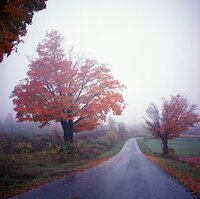
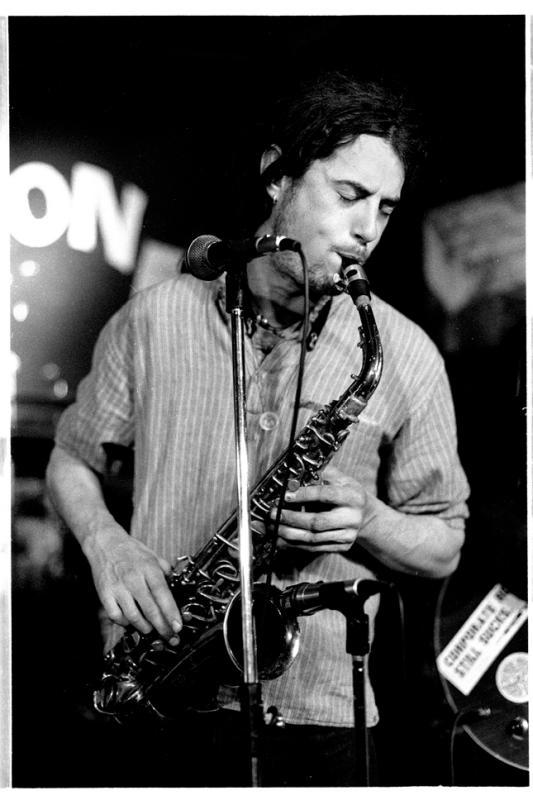
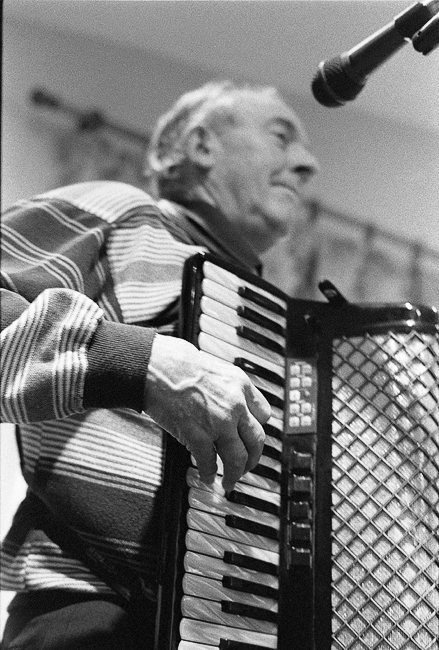
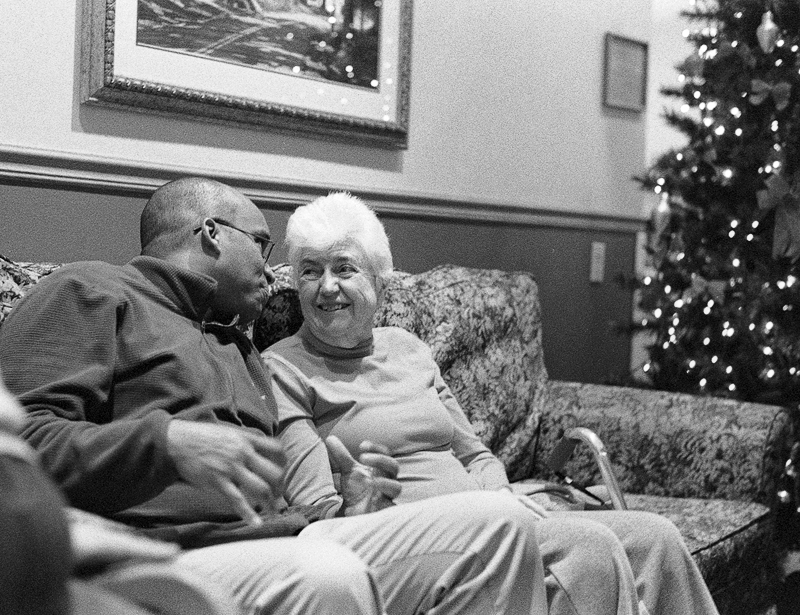
I prefer it in Tmax Developer at EI 1600, developed for 8 minutes at 24C, 1+4 dilution. Xtol gives finer grain but I like the tonality of Tmax Developer better

rodeo2007-8.jpg


apollo_3-17-08_1.jpg


grandpa_3-17-08_1.jpg


marys-bar11.jpg


All these were Tmax 3200, EI1600, Developed as described above.
 

jim appleyard

Subscriber
Allowing Ads
Joined
Nov 21, 2004
Messages
2,421
Location
glens falls, ny USA
Format
Multi Format
Pyrocat HD was developed (get it?) by Sandy King, who frequents APUG often. Pytocat HD contains a developing agent called catechol (sometimes pyrocatechol) and catechol is a staining developer. Yes, it "stains" the negative. This stain helps smooth out grain and contol the highlight areas of your photo.

You can mix up Pyrocat HD yourself by ordering the chems from Artcraft Chemicals or Photo Formulary. The formulary also sells a pre-packaged kit.

It you search here on APUG you will find pages and pages of info about Pyrocat. It is a very fine and popular developer.
 
OP
OP

CuS

Member
Allowing Ads
Joined
Oct 29, 2007
Messages
144
Format
35mm
Thanks

Pyrocat HD was developed (get it?) by Sandy King, who frequents APUG often. Pytocat HD contains a developing agent called catechol (sometimes pyrocatechol) and catechol is a staining developer. Yes, it "stains" the negative. This stain helps smooth out grain and contol the highlight areas of your photo.

You can mix up Pyrocat HD yourself by ordering the chems from Artcraft Chemicals or Photo Formulary. The formulary also sells a pre-packaged kit.

It you search here on APUG you will find pages and pages of info about Pyrocat. It is a very fine and popular developer.

Thanks - I'll give it a go!
 

jim appleyard

Subscriber
Allowing Ads
Joined
Nov 21, 2004
Messages
2,421
Location
glens falls, ny USA
Format
Multi Format
There are a few different varieties of Pyrocat out there; HD, MC, etc. I use the HD, but instead of Phenidone, I use Metol with catechol and mix in propylene (sp?) glycol. The glycol makes the stuff last just this side of forever.

Before you use, please read-up on the varieties and workings of catechol. find which one is best for you :smile:
 
OP
OP

CuS

Member
Allowing Ads
Joined
Oct 29, 2007
Messages
144
Format
35mm
Thanks for that

There are a few different varieties of Pyrocat out there; HD, MC, etc. I use the HD, but instead of Phenidone, I use Metol with catechol and mix in propylene (sp?) glycol. The glycol makes the stuff last just this side of forever.

Before you use, please read-up on the varieties and workings of catechol. find which one is best for you :smile:

yes, the PG (or any glycol adjuvant) sounds like it makes sense. Probably acting as a hymectant. I wonder the if formula has an oxygen scavenger present?
 
OP
OP

CuS

Member
Allowing Ads
Joined
Oct 29, 2007
Messages
144
Format
35mm
Thanks for that

There are a few different varieties of Pyrocat out there; HD, MC, etc. I use the HD, but instead of Phenidone, I use Metol with catechol and mix in propylene (sp?) glycol. The glycol makes the stuff last just this side of forever.

Before you use, please read-up on the varieties and workings of catechol. find which one is best for you :smile:

yes, the PG (or any glycol adjuvant) sounds like it makes sense. Probably acting as a humectant. I wonder the if formula has an oxygen scavenger present?
 

marke

Member
Allowing Ads
Joined
Oct 20, 2007
Messages
21
Location
Wisconsin, U
Format
35mm RF
I just started using this film myself, and got some good advice over at RFF. I believe this film is designed to be pushed when needed, hence the "P"(3200) designation. But I also believe Kodak has stated the true ISO to be 1000 (or 800). So it pushes well (and best dev in Tmax), but you lose more shadow detail the more you push it.

I've been shooting it at EI 1600, and developing in Tmax. 8.5 minutes at 72F. Constant agitation for first 30 seconds, then 5 seconds of light agitation each 60 seconds. Oh yes, and this is film that expired in 2007.

original.jpg

original.jpg

original.jpg
 
Photrio.com contains affiliate links to products. We may receive a commission for purchases made through these links.
To read our full affiliate disclosure statement please click Here.

PHOTRIO PARTNERS EQUALLY FUNDING OUR COMMUNITY:


Ilford ADOX Freestyle Photographic Stearman Press Weldon Color Lab Blue Moon Camera & Machine
Top Bottom