
• Welcome to Photrio!
    Registration is fast and free. Join today to unlock search, see fewer ads, and access all forum features.
    Click here to sign up

Best exposure for limit contrast scenes

Tractor & Tulips

A
Tractor & Tulips

  • 0
  • 0
  • 12
Tree with Big Shadows

Tree with Big Shadows

  • 2
  • 0
  • 71

Forum statistics

Threads
203,456
Messages
2,855,030
Members
101,853
Latest member
Expert Graphics Int.
Recent bookmarks
0

k0diak

Member
Allowing Ads
Joined
May 2, 2014
Messages
4
Location
Singapore
Format
35mm RF
Hi,

First post, so please forgive. I'm about to start darkroom printing after a few months of film development at home.

This exposure question bugs me since I never printed:

Imagine a scene that has a moderate contrast range, let's say 4 stops. I want the brightest part to be in zone V and the darkest to zone II in the print.

- Is it better to expose the negative in that way or I should expose say zone IV to VII and just underexpose the print?

- Is it better to do a little longer development to stretch out the zones then print on higher contrast or better to keep it closer to how I want to expose?

In other words:
Should the way I expose and develop the negative reflect the final output (not considering latitude limits) or I try to preserve as many tones as possible in the negative?

Example photo (ignore the brightest part, has a bit more range):
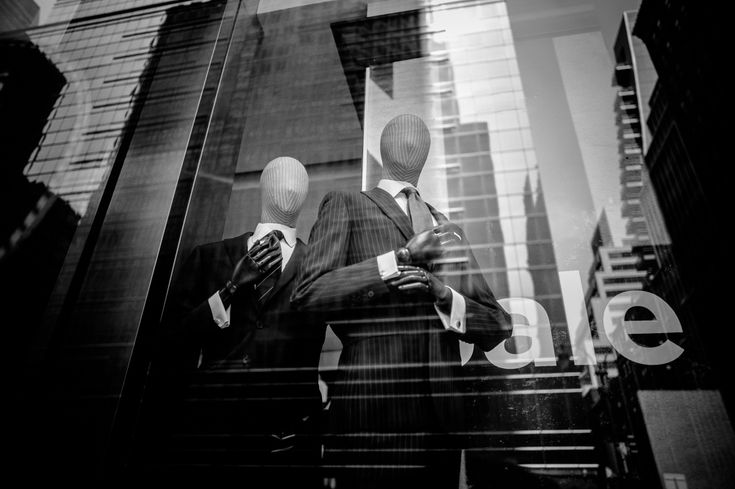

d2a22ce64ef5676bad8f43d147289ec5.jpg


Thanks!
 
Quick addition because I'm getting general exposure information in messages: for easy printing on VC paper, is it better to have the maximum of the negative density range used (as spread out as possible) or better to have about the density ratio of the desired print? In this later case, where on the curve should the range be positioned, same as the print or use the more linear response part of the curve?
 
"let's say 4 stops" (...) "brightest part to be in zone V and the darkest to zone II in the print" the way I count: II+4=VI, but anyway...
A print spanning zones II to V, starting at dark gray (no black) and maxing at middle gray, will look..., well, it's up to you

Is it better to expose the negative in that way or I should expose say zone IV to VII and just underexpose the print?
If the limited brightness range of the subject allows it, I would indeed expose a little more: zones (III-VI) or (IV-VII) as you suggest. The neg wil be more dense (and have better separation in the shadows), you will need to expose more, not less under the enlarger.

Is it better to do a little longer development to stretch out the zones then print on higher contrast
If you develop the negative longer, it will have higher contrast; to acheive (more or less) the same print you need a paper with less contrast, not more. And indeed with such a low brightness range subject, I would develop the negative to a higher contrast (but then not increase the exposure as mentioned above); a print spanning zones II-V will not look like the example image that you posted; darker, dull.
 
The way you expose and develop the negative has everything to do with the final print. DOing so in a normal manner and then underprintg to lower the tonality will only result in mud.
 
With modern films one can almost always expose all portions of a scene to a suitable portion of the film curve ( not including specular reflections and light sources ).
 
To simplify things, in the days of black & white press photography, on sunny days with contrsty light, we would expose 400asa Tri-X at 200asa and cut development in D76 by a quarter. Conversly on dull days when the light was flat, we'd re-rate Tri-X at 800asa and give slightly extended development in Microphen (a speed increasing developer that gave a "punchy" neg when light was flat)
 
In other words:
Should the way I expose and develop the negative reflect the final output (not considering latitude limits) or I try to preserve as many tones as possible in the negative?

I would say reflect the final output, because it also depends on your type of enlarger, paper, chemicals, ambient temperature in your darkroom, to name but a few.
 
Photrio.com contains affiliate links to products. We may receive a commission for purchases made through these links.
To read our full affiliate disclosure statement please click Here.

PHOTRIO PARTNERS EQUALLY FUNDING OUR COMMUNITY:


Ilford ADOX Freestyle Photographic Stearman Press Weldon Color Lab Blue Moon Camera & Machine
Top Bottom
