
• Welcome to Photrio!
    Registration is fast and free. Join today to unlock search, see fewer ads, and access all forum features.
    Click here to sign up

Beginner: Neopan 400 recommended development

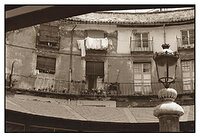
Valencia

A
Valencia

  • 0
  • 0
  • 45
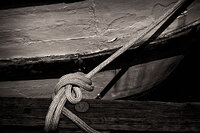
Tied to the dock

D
Tied to the dock

  • 4
  • 0
  • 89

Recent Classifieds

Forum statistics

Threads
203,092
Messages
2,849,720
Members
101,658
Latest member
Coopat
Recent bookmarks
1

anbe

Member
Allowing Ads
Joined
Jul 31, 2007
Messages
7
Location
Padua, Italy
Format
35mm
Finally I have decided to enter the wonderful world of film development. :D

I shoot Neopan 400 in 135 format for street photography and I love contrasty scenes. The enlarger I'm using now is a condenser one and I print on fixed gradation FB paper.

I've read almost all posts on Neopan 400 finding a lot of useful information but they are a bit confusing for a beginner like me.
So I'm here to ask your advice: what would be a good (or the best) developer (and related time/temperature, agitation, rated EI, etc) to begin with?

Please consider that I'm living in Europe so it could be difficult buying chemicals outside EU.

Thanks

Andrea
 
I use Ilford ID-11 with good results.
ID-11 is a very common powder based developer, available in 1 and 5 litre packets.
To use it, you make a stock solution by dissolving the powder into the appropriate amount of water, and then you dilute this for use.
I've found it to be cheap and reliable.
I normally use it at 1+1 (half stock solution, half water) concentration, but I can't remember the time offhand - but it's whatever is printed in the instructions.

There should be no problems buying it, as Ilford are a UK company

EDIT: I rate the film at 400, and develop at 20C
 
Last edited by a moderator:
I use Ilford ID-11 with good results.
ID-11 is a very common powder based developer, available in 1 and 5 litre packets.
To use it, you make a stock solution by dissolving the powder into the appropriate amount of water, and then you dilute this for use.
I've found it to be cheap and reliable.
I normally use it at 1+1 (half stock solution, half water) concentration, but I can't remember the time offhand - but it's whatever is printed in the instructions.

There should be no problems buying it, as Ilford are a UK company

EDIT: I rate the film at 400, and develop at 20C

I can also recommend neopan 400 in ID-11, it's what I started with and works very well for me. I am now moving on to try different things.. but this combo is definitely easy to work with for a beginner, if I can do it I'm sure anyone can.
 
If you find it easier to source Kodak's D-76, you can use that the same as Ilford's ID-11. Both are excellent choices for you, and both behave identically in use.
 
I too use Neopan 400 (love it), both in 35mm and 120. I normally develop it in Kodak XTOL, in some dilution. I love it 1+3, 14 minutes, 20 degrees Celsius, agitate for first minute, then four times per minute after that.

When I've been out of XTOL, I've also used D76 (same as ID11 I believe) 1+1, for 9:30, 20 degrees Celsius, and agitated for the first minute, then four times each minute after that.

Nice tones and I find the contrast is what I like. It may not be gritty enough for you though if you're looking for a more hard edged "street" look.

Good luck and have fun!
 
Try it with Xtol 1:1 @ 20 C- 9.75 minutes. Here are a couple of test exposures of mine- high and low contrast scenes (lousy scans!)

high contrast:
(there was a url link here which no longer exists)
low contrast:
(there was a url link here which no longer exists)
 
I was going to say Xtol 1+1 also. Whatever developer you choose, if you stick with the same film for a while you'll figure out the time/agitation that matches your paper and light source for what you want.
 
Hi Andrea,

I am finally getting Neopan 400 to do the things I want it to do. For my use it seems to work best at Ei200. I am getting some of the best negatives (in ease of printing), developing in Rodinal 1:50 for 12 minutes@ 20c with minimal agitation. (15 seconds initial, then 2 further inversions at 4 mins and 2 more at 8 mins). Examples below.

http://www.rangefinderforum.com/photopost/showfull.php?photo=82373
http://www.rangefinderforum.com/photopost/showfull.php?photo=82372
http://www.rangefinderforum.com/photopost/showfull.php?photo=82748

Good luck with Neopan. It is a wonderful film and can make some lovely tones in Rodinal.

Regards, John.
 
Finally I have decided to enter the wonderful world of film development. :D

I shoot Neopan 400 in 135 format for street photography and I love contrasty scenes. The enlarger I'm using now is a condenser one and I print on fixed gradation FB paper.

I've read almost all posts on Neopan 400 finding a lot of useful information but they are a bit confusing for a beginner like me.
So I'm here to ask your advice: what would be a good (or the best) developer (and related time/temperature, agitation, rated EI, etc) to begin with?

Please consider that I'm living in Europe so it could be difficult buying chemicals outside EU.

Thanks

Andrea

Have you ever shot other popular films such as TriX and HP5 and developed them with any particular developers? If you have, you can start from there. Neopan 400 is close to them in terms of quality and characteristics, and try to adjust and make your own chart with whatever is available and accessible to you.

I usually shoot Neopan at 400 ASA but overexpose it anywhere from 1/3 to 1 stop, develop it with Fuji Super Prodol diluted to 1:1 for 7 1/2 min at 20 Celsius.
 
Last edited by a moderator:
Neopan 400 Spec Sheet

I've read almost all posts on Neopan 400 finding a lot of useful information but they are a bit confusing for a beginner like me.
So I'm here to ask your advice: what would be a good (or the best) developer (and related time/temperature, agitation, rated EI, etc) to begin with?

Thanks

Andrea

Andrea,

I don't know whether this will help or hinder, but I am asking the same question and found the following Fuji Data & Tech Sheet for Neopan 400.
I going to try HC110b because that's what I have on hand, but would like to get some feedback on the Fuji developers, SPD or Fujidol.

Terry
 
Hi Andrea,

I am finally getting Neopan 400 to do the things I want it to do. For my use it seems to work best at Ei200. I am getting some of the best negatives (in ease of printing), developing in Rodinal 1:50 for 12 minutes@ 20c with minimal agitation. (15 seconds initial, then 2 further inversions at 4 mins and 2 more at 8 mins). Examples below.

http://www.rangefinderforum.com/photopost/showfull.php?photo=82373
http://www.rangefinderforum.com/photopost/showfull.php?photo=82372
http://www.rangefinderforum.com/photopost/showfull.php?photo=82748

Good luck with Neopan. It is a wonderful film and can make some lovely tones in Rodinal.

Regards, John.


:D Same time, and dilution but @400ISO and agitating the initial 60sec + 10sec every three minutes
kind regards
 
Andrea,

I don't know whether this will help or hinder, but I am asking the same question and found the following Fuji Data & Tech Sheet for Neopan 400.
I going to try HC110b because that's what I have on hand, but would like to get some feedback on the Fuji developers, SPD or Fujidol.

Terry

Hi, Terry.

I have had mixed results with HC-110 and Neopan, finally settling on Dilution H for 9 mins @ Ei200. I found dilution B (1:31), to be too contrasty with "normal" agitation.The extended time in development by doubling the dilution (1:63), and cutting agitation, cured that and gave more manageable negatives.

Regards John.
 
:D Same time, and dilution but @400ISO and agitating the initial 60sec + 10sec every three minutes
kind regards

Hi, Soren.

Do you wet print or scan your negs ? I love the tones with this combination and I am hooked on the look. I wet print and the negs produced this way print easily with a minimum of fuss. It has surpassed my expectations of my old favorite HC-110 for sharpness....

Regards, John
 
I made (and will again when I get my darkroom) wetprints. Its a hell of a job to keep them wet to avoid drydown :D

Kind regards
 
I shoot a lot of NP400 in 135 format for street photography. What I have found interesting is the difference of the light available in Australia and Germany. The two places I practice that kind of photography on a regular basis.

To add some contrast to the German light, I often use an orange filter, this can also cut through the summer haze a bit, especially if taking a scenic shot of a village ½ a kilometre away.

I use D76 1+1 exclusively; I rate the film at 320 ASA for daylight and fluorescent and 250 ASA under tungsten lighting.

As you use a condenser enlarger you may wish to develop the negs to the higher contrast settings given for diffused enlargers, this will bump the contrast a bit as well.

To give you an idea of the difference, the time for NP400 in D76 1+1 is 9.75 minutes @ 20° C. You could add 10% to this time, which is 10.72 minutes, which equates to 10 minutes and 45 seconds developing time.

It is these kinds of subtle changes, which personalise and give you what you are after.

My personal take on NP400 in D76 @ 1+1 dilution is:- 10½ minutes at 20º C with the film exposed on my in camera meter at 320 ASA.

You will have differences and I’m sure you will have to alter your developing regime to suit the graded paper you are using, that’s the way it is.

Let us know how you get along.

Mick.
 
Photrio.com contains affiliate links to products. We may receive a commission for purchases made through these links.
To read our full affiliate disclosure statement please click Here.

PHOTRIO PARTNERS EQUALLY FUNDING OUR COMMUNITY:


Ilford ADOX Freestyle Photographic Stearman Press Weldon Color Lab Blue Moon Camera & Machine
Top Bottom
