
• Welcome to Photrio!
    Registration is fast and free. Join today to unlock search, see fewer ads, and access all forum features.
    Click here to sign up

Back to basics with a Weston light meter.

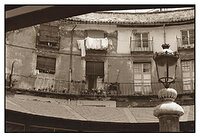
Valencia

A
Valencia

  • 0
  • 0
  • 14
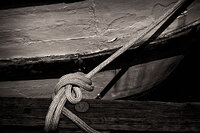
Tied to the dock

D
Tied to the dock

  • 4
  • 0
  • 77

Recent Classifieds

Forum statistics

Threads
203,086
Messages
2,849,676
Members
101,652
Latest member
Mayorbeez
Recent bookmarks
0

WILL WORK FOR FILM

Member
Allowing Ads
Joined
Oct 3, 2016
Messages
102
Location
Boise Idaho
Format
Medium Format
Lately I have been trying to dramatically improve my analog photography with a better understanding of the basics of light capture.

Stepping back in time with my recently calibrated Weston 3 light meter has really opened my eyes to the skill that was and is still required to attain a black and white analog image as visualized. Exposing and developing a useable negative is relatively easy but capturing the exact image that is seen in my mind's eye has been elusive to this point. My recent step into medium format has really intensified my desire to get back to basics and learn to get the results I imagine.

So why a Weston? I can almost hear the head shaking.

Well, it is dead accurate. George at Quality Light Metrics is the man. And, as I investigate the capabilities of this ingenious little gadget in regards to the zone system, it is really quite capable. But as with any form of technology it does have it's limitations.

Still photography has been my recent interest in regard to fine tuning both my exposure and development. The ability to control the environment and take my time has proven extremely valuable in this regard. I pick an interesting household item and manufacture a low key scene using window light or indoor lighting in the hall against a dark room. Visualize the image I want in my head and then measure the scene with the Weston. It is necessary to get very close to the subject and slowly sweep the meter finding the high and low values but I am surprised at how intuitive this meter can be when one takes the time to learn how to use it.

Then there is landscape. This is where I am floundering a bit with the Weston. I have to admit that a spot meter is a far superior tool for this application. My Nikon F4's spot metering capabilities coupled with the Weston have taught me quite a bit. I will meter the landscape with the Weston and create a plan of attack. Then spot meter the same scene as a reality check. In my opinion, every photographer should have this experience. What an eye opener!

So what is the point?

To me, a photograph is a personal interpretation of a scene. Until I learn how to interpret that scene and then paint it with light using the tools at hand I am not in control of the outcome. Therefore I am not achieving the image seen in my mind's eye. When I am successful at achieving the pre-conceived image as a negative, darkroom printing is remarkably easy and the result is a physical print to be proud of.

I just want to share this experience as it has been rather profound.
 
My "go to" meter is, and always has been a Sekonic L-398 Studio Master. I have a Minolta digital meter that just sits on a shelf, I'm so used to the Sekonic that everything is "at a glance" when adjusting exposure.
 
Last edited:
Completely agree, I use 2 weston's a master 5 and a euromaster, dead accurate, and if you can get hold of a weston instruction book it will teach you more about exposure than most books will,I also have a East Kilbrade euromaster, made by a firm set up after Weston themselves closed down, it is a Weston in everything but name as tyhey could not call it a weston
 
I'd not waste a lot of time trying to pre-visualize. Once a properly exposed negative is obtained, a full range of interpretations are available in the darkroom when printing. Obtaining a properly exposed negative involves placing low values so they have a minimum separation of tones.
 
Wait until you get a 1 degree spot meter. It's hard to use anything else for landscapes once you get used to their pinpoint accuracy and ability to meter through lenses.
 
The Weston meters were the standard for many years when I was growing up (1940's - 50's). Seems like everyone that did photography had one or more, and they worked well. Try (well, you can't anymore) using Kodachrome 10 - your exposure has to be spot on. That said, I do love my Gossen Luna Six and Luna Pro meters. The Westons, to their credit, never needed a battery.
 
Lately I have been trying to dramatically improve my analog photography with a better understanding of the basics of light capture.

Stepping back in time with my recently calibrated Weston 3 light meter has really opened my eyes to the skill that was and is still required to attain a black and white analog image as visualized. Exposing and developing a useable negative is relatively easy but capturing the exact image that is seen in my mind's eye has been elusive to this point. My recent step into medium format has really intensified my desire to get back to basics and learn to get the results I imagine.

So why a Weston? I can almost hear the head shaking.

Well, it is dead accurate. George at Quality Light Metrics is the man. And, as I investigate the capabilities of this ingenious little gadget in regards to the zone system, it is really quite capable. But as with any form of technology it does have it's limitations.

Still photography has been my recent interest in regard to fine tuning both my exposure and development. The ability to control the environment and take my time has proven extremely valuable in this regard. I pick an interesting household item and manufacture a low key scene using window light or indoor lighting in the hall against a dark room. Visualize the image I want in my head and then measure the scene with the Weston. It is necessary to get very close to the subject and slowly sweep the meter finding the high and low values but I am surprised at how intuitive this meter can be when one takes the time to learn how to use it.

Then there is landscape. This is where I am floundering a bit with the Weston. I have to admit that a spot meter is a far superior tool for this application. My Nikon F4's spot metering capabilities coupled with the Weston have taught me quite a bit. I will meter the landscape with the Weston and create a plan of attack. Then spot meter the same scene as a reality check. In my opinion, every photographer should have this experience. What an eye opener!

So what is the point?

To me, a photograph is a personal interpretation of a scene. Until I learn how to interpret that scene and then paint it with light using the tools at hand I am not in control of the outcome. Therefore I am not achieving the image seen in my mind's eye. When I am successful at achieving the pre-conceived image as a negative, darkroom printing is remarkably easy and the result is a physical print to be proud of.

I just want to share this experience as it has been rather profound.

Dead accurate??? How accurate is it?
 
Dead accurate??? How accurate is it?
I can't speak for the OP, but "dead accurate" for me means it agrees with what I've determined is my personal ISO for the film and paper I use. As long as my exposures are easy to print, it doesn't matter if my meter agrees with others and stays consistent. I use my Sekonic for 95% of my situations, rarely need my spot meter.
 
I still use my grandfather’s Weston Master from time to time.

I got it calibrated about a dozen years ago and it’s a pretty reliable meter.

Of course, the key to reliability of any meter is understanding its limitations....
 
"DEAD ACCURATE"

Well that is surely an illusive term.

To me it means that it has been calibrated by a master and I trust it over every other meter I own.
 
I can't speak for the OP, but "dead accurate" for me means it agrees with what I've determined is my personal ISO for the film and paper I use. As long as my exposures are easy to print, it doesn't matter if my meter agrees with others and stays consistent. I use my Sekonic for 95% of my situations, rarely need my spot meter.
The numbers on the Weston Master III are Candelas per Square foot. How close is it?
 
I too have George at Quality Light Metrics adjust my light meters.
 
Wait until you get a 1 degree spot meter. It's hard to use anything else for landscapes once you get used to their pinpoint accuracy and ability to meter through lenses.

I recently picked up a Pentax 1/21 spot meter off the Bay for almost nothing. Unfortunately, I didn't do my homework and was unaware of the battery issues involving that model. The 640 mercury 1.3 volt powers the high range and is no longer made and there are no modern 1.3 volt substitutes. The low light mode runs off a 9V and is spot on to my Weston. I can at least use it for low light work. Haven't really given it much thought since George informed me that he didn't recommend putting any money into it. I might just throw a 1.5V alkaline in it and see what happens.
 
Still photography has been my recent interest in regard to fine tuning both my exposure and development. The ability to control the environment and take my time has proven extremely valuable in this regard. I pick an interesting household item and manufacture a low key scene using window light or indoor lighting in the hall against a dark room. Visualize the image I want in my head and then measure the scene with the Weston. It is necessary to get very close to the subject and slowly sweep the meter finding the high and low values but I am surprised at how intuitive this meter can be when one takes the time to learn how to use it.

THANK YOU! for visualizing So many use "PREvisualize". :D
 
I mainly used Weston Master II and Master III for decades. The GE and Norwood Director from that era were also good, with the Norwood always ready for incident light readings. The GE had the advantage of the meter movement axis being vertical in most use, which reduced errors from an out-of-balance meter movement.
 
I recently picked up a Pentax 1/21 spot meter off the Bay for almost nothing. Unfortunately, I didn't do my homework and was unaware of the battery issues involving that model. The 640 mercury 1.3 volt powers the high range and is no longer made and there are no modern 1.3 volt substitutes. The low light mode runs off a 9V and is spot on to my Weston. I can at least use it for low light work. Haven't really given it much thought since George informed me that he didn't recommend putting any money into it. I might just throw a 1.5V alkaline in it and see what happens.
If you can rig up an appropriate spacer (even wadded up aluminum foil will work in a pinch) you can use zinc-air hearing aid batteries. At 1.35V they get you close enough. They don't last very long, but they're very cheap and they'll keep your meter working more or less as intended.
 
THANK YOU! for visualizing So many use "PREvisualize". :D

Pre-visualizing is too redundant. Might as well just take a nap.

Clearly you both lean more to Ansel Adams then to Minor White :D.

upload_2019-2-13_9-13-10.png
 
8A8FB8F4-EB05-4296-BD34-C25E1D88D33C.jpeg

Zone stickers made up from your own print paper can give you a direct visual link between the subject luminance and your intended print.
 
I have the Invercone for my Master III. Hasn't failed me yet. Only caveat (Weston generally) is low light issues.


Honestly the meter taught me more about exposure than many books I've read. Not that the books were poor seeing it just clicked the AHA!!! switch between my ears. Doesn't hurt that I have an affinity for old stuff that was well designed. IMHO the Weston meters fit that description.
 
Only caveat (Weston generally) is low light issues.

True! If one likes to meter for long exposures he'll need another meter. The Weston meter works effectively at any level of illumination where one would consider hand-holding the camera.
--
There's a guy in the UK who sells fully reconditioned WESTON EUROMASTER and other Weston light meters ~ Complete with INVERCONE Case & Instructions (fully rebuilt, refinished, restored with new selenium cell fitt) at an acceptable price.
 
Last edited:
Photrio.com contains affiliate links to products. We may receive a commission for purchases made through these links.
To read our full affiliate disclosure statement please click Here.

PHOTRIO PARTNERS EQUALLY FUNDING OUR COMMUNITY:


Ilford ADOX Freestyle Photographic Stearman Press Weldon Color Lab Blue Moon Camera & Machine
Top Bottom
