• Welcome to Photrio!
    Registration is fast and free. Join today to unlock search, see fewer ads, and access all forum features.
    Click here to sign up

B&W Reversal: what is it with Ilford's hypo quantities?

Recent Classifieds

Forum statistics

Threads
201,764
Messages
2,829,746
Members
100,931
Latest member
zalapatax
Recent bookmarks
0

josephchesshyre

Member
Allowing Ads
Joined
Jun 4, 2014
Messages
53
Location
Chester, Che
Format
35mm
Over the last few years I've processed roughly twelve rolls of Ilford HP5 and FP4 using Ilford's reversal process instructions. I ended up lowering the quantity of sodium thiosulphate in the first developer from what they recommend for FP4 (12g/L) down to 4g/L (and using either 1g/L or none for HP5), but still not being entirely satisfied with the results.

I know there is advice on here to experiment with the quantity of this, but I don't understand why these instructions specify this amount for these specific films when it is clearly too much. However, just to try following other advice (including that included in the Ilford sheet), yesterday I processed a roll sticking 100% to the sheet's quantities but instead varying the EI, bracketing 0, -1 and -2 with a roll of FP4 at 250 ISO (box speed is of course 125). I wanted to see what the results would be like with quite a bit of underexposure but with the full quantity of hypo.

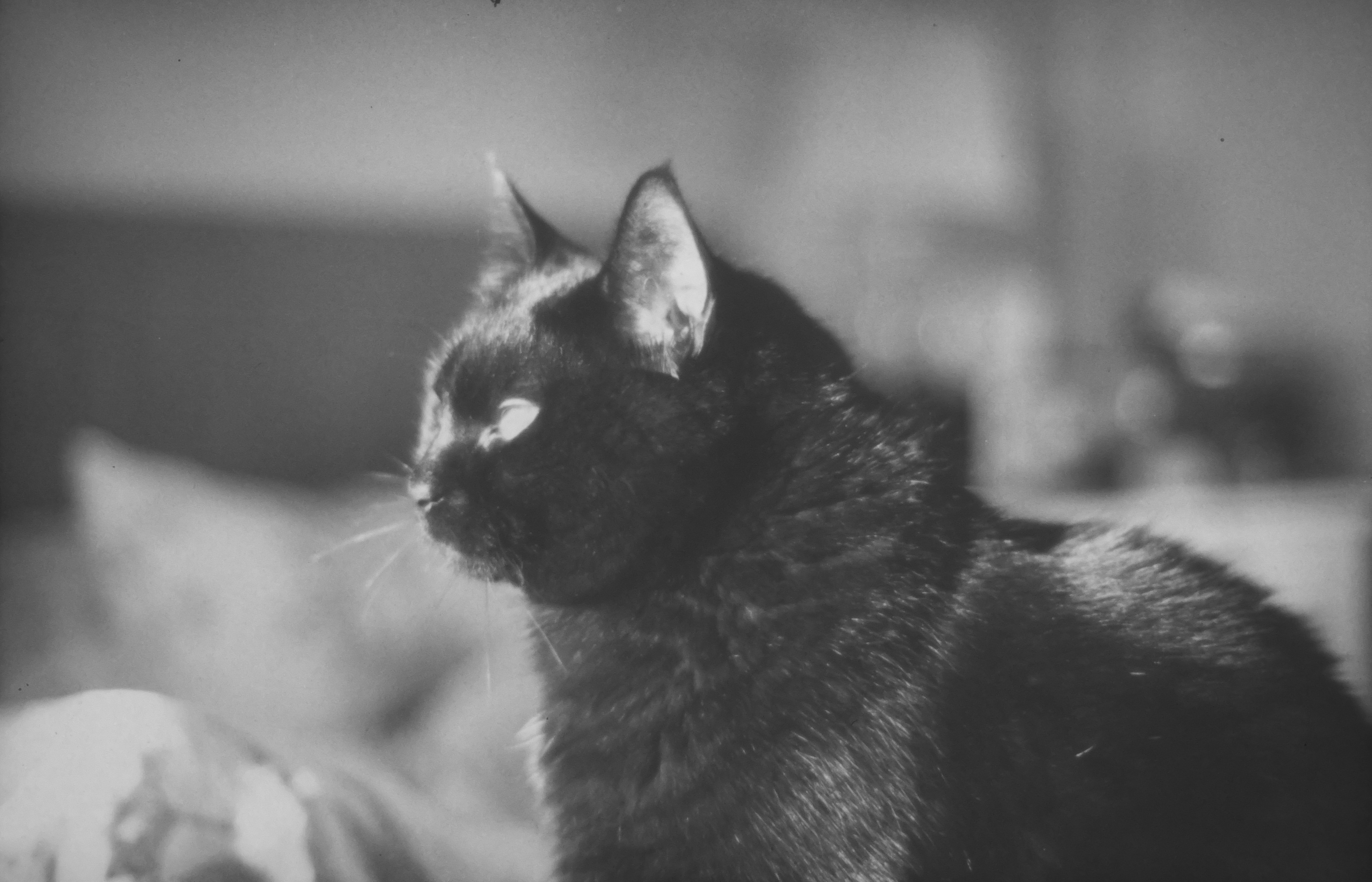
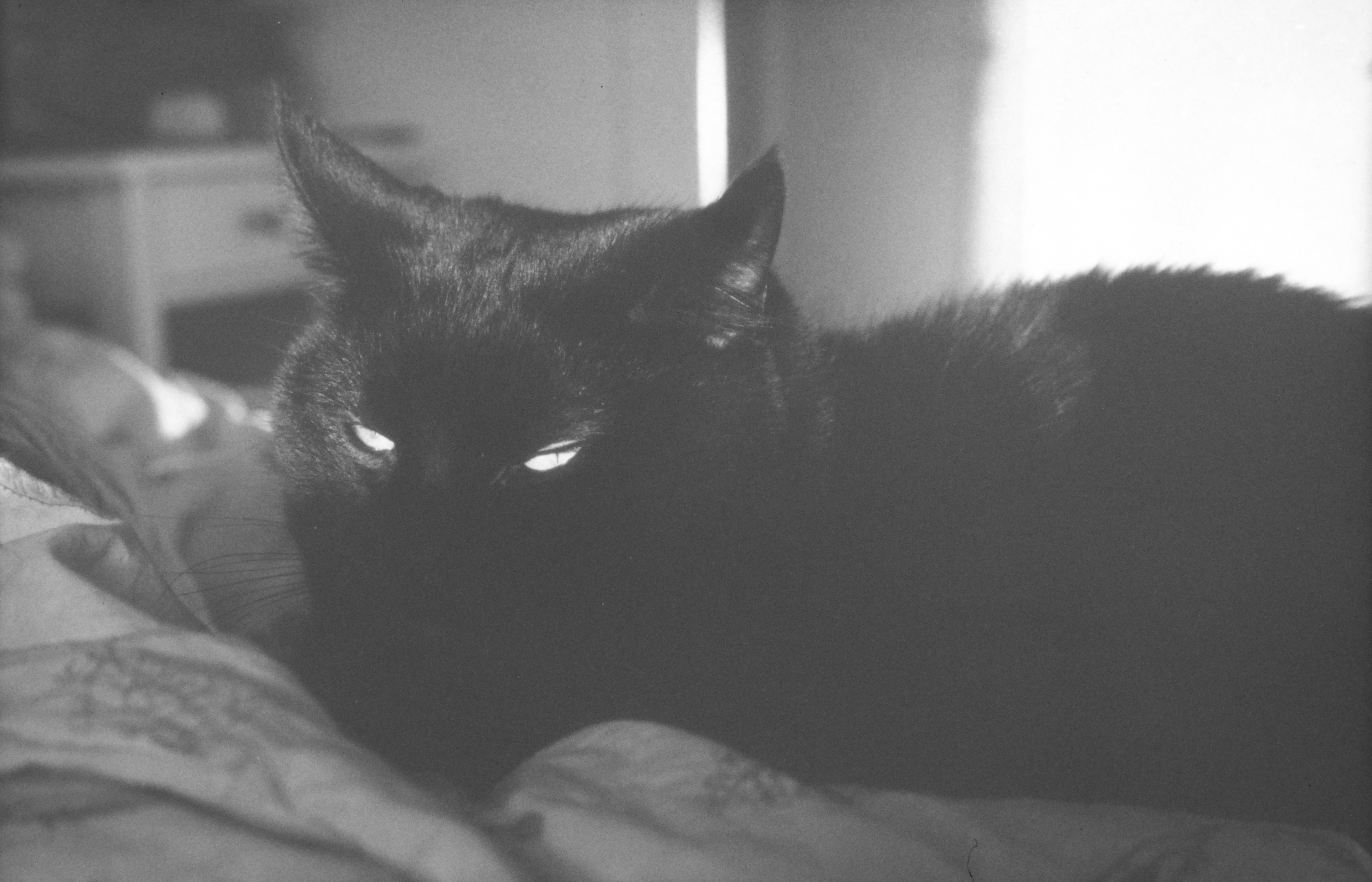
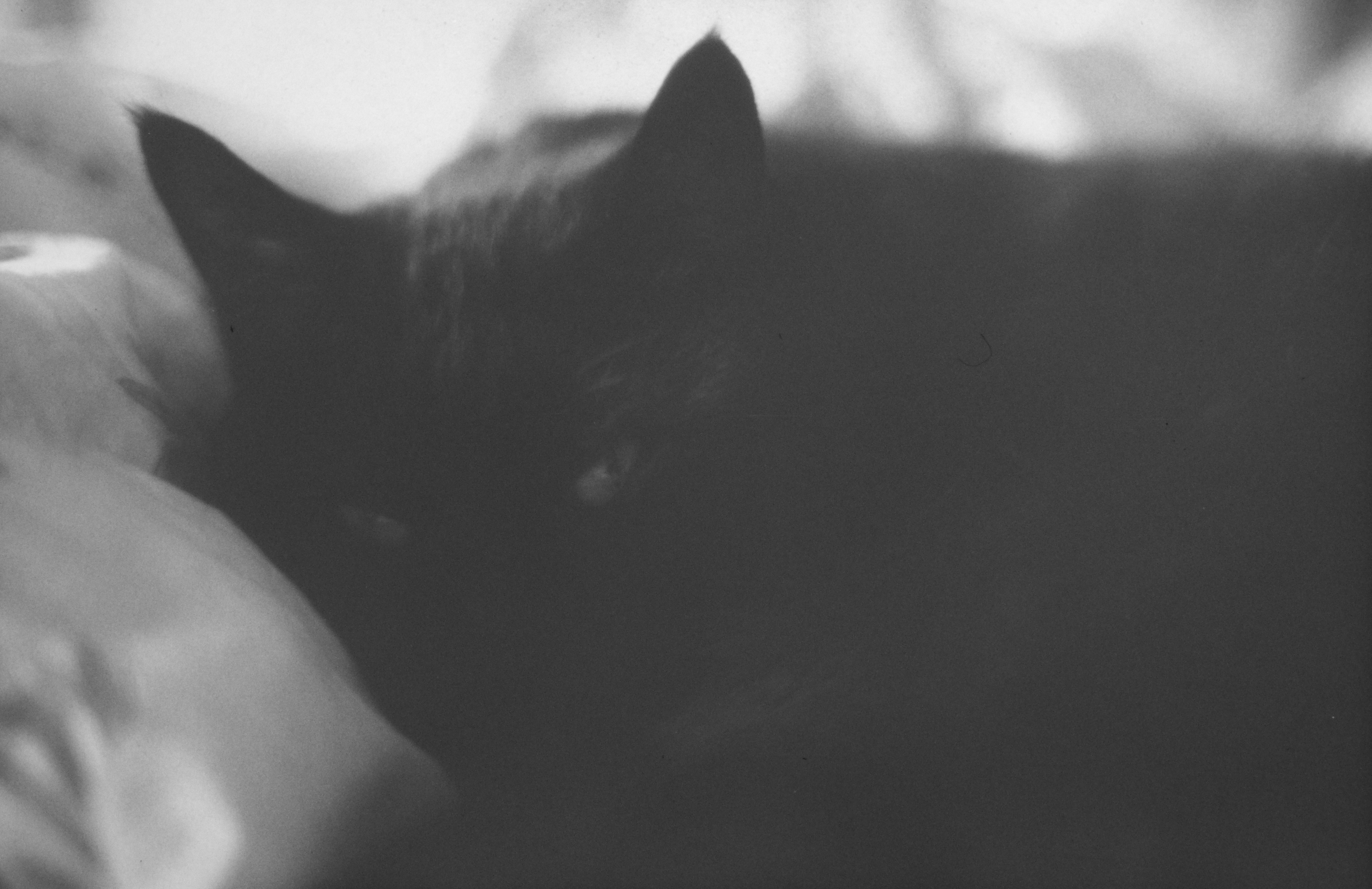
Well, the photos are all hugely lacking in D-max and the ones with the lowest exposure are just muddy - there is almost no detail in the shadows. The edges of the film are similarly lacking in density. The shoot was of my black cat in nice sunlight so this was a good challenge for this test. About half of the photos are useable and look quite nice but have a very narrow contrast range because of the lack of blacks. I will post a couple of scans later today.

I know I should have expected this, but I'm getting pretty disheartened now, not to mention confused, because some sources imply that you *must* use some silver halide solvent in the first developer, whilst others say that actually it's better to use none at all and that you can use the Ilford method as it is but omitting the hypo.

My question I suppose is where do I go from here? Is part of the problem in fact that sodium thiosulphate is inferior to potassium thiocyanate as a 1st developer ingredient? I've collected the necessary chemicals to make Kodak D168 so I think perhaps I should try that. Does anyone have any experience of using that Kodak process with any Ilford films who might be able to recommend a 1st development time? I know the Kodak instructions say 5-10 minutes so I guess if no one's done this I'll just have to try a few different times out.

I find it a little frustrating that those Ilford instructions were out there (I know they've now withdrawn them pending revision and I'll be extremely interested to see what the new instructions are like) with quantities specified which just don't seem to work. I've followed everything in the instructions to the letter so I don't think it's something else I'm doing wrong. My final conclusion was maybe that I was overexposing but this last test has shown that this is not the cause.

Perhaps before trying D168 (or as well as) I should try a roll with the Ilford-specified ingredients but with maybe an 8 minute developing time rather than 12 minutes?
 

pentaxuser

Member
Joined
May 9, 2005
Messages
20,335
Location
Daventry, No
Format
35mm
Have you written to Ilford, telling them of your findings and asking for advice or if they cannot at this stage supply any, asking for a progress report on where they are in relation to fresh instructions?

Thanks

pentaxuser
 
OP
OP

josephchesshyre

Member
Allowing Ads
Joined
Jun 4, 2014
Messages
53
Location
Chester, Che
Format
35mm
No I haven't but I had planned to, and this is of course an excellent idea. I get the impression from previous correspondence I've had with them (about their own lab's processing methods) that they welcome questions and discussion. I actually live about 40 miles from them so should maybe even pay them a visit!

I can't remember where I read that they were updating their reversal instructions (I think on a thread somewhere on here) but I will definitely report back with their reply.

In the meantime I will post some of the scans of the photos I mentioned above.
 
OP
OP

josephchesshyre

Member
Allowing Ads
Joined
Jun 4, 2014
Messages
53
Location
Chester, Che
Format
35mm
So here are four of the photos (Ilford FP4+ at 250 ISO). I have done nothing to them after 'scanning' them with my Panasonic DMC-FZ72 other than converting them to grayscale.

Does this look like too much hypo, as I suspect it is? They're not entirely unpleasant to look at, I just feel they should have a far wider range of tones and a higher D-max.

P1000536.jpg
P1000552.jpg
P1000555.jpg
P1000565.jpg
 
  • johnielvis
  • Deleted
  • Reason: too long...shortend in new post

johnielvis

Member
Allowing Ads
Joined
May 21, 2010
Messages
966
Format
Medium Format
Oh--forgot to add--your muddy results indicate that the hypo got to the silver salts before the developer did--so, since you started already lowering the hypo concentration, you got it as low as you can go pretty much--so it's time to start strengthening the developer--so just use more concentration and higher temperature and leave the low hypo concentration alone and constant. Time to tweak/strengthen the developer. let me delete the last post....this is shorter and more succinct.
 
OP
OP

josephchesshyre

Member
Allowing Ads
Joined
Jun 4, 2014
Messages
53
Location
Chester, Che
Format
35mm
Thank you! I was using Ilford PQ Universal diluted 1 + 5 plus 12g/L hypo, at 20 C, for 12 minutes. Is this not quite a strong developer?

I am keen to try using Kodak D168 as I say - is this stronger than the above? It does contain 2g/L KSCN I know but I understand that this has a slightly different action from hypo and tends not to lower shadow density so much.

*edit* just seen your second reply. To clarify, although I'd been lowering the hypo previously, as I said above with this roll I used full strength (12g/L as specified by Ilford for FP4).
 

johnielvis

Member
Allowing Ads
Joined
May 21, 2010
Messages
966
Format
Medium Format
I've experimented with pq universal--straight, with no hypo--and I got intense dmax, but dark, so that developer will need the hypo. You need to maybe half the development time--I recall I was using very concentrated pq universal--like the concentration for paper--maybe stronger.

I'd keep increasing the developer concentration and temperature until you can get the development time to 5 minutes or so--then the developer will be powerful enough to "win the race" agains the hypo. The higher temperature seems to increase developer speed and keeps hypo speed of action the same, in other words.

experiment--at this point start increasing developer power so it gets a faster start and acts faster than thy hype.
 

johnielvis

Member
Allowing Ads
Joined
May 21, 2010
Messages
966
Format
Medium Format
I know nothing of d-168. Never tried it. I've head of d-95 or d-96 which is used for movie film--very strong very short development times very high temperature
 

johnielvis

Member
Allowing Ads
Joined
May 21, 2010
Messages
966
Format
Medium Format
I do recall that I got decent--but not quite perfect results with pq universal with no hypo--it was very concentrated and I think I was using double of box speed exposure--I will give a look for my old notes on it and report back if and when I find them. If you have that, then you'll be able to tweak the hypo to suit you--I believe that my results would have been much better in the highlights.

OH--I had an idea that kind of worked too, but I never tweaked it--use no hypo at all--develop with strong developer--you'll get a very dense positive with dark highlights--THEN--put in farmer's reducer to lighten the highlights--you can do this by inspection--it is hard to control, but works great when you get lucky!

so you do solvant action AFTER developing instead of during developing--maybe try that? It's certianly easier to fix an image afterwards by inspection so long as there's "too much" image there--if it's thin and muddy, you cannot resurect it.
 

johnielvis

Member
Allowing Ads
Joined
May 21, 2010
Messages
966
Format
Medium Format
The compensation you did should be adequate--the concentrations aren't super critical for the hypo--just make that developer stronger! if the developer is strong enough, it gets ahead of the hypo no matter what the concentration. I recall d67 from that list as well. These formulae have worked for industry, but are a pain to prepare.

I suggest sticking with the easy to get and dilute/mix pq universal liquid or other paper developers (I've heard good results with something called documol??) and just experiment with ever higher temperatures and stronger concentrations. I seem to recall that at 1+1 or something there was no increase in activity--it's like 1+2 or 1+3 was stronger than the more concentrated tests--you reach a point where the increase in concentration has the opposite effect and you get darker highlights--I forgot when that point is. It's at this sweet spot of maximum developer activity where you should start adding hypo to clear the highlights.

Some solvant developers can reach a peak activity where no hypo is needed to be added (at the right temperature and concentration).

If I only knew where I put those notes! Maybe start with "print paper strength" pq universal with no hypo and try developing at 80 degrees for like 5 minutes--dark highlights? good--then try again, with a teeny bit of hypo. Muddy now? less hypo and try again or double the developer concentration or increase the temperature.

so you can sort of guide your way to a decent result like that. In general--if muddy and thin, the hypo won the race--so make the developer stronger and see what happens. Compare. Then maybe try weaker hypo...compare...it'll be a combo of both. Right now your hypo is stronger than the developer for sure. The developer needs to get in early and do it's job FAST before the hypo starts in on it's action.
 

johnielvis

Member
Allowing Ads
Joined
May 21, 2010
Messages
966
Format
Medium Format
OH--standardize on exposing at box speed too! that's what you want anyways. that's another variable that needs to be tamed, so just hold it constant.
 
OP
OP

josephchesshyre

Member
Allowing Ads
Joined
Jun 4, 2014
Messages
53
Location
Chester, Che
Format
35mm
Thanks for this excellent advice.

The odd thing is, the standard dilution recommended for using PQ Universal with paper is 1+9 so 1+5 is already strong.

For comparison here are a couple of shots from new year's day which were also FP4+ but at 500 ISO and with only 4g/L of thiosulphate. Everything else was the same. They are clearly much better but there is still great room for improvement!

I will speak to Ilford as I find it bizarre that their recommended quantities of thiosulphate appear to be so excessive.

I also suspect that potassium thiocyanate is worth investigating, as several things I've read on this site and in Haist (IIRC) suggest that it is not simply more potent than sodium thiosulphate but also superior in a number of ways.

P1000520.jpg
P1000504.jpg
 

pentaxuser

Member
Joined
May 9, 2005
Messages
20,335
Location
Daventry, No
Format
35mm
I liked the last three pictures of the cat. The last time I saw such mean eyes they belonged to Pierce, Colby and Ben Miller waiting for the noon train in Hadleyville :D

pentaxuser
 

Rudeofus

Member
Joined
Aug 13, 2009
Messages
5,119
Location
EU
Format
Medium Format
Just curious: did you ever test whether second development is strong enough? You could try a quick test clip in broad daylight with just second dev and fix, then check density.
 
OP
OP

josephchesshyre

Member
Allowing Ads
Joined
Jun 4, 2014
Messages
53
Location
Chester, Che
Format
35mm
Just curious: did you ever test whether second development is strong enough? You could try a quick test clip in broad daylight with just second dev and fix, then check density.

With previous rolls with less hypo in the first dev. the unexposed bits of the roll are deep black, so I think the second development is strong enough, yes.

For my next roll I'm going to try HP5 (don't have any more FP4 at the mo) in Kodak D168 for ten minutes, and see what happens!
 

Rudeofus

Member
Joined
Aug 13, 2009
Messages
5,119
Location
EU
Format
Medium Format
I understood your original post as "I get muddy blacks even if I cut out the Thiosulfate entirely". Assuming that Ilford PQ Universal is not foggy by itself, you should get very dark blacks unless either your film is fogged or second development is too weak.
 
OP
OP

josephchesshyre

Member
Allowing Ads
Joined
Jun 4, 2014
Messages
53
Location
Chester, Che
Format
35mm
Apologies, I was not clear (no pun intended). I meant in this last roll, where I used Ilford's recommended quantity of thiosulphate, all the blacks were muddy.

To clarify: why have I gone back to the full amount of hypo having previously established that they look better with lower quantities? Because for this latest roll I wanted to try using the full quantity and lowering the exposure instead. The results of this are the cat photos above.

So I suppose I made this thread to ask two questions really (as well as just provoking some discussion of course):
1. Why do Ilford recommend such high quantities of hypo?
2. Where might I go from here to improve my slides?
 
Last edited:

iandvaag

Subscriber
Allowing Ads
Joined
Oct 7, 2015
Messages
484
Location
SK, Canada
Format
Multi Format
I have obtained very satisfactory (IMO) results with Delta 100. I use D67 (which is D19 with 2 g/L KSCN added or D168 with 5 g/L KBr added). I've determined the proper development time in my process to be 15 minutes at 20 C. If you use D168, I imagine it will be less since it doesn’t have the restrainer (KBr).

The gamma (straight line contrast) is 2.7, and the dmax is 3.57. The slides look good to my eyes when exposed at EI 100.

Delta 100 in 120 format is particularly well suited to reversal because it has a very clear film base (low dmin). It is slightly tinted in 35mm, but the slides still look good.

I have done some testing of Delta 400 and PanF+, however I have not come to a conclusion yet. The proper development time for both is in excess of 15 minutes (with D67 at 20 C), so I'm considering trying something else (perhaps D168) to make it a bit more reasonable. I don't have as much time to devote to this as I would like. Hopefully this is helpful. Shooting B&W slides is so much fun! Best of luck.

PS - I know you said Ilford films, but I've also had success with Rollei Superpan 200 (aka Rollei IR 400 aka Rollei Retro 400s). The contrast is very high, but the film base is clear and it looks really good. Development time for EI 200 (or approximately EI 6 - 12 with Hoya R72 IR filter) is 6 min at 20C using D67.
delta_100_reversal_d67_15_min_small.png


The exposures are +3, +2, +1 stops respectively for the top film strip and proper exposure, -1, -2 stops respectively for the bottom strip.

sensitometry_delta_100_reversal_d67_15_min.png
 

Rudeofus

Member
Joined
Aug 13, 2009
Messages
5,119
Location
EU
Format
Medium Format
So I suppose I made this thread to ask two questions really (as well as just provoking some discussion of course):
1. Why do Ilford recommend such high quantities of hypo?
2. Where might I go from here to improve my slides?
Ilford may have optimized their process for some different film which needs more solvent, e.g. a high iodide emulsion. IDK when they wrote this document and which films were current then.

Optimization of reversal process is easy if you keep the process mechanism in mind. You can model the Thiosulfate as "negative restrainer", i.e. Thiosulfate (or Thiocyanate, DTOD or whatever you use) increases fog and contrast, just the opposite effect of Bromide/Iodide. If you want, you can keep Thiosulfate level as is and add Bromide to fix Dmax.
 
OP
OP

josephchesshyre

Member
Allowing Ads
Joined
Jun 4, 2014
Messages
53
Location
Chester, Che
Format
35mm
Ilford may have optimized their process for some different film which needs more solvent, e.g. a high iodide emulsion. IDK when they wrote this document and which films were current then.

I *think* the document dates from 2002. One of the three Ilford films it's optimised for is FP4+, the film I was using! The other two are Pan F and Delta 100. Hence my puzzlement. Perhaps they've changed the formulation since then? Hopefully all (or some) will be revealed when I contact them.
 

mard0

Member
Allowing Ads
Joined
Oct 12, 2017
Messages
47
Location
Netherlands
Format
Analog
I've recently started playing with b&w reversal of Rollei superpan. Before I started I also got the advice to add thiosulfate to the first developer. And, same as you, it only ended up decreasing the contrast.

My current regiment is 20min in HC-110 dilution B with no sodium thiosulfate added. This is for Rollei superpan shot at iso 125.
 

Rudeofus

Member
Joined
Aug 13, 2009
Messages
5,119
Location
EU
Format
Medium Format
@mard0: I don't think Thiosulfate decreases contrast - it likely increases contrast while reducing Dmax.
 

mard0

Member
Allowing Ads
Joined
Oct 12, 2017
Messages
47
Location
Netherlands
Format
Analog
@mard0: I don't think Thiosulfate decreases contrast - it likely increases contrast while reducing D.
Dmin is fixed, it's set by the transparency of base. Lowering the Dmax with thiosulfate will lower the contrast.
 

Rudeofus

Member
Joined
Aug 13, 2009
Messages
5,119
Location
EU
Format
Medium Format
Dmin is fixed, it's set by the transparency of base. Lowering the Dmax with thiosulfate will lower the contrast.
Lowering Dmax will not reduce contrast, it will only lower total dynamic range.

You can have a medium with Dmin=1.0 and Dmax=1.1 and still have extreme contrast.
 
Photrio.com contains affiliate links to products. We may receive a commission for purchases made through these links.
To read our full affiliate disclosure statement please click Here.

PHOTRIO PARTNERS EQUALLY FUNDING OUR COMMUNITY:


Ilford ADOX Freestyle Photographic Stearman Press Weldon Color Lab Blue Moon Camera & Machine
Top Bottom