• Welcome to Photrio!
    Registration is fast and free. Join today to unlock search, see fewer ads, and access all forum features.
    Click here to sign up

B&W film inspection

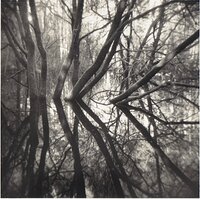
Flooded woodland

Flooded woodland

  • 14
  • 0
  • 84
Babylon

D
Babylon

  • 3
  • 1
  • 77

Recent Classifieds

Forum statistics

Threads
202,840
Messages
2,846,307
Members
101,559
Latest member
gnafin61
Recent bookmarks
1

Jimbob

Subscriber
Allowing Ads
Joined
Jan 16, 2004
Messages
81
Location
Flower Mound
Format
Medium Format
I’ve been developing B&W film since the early 1970’s. I've never done what I’m asking about. Can you inspect film that has been developed but still needs stop bath and fix? Maybe with darkroom light or room light?

thanks

jimbob
 
Yes, but under a special safe light, Kodak covers that in their dark room data guide.
 
If this is a panchromatic b&w film then the Kodak light has to be about 4 feet away and used for a matters of seconds only Good luck with seeing anything of value

pentaxuser
 
Yes, I have done it experimentally after making sure that all traces of developer have been washed out of the film. The rate of elemental silver formation under darkroom light or room light (not sunlight !) is very slow and may not contribute to measurable base fog. Of course the film can't go back into the developer unless 100% black negatives are desired. The only reasonable path forward is to stop and fix conventionally.

Development by inspection is a clean different thing and is marginally possible for panchromatic film by using a dim green safelight for a few moments toward the end of the development. A developed but unfixed negative looks a lot different to a fixed negative so development by inspection is a rare exercise in skilled judgement that I wouldn't attempt.
 
Likely the only way to do it successfully is to get a dark green safelight filter with the 15watt bulb and do it enough times to know what it's supposed to look like. I've developed ortho film by inspection using a red safelight and often didn't develop enough. The density that you see on unfixed film partly gets fixed away. So, it has to look overdeveloped in order to be right. Frankly, I think it would be a pretty special skill to recognize that using a dim green safelight and take a lot of practice.
 
Developing by inspection is more likely to be practical with larger sizes of sheet film. Historically, portrait photographers like Karsh employed it with the older (and usually slower) emulsions that were designed for studio portraits.
 
Back in the 60s/70s we had one of those dark green safelights mounted over the sink and hard rubber tanks in our little full-darkness film darkroom, but I don't recall it ever being used. I turned it on a couple of times just out of curiosity.

With sheet film, we sort of developed by inspection via split development. With 4x5in and 6x9cm, we'd always shoot both sides of a holder (or more) for a given setup, then develop all the "first" sides at the standard time/temp. We'd examine the negs after fixing, then adjust the development time on the second batch if needed.
 
I once had a Durst Tri-color light that had a green filter. I cannot say if it was stronger than a Kodak one but I doubt it. Anyway I switched to the green light and sat in the darkroom for about 15 mins and still could barely see my hand in front of my face. I could have sat for 15 weeks and still would not have been able to distinguish anything useful in a negative 😄

pentaxuser
 
If this is a panchromatic b&w film then the Kodak light has to be about 4 feet away and used for a matters of seconds only Good luck with seeing anything of value

pentaxuser

But only stop with water until you have decided that the development is complete and then use stop bath, but not before since the stop bath will kill the developer.
 
I use IR goggles when using my tanks & hangers, but I still find it difficult to determine when the neg is "cooked." I, also, have a large dark-green safelight but found that impossible to really see anything useful.
 
I've been doing visual inspection for several years now. dark green filter and a foot switch is the answer
If you already have a general idea of your estimated time you can wing it afterwards
I develop in pyro and you must look through the base side
use your thumb as a guide...it aint rocket science !!
 
Yes, I have done it experimentally after making sure that all traces of developer have been washed out of the film. The rate of elemental silver formation under darkroom light or room light (not sunlight !) is very slow and may not contribute to measurable base fog. Of course the film can't go back into the developer unless 100% black negatives are desired.
So what changes occur in the film after all traces of developer have been washed out and it has been exposed to darkroom light for how many seconds that does not harm the film but turns it black if placed in the developer again I take it that there is a latent change of some kind that remains latent if stop and fix are applied but is triggered by any additional time in the developer

The latent change that starts with normal darkroom light is not presumably triggered by dark green light or infra-red light The latter works I assume because most panchro films are infra-red blind but this would not appear to be the case does with deep green light so why is this OK?

Thanks

pentaxuser
 
So what changes occur in the film after all traces of developer have been washed out and it has been exposed to darkroom light for how many seconds that does not harm the film but turns it black if placed in the developer again I take it that there is a latent change of some kind that remains latent if stop and fix are applied but is triggered by any additional time in the developer

It is simpler than that.
If you add light, it will expose and change the silver halide particles that have not yet been developed.
However, because there is no developer remaining on the film, those newly exposed silver halide particles will remain invisible (latent).
So if the next step is to treat those invisible latent silver halide particles with fixer (no stop is actually needed because there is no developer to neutralize), they will be rendered unresponsive to light, and ready to simply be washed away without ever forming an image.

 
So what changes occur in the film after all traces of developer have been washed out and it has been exposed to darkroom light for how many seconds that does not harm the film but turns it black if placed in the developer again I take it that there is a latent change of some kind that remains latent if stop and fix are applied but is triggered by any additional time in the developer.
Once the "washed out" film is exposed to a roomful of actinic light it becomes 100% fogged but the fog is latent image fog which is invisible. Re-immersion in developer will turn than that 100% latent image fog into 100% density fog alais black film.
The latent change that starts with normal darkroom light is not presumably triggered by dark green light or infra-red light The latter works I assume because most panchro films are infra-red blind but this would not appear to be the case does with deep green light so why is this OK?
The dark green light does cause latent image fog in panchromatic film. What enables development by inspection is that fully developed but unfixed film has lost a lot of light sensitivity. The most sensitive silver halide crystals have been already used up in forming the image and in creating base fog. The less sensitive silver halide grains that remain will be fogged by a second or two of green light but the amount of extra fog won't be enough to ruin the negative. Why dark green? It's not to benefit the film but to use a colour that the human eye is most sensitive to in dim light.
Thanks

pentaxuser
 
Genuinely curious here, but if you can't stick the film back in the developer if they are not developed enough, then what is the purpose of looking at them before they are fixed? You're going to get the same results either way, so it seems like there's no benefit to inspection. What am I missing?
 
It is simpler than that.
If you add light, it will expose and change the silver halide particles that have not yet been developed.
However, because there is no developer remaining on the film, those newly exposed silver halide particles will remain invisible (latent).
So if the next step is to treat those invisible latent silver halide particles with fixer (no stop is actually needed because there is no developer to neutralize), they will be rendered unresponsive to light, and ready to simply be washed away without ever forming an image.

Thanks I thought that is what I had indicated must be happening However that still leaves the matter of exposure to dark green light to which I thought film was sensitive so I assumed that adds light also and yet if I have understood development by inspection it is possible to continue developing if necessary So what's the critical difference with dark green light

pentaxuser
 
The dark green light does cause latent image fog in panchromatic film.

Thanks I have cut out the rest of you answer, Maris, as it was largely covered by Matt but in both cases or in your case, as you have at least explained that dark green light does not cause latent image fog of a serious enough nature to ruin the negative, my question remains as it was to Matt: why does a dark green light not cause enough latent image fog to damage the negative?

What is it about the dark green light? Is it simply a matter of a low enough intensity rather than its colour. So for instance assuming a dark enough red light might be available then if its intensity was low enough to match the dark green then it too could be used?

I hope my question is clear enough now

Thanks

pentaxuser
 
You can use a lower intensity green light than a red light, because our eyes evolved in a way that gives us the ability to see under extremely low levels of green light.
Something to do with forests and jungles, I believe.
 
Can you inspect film that has been developed but still needs stop bath and fix?

You might try desensitising the film before (or during) development. Any good book on film development will contain desensitising formulae. The chemicals are probably hard to source and expensive. The technique will probably work only for "old" emulsions.
 
You can use a lower intensity green light than a red light, because our eyes evolved in a way that gives us the ability to see under extremely low levels of green light.
Something to do with forests and jungles, I believe.

That’s it. Your eyes are most sensitive to green so it doesn’t take much of it for you to be able to see something.

Then there’s the “dip” in sensitivity in the green part of the spectrum which most panchromatic film has, coincidentally or on purpose but it’s something to do with how the sensitizing dyes interact with differing colors of light.

But wait there’s more! You’re almost done developing when you peek. You’re not going to develop much longer, or you might stop right now. So even though you give a bit of fogging exposure, you aren’t “reducing” much of that silver halide you exposed to green into metallic silver.

Not done yet with all the reason green light is safe. The green safelight filter only allows 10% of the green light from a tiny 15 watt incandescent bulb at seven feet away.

All that is what makes green light reasonably safe, even though it’s not truly safe.
 
And, if you use pyro style developers the emulsion hardens as it developers which will make it even less sensitive to the green light.
 
Photrio.com contains affiliate links to products. We may receive a commission for purchases made through these links.
To read our full affiliate disclosure statement please click Here.

PHOTRIO PARTNERS EQUALLY FUNDING OUR COMMUNITY:


Ilford ADOX Freestyle Photographic Stearman Press Weldon Color Lab Blue Moon Camera & Machine
Top Bottom