
• Welcome to Photrio!
    Registration is fast and free. Join today to unlock search, see fewer ads, and access all forum features.
    Click here to sign up

B&W enlarger paper for beginner

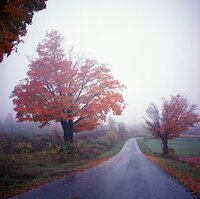
Rainy Day Trees

A
Rainy Day Trees

  • 4
  • 0
  • 59
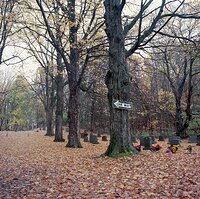
One Way

A
One Way

  • 1
  • 1
  • 57

Forum statistics

Threads
203,152
Messages
2,850,617
Members
101,700
Latest member
Cpeason301
Recent bookmarks
1
I use graded paper because .. after a fairly long time... I figured out how best to match the paper grade with my way of metering and the film that I use. I think it might be a bit too much to ask of a beginner unless he/she is really diligent.

In any case, you can get some multigrade paper and shoot it at a fixed contrast level simply by using one contrast filter. Thus you can learn all the harsh lessons of exposure and development and still get a reasonable print with the paper that you have.

I had some students start with multigrade because graded paper would have left them punished and defeated. Plus, you know, every single thing they shot was a Masterpiece and they expected a nice print at the end of the day. :wink: Mind you , I didn't tell them about the multigrade filters at first, I let them flounder around a bit at grade 3 and then I brought it up like a magic trick when I saw a print that obviously needed a different grade.

Anyway, there is that ilford rc postcard paper, that's what I had them use. I knew they'd want to send postcards home... which they did.
 
Okay Barry, I'll cc my wordy response in here in case it is of general use to other experimentalists :wink:

I've not yet printed the central park scenes to my satisfaction, they look okay but I've been meaning to print them to the grade 3 matte slavich paper, which has worked very well for much of my IR stuff (e.g. the gas pump shot). The ilford papers (and some others I tried) were just a tad too warm for my IR shots, IMHO, plus they tend to turn colour upon toning instead of keeping nice cold blacks. After trying the slavich matte, with Se toning, I was instantly happier. I knew grade 3 would be roughly right because my IR negs tend to be a tad underexposed... the rollei IR plus #87 filter pretty much guarantees a neg on the edge of thin, so then the contrast index is a bit low (maybe a good thing for IR) and I remedy that with grade 3 or even 4 paper.

Bear in mind that I strongly favour matte paper, even though it has weaker blacks. but the black issue means that I pretty much always Se tone or go for a sepia/se split. Some folks don't like fiber matte. Beginners may think it a bit weak in contrast. [redacted inflammatory comments about rc] There are some exceptions.

[redacted comments about digital]

Anyway back to your question: I favour ilford fp4+ and hp5+ whenever possible, using ilford ID11 (D76) at 1+1 and standard development. My all time favourite b&w film is (discontinued) panatomic x, but I still have a lot of that for LF and some polaroid type 55 which is basically the same thing. But I find that the fp4+/hp5+ can give the edge bite that I like. I like geometry to be a feature so I tend to go for the traditional grains. I use perceptol when sharpness is a major concern (rarely, actually) and I have played with wd2d+ for dev'ing the efke films and like it a lot. For a scanning workflow, pyro based developers are probably best, as they tend to interpolate between the grain that gets emphasized by a scanner.

For IR I use, as mentioned, rollei IR + #87 filter plus 12 stop filter compensation!!! It drives people nuts to have longish exposures but actually I like the dynamic look. I am not much a fan of halation, so I like the rollei- didn't like hie even when it was less expensive. The gas pump shot is maybe the only thing I've ever done with hie that pleased me somewhat. I haven't experimented with the efke as yet. Anyway, as mentioned, I like a coldish print for most IR shots and hence the slavich. I just wish it were a thicker paper base, but oh well.
 
Come and tell him hello yourself! I can offer a quick darkroom clinic and Oded can offer a tour of his marvelous instruments and a lot of great conversation!

(For the benefit of the non-violinmakers: Oded Kishony is a wonderful violinmaker who lives near me)
 
Many, many years ago, I ran a darkroom for a university newspaper.

It was a fairly high volume darkroom (we published three times per week), but we ran on voluntary labour. We supplied the film, the chemistry and the paper.

My photographers were all young and ran the gamut of experience between pretty green, to mid-level experienced (for university undergraduates).

The change to variable contrast paper (Kodak Polycontrast in SW FB IIRC) made for a great improvement, because it made it much easier to keep the darkroom stocked (I did, after all, also carry a full Physics and Math course load :smile:).

It also made it much easier to help the other photographers improve their prints (if they needed the help) because it was so much more flexible to adjust filtration (when in learning and teaching mode).

Matt
 
Dear Stradibarrius,

PM me your home address and I will send you a MULTIGRADE printing manual that should help...you do not have to use ILFORD to learn from it...

Simon ILFORD Photo / HARMAN technology Limited :
 
Kodak's Polycontrast. Dan

Pardon an uneducated soul. :smile: That VC paper became popular (and easy to use) in the late 70'ies when combining them with RC paper lead me to believe that they were invented then. (Oh, what a silly bunt... :smile: )
Anyhow, I tried to google for the introduction year of Polycontrast and couldn't find it, but I found this instead: http://www.photomemorabilia.co.uk/Ilford/Multigrade.html which set my mind straight.

//Björn
 
I suggest beginning with RC but quickly moving to fiber. My students see the difference between RC and fiber after several darkroom class periods. They want a sense of improvement in their printing. Using fiber finished with selenium toning gets them there faster. My intermediate class prints with fiber exclusively. As a result I have a waiting list this semester.
 
Photrio.com contains affiliate links to products. We may receive a commission for purchases made through these links.
To read our full affiliate disclosure statement please click Here.

PHOTRIO PARTNERS EQUALLY FUNDING OUR COMMUNITY:


Ilford ADOX Freestyle Photographic Stearman Press Weldon Color Lab Blue Moon Camera & Machine
Top Bottom
