- Joined
- May 25, 2012
- Messages
- 89
- Format
- Multi Format
Thank you guys I will try shooting it at half box speed. I currently have d76. When I run out I want to try some other types and find my own style. I do want to try stand developing but read its not ideal for printing. Anyone have experience to the contrary?
But test it for yourself, and print the negs to see how you like it. Compare it to regular development on the same shots. Make contact sheets of the negatives side by side to see the difference. It will tell you a lot.
I feel like a geeky doctor always testing, but I wouldn't have it any other way. It's a lot of fun and ALL of you have so much incite thank you for sharing. Now if I could just figure out how to get a proper contact print from the negatives, I feel my testing would be that much better.
Contact printing is like a luxury compared to enlarging. For my own film and developing testing I use a contact printing frame, but a sheet of glass and a flat surface will do nicely. You lay a piece of photo paper with emulsion side up, put your negatives on top with their emulsion side down, and then you 'close the lid'. If you use a sheet of glass I recommend taping the edges with tape so you don't cut yourself. Put pressure on the glass to hold paper and negatives in close contact, and avoid blocking the light. You can use weights if you need to use your hands.
Make a test strip to determine exposure time, and start making contact sheets. The exposure time that gives you maximum black of the paper in the film rebate is usually the best exposure. Then you either adjust contrast grade of the printing paper, or you adjust developing time of your negative to get the contrast you need out of the print. I always make my contact prints at Grade 2.5, and adjust film exposure and developing time to have negatives that print reasonably well as a straight print at that contrast.
Then when I start making individual prints of single negatives I of course tweak the print into what I want the finished print to look like, but I find the approach above gives me the best starting point to get to a finished print, with minimal time spent and minimal waste.
And keep practicing. Your picture above is really nice, so I think you are well on your way. You just have to remember that your paper and paper developer has a certain range, and your negative exposure and development time are variables that you alter to fit the paper and paper developer. If you learn how this system works, it will be much easier to make negatives that print like a dream without much darkroom gymnastics.

I don't think standing development lends much to the Foma films, honestly, but that's just my flavor. Standing development is a pretty extreme form of compensating development, and has its uses and strengths, for sure.
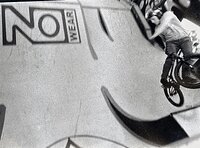
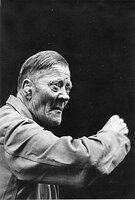
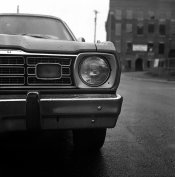
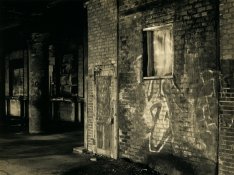
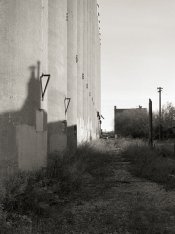
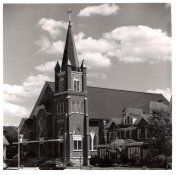
I've shot and developed 3-4 rolls of Action 400 in Rodinal 1:100 60 minutes, it gives lots of grain, quite nice grain, but still, lots of it. I kind of liked it, creative, but nothing I am going to keep on doing. Here's a cpl of shots (not entirely perfect since the scan didn't do a lot for the grain when viewed on the screen.. they look better even printed digitally.
Dead Link Removed
Dead Link Removed
Dear Jenni,
Variable contrast printing is different to using graded...but in my opinion easier, pm your address and I will send you the multigrade printing manual and you can de-chaos, it does not matter which brand you are using the principle is the same.
Simon. ILFORD Photo / HARMAN technology Limited :
I use Arista EDU 400 and 100. I really like it. It has an old look that I like. I use Xtol or HC-110 B. I also use Arista EDU FB VC paper. Both a great value and made by Foma.
Here are a couple of shot on Arista EDU posted on APUG.
(there was a url link here which no longer exists)
I've shot and developed 3-4 rolls of Action 400 in Rodinal 1:100 60 minutes, it gives lots of grain, quite nice grain, but still, lots of it. I kind of liked it, creative, but nothing I am going to keep on doing. Here's a cpl of shots (not entirely perfect since the scan didn't do a lot for the grain when viewed on the screen.. they look better even printed digitally.
Dead Link Removed
Dead Link Removed
Hey guys.. Saw this posting about Arista EDu products.. I'm currently using VC double weight Fiber 11x14 for my printing. I'm pretty happy with the results. The black deep rich tone and white are very nice with still showing detail. However I notice when a silininium tone my photos, it does darken a bit more. I do recall back in the day that is was one of the properties of Sil toning that you had to be aware of. Someone here might be able to tell me forsure. I was eyeing the 120 film that they offer,espcially the price per roll, however I'm really liking my old standby of Ilford Delta 100 120.
Todd
Here is a 9x12" print using 35mm Foma 400, processed in Edwal 12. 100% different.
| Photrio.com contains affiliate links to products. We may receive a commission for purchases made through these links. To read our full affiliate disclosure statement please click Here. |
PHOTRIO PARTNERS EQUALLY FUNDING OUR COMMUNITY: ![]() |