• Welcome to Photrio!
    Registration is fast and free. Join today to unlock search, see fewer ads, and access all forum features.
    Click here to sign up

Arista 400 EDU Sheet vrs it in 35mm

Recent Classifieds

Forum statistics

Threads
201,876
Messages
2,831,644
Members
100,997
Latest member
Allegroviandante
Recent bookmarks
0

peter k.

Member
Allowing Ads
Joined
Nov 27, 2011
Messages
1,405
Location
Sedona Az.
Format
Multi Format
Been shooting Arista 400 EDU film (aka Foma) in 4x5 sheet and worked out the developing times for the conditions my conditions and manners are in. Would like to try it in some 35mm or 120.
The question is.. is it the same emulsion?
Is it curly? (Believe I've read somewhere in the past that the 35mm is.. want to verify. If true than will use the120)
 
Joined
Jan 21, 2003
Messages
15,715
Location
Switzerland
Format
Multi Format
The 35mm is the flattest 35mm film I have ever experienced.

The 35mm film specifically has far less developed anti-halation capabilities. You will see more 'bloom' in light/dark adjacencies, for example, so you can either embrace that or really watch it when you shoot. Great film for portraiture.
 
OP
OP
peter k.

peter k.

Member
Allowing Ads
Joined
Nov 27, 2011
Messages
1,405
Location
Sedona Az.
Format
Multi Format
Yes ...
has far less developed anti-halation capabilities
found that out using HC110.. finally went to D-76 to develop it. Others didn't seem to have that problem with HC110 with it, but my water and method constantly got me blown out skies.
 
Joined
Jan 21, 2003
Messages
15,715
Location
Switzerland
Format
Multi Format
Yes ... found that out using HC110.. finally went to D-76 to develop it. Others didn't seem to have that problem with HC110 with it, but my water and method constantly got me blown out skies.

It has very little to do with the developer, honestly. The rapidly developing density in highlights (and everywhere else) is a property of the film. The use of filters helps with this if you're photographing landscape, for example.
With that said, I had very good results with Foma 400 using PMK Pyro, which helped with highlight control. Pyrocat would be another good one, or Diafine. The problem with Fomapan 400 is that if you develop it too little, you get a very flat negative. If you develop it too much, you block up highlights. It's a bit of a delicate balancing act to get it just right, so darkroom precision really pays off, and a critical view of your results with subsequent adjustments is imperative for great results.

You must do some trial and error with exposure and developing time adjustments, and that is your vehicle to keeping highlights in check.

The antihalation is a separate 'issue' from the contrast properties, and there isn't really anything you can do. Light/dark adjacency results in light bleeding into the dark. No filter or development trick helps. That makes the film a little bit more limited in use, but when you nail it, it's a gorgeous film, and sometimes the antihalation properties can provide some interesting results, such as in close-up work, figure work, or portraiture. If you want accuracy of the recorded scene, it's not the right film, but if you like to play around and experiment with some genuinely interesting results from an artistic standpoint, you're going to have a field trip with this film. Go play! :smile:
 
OP
OP
peter k.

peter k.

Member
Allowing Ads
Joined
Nov 27, 2011
Messages
1,405
Location
Sedona Az.
Format
Multi Format
It has very little to do with the developer, honestly. The rapidly developing density in highlights (and everywhere else) is a property of the film.
Yes, true, but with my use, HC110 failed. Could not get it consistent results with the Hc110. Of course it is not just the film. It's me, the water, the way you develop, the shutter, a whole mess of things enter the picture of the final negative. but when it came together.. oh yes!!!

The use of filters helps with this if you're photographing landscape, for example.
Shoot landscapes, but I got so frustrated with the film, as I had been trying and testing it for, I think six months. I keep coming back to it. In fact so much that the 35mm and MF.. whinned for some attention.
Love the film when I got the developing and exposure corect, thought I had it worked out and then.. bla.. so just quit shooting it for a while. Then came the new year. Tried again, and bang, right off the bat, same results.
Totally frustrated!
Said.. Ok.. we need a change!! Had a little old D-76 about. It actually had changed color, but did a test strip and it developed, good enough for a test. So tried that, it worked.
Hmmm Had an unopened bag of D-76 and mixed, and got deeper into its testing. Started all over again. Using a filter, this time, which really helps and showed the difference, compared side by side, for the same shot and same development together. Been getting consistent results, but the sun is not as bright as summer, yet, but so far so good. We live in the southwest.

The problem with Fomapan 400 is that if you develop it too little, you get a very flat negative. If you develop it too much, you block up highlights. It's a bit of a delicate balancing act to get it just right, so darkroom precision really pays off, and a critical view of your results with subsequent adjustments is imperative for great results.
Absolutely! All this testing made that very clear. And anyone reading this, and is having trouble needs to be very aware of this.

The antihalation is a separate 'issue' from the contrast properties, and there isn't really anything you can do. Light/dark adjacency results in light bleeding into the dark.
Hmm.. never thought of it that way... yes makes sense, ah.. could not put my finger on it, but that is one of the difference between Tri-x and the Foma.. And yes that would make it a better portrait film.

Yes I am going to have a field day with this film.. and would like to try it in another format.
That's why the original question.

 
Joined
Jan 21, 2003
Messages
15,715
Location
Switzerland
Format
Multi Format
Yes I am going to have a field day with this film.. and would like to try it in another format.
That's why the original question.

The 120 and the sheet film are very similar, and don't have the antihalation properties of the 35mm film, for some reason. They don't bloom the same way the 35mm film does, even though the 120 still exhibits some of that. Kodak, Ilford, and Fuji are all miles 'better' with respect to antihalation. You may or may not like the results better too.

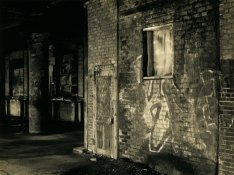
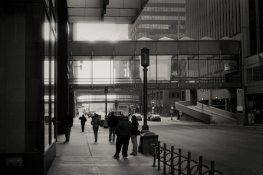
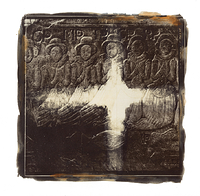
The industrial looking shot is 35mm Foma 400, developed in Edwal 12, printed on Foma Fomabrom 112.
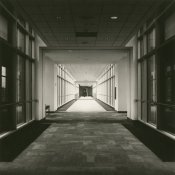
The Skyway shot is 120 Foma 400, developed in PMK Pyro (grainy), printed on Foma Fomatone 132.
The portrait by the tree is 120 Foma 100, developed in Harvey's 777, scanned negative, and here you can see the blooming that looks like flare, even on the 120 ISO100 version.

You just have to use the film in the right kind of light.
 

Attachments

  • door_at_bay_20.jpg
    door_at_bay_20.jpg
    427.6 KB · Views: 95
  • metro_state_skyway_01.jpg
    metro_state_skyway_01.jpg
    280.2 KB · Views: 98
  • river-w-dad_02.jpg
    river-w-dad_02.jpg
    345.8 KB · Views: 98
OP
OP
peter k.

peter k.

Member
Allowing Ads
Joined
Nov 27, 2011
Messages
1,405
Location
Sedona Az.
Format
Multi Format
The 120 and the sheet film are very similar, and don't have the antihalation properties of the 35mm film, for some reason. They don't bloom the same way the 35mm film does, even though the 120 still exhibits some of that.
Ok, then will give the 120 the next try...

Hmmm.. fer the future.. ya gonna make me try some of these other developers... but first steps.. first ;-)

I've done intensive article searches these past months while I've gone through this hard nut process. But they didn't put the puzzle together. Part of it is being a stubborn cuss! ;-)
Now with our interchange, and your three sample shots... especially the third one, its giving more clarity, and as you say
You just have to use the film in the right kind of light.
I've been trying to make it do a full spectrum, for all shots, and it just isn't going to go there!

This Dot Puzzle is finally, starting to come all together, with your three samples, taking the gauge, from night, to interior, to daylight. Using three different developers.
I've shot similar shots, and have gotten much the same as you have.. but with poor shots confusing the issue. The experience and testing was done over a wide range of time, with the concentration for consistent results, for a full spectrum causing a near sightedness.
Trying D-76, started me in the process of stepping back, and getting out of a rut.
Now you have completed the process... thank you!

Where going to have fun again!
 

Roger Cole

Member
Allowing Ads
Joined
Jan 20, 2011
Messages
6,069
Location
Atlanta GA
Format
Multi Format
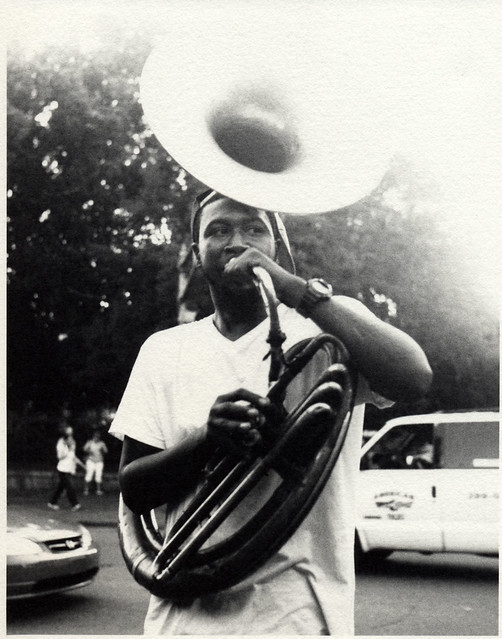
Combine Foma with a camera that IS prone to flare when shooting into the light (well more so I mean) namely my Yashicamat 124 and it gets...flary.

Yashicmat 124, Foma 400 120 as Arista, EI 200, D76 1+1 (forget the time, about 10% less than the data sheet says for EI 400.) I thought the flare/bloom worked here because it looks like he's blowing light out of the sousaphone so I called it "The Light of Music." Musician in a street band in New Orleans, printed on Arista Silver Artist paper (Fotokemika Varycon emulsion I think it was) :

JazzMusician1 by Roger Cole, on Flickr
 
Last edited by a moderator:

Arctic amateur

Member
Allowing Ads
Joined
Oct 24, 2011
Messages
325
Location
Ringerike, Norway
Format
35mm
The 120 and the sheet film are very similar, and don't have the antihalation properties of the 35mm film, for some reason. They don't bloom the same way the 35mm film does, even though the 120 still exhibits some of that.

Wouldn't the differences in blooming be simply due to the different negative sizes? If blooming is caused by internal reflections in the film then a bright point will bloom the same distance in mm, but it'll be a much larger relative part of the 35mm negative than the 4x5. (Assuming that the AH layer is actually the same on all film sizes).
 
Joined
Jan 21, 2003
Messages
15,715
Location
Switzerland
Format
Multi Format
Wouldn't the differences in blooming be simply due to the different negative sizes? If blooming is caused by internal reflections in the film then a bright point will bloom the same distance in mm, but it'll be a much larger relative part of the 35mm negative than the 4x5. (Assuming that the AH layer is actually the same on all film sizes).

I don't know. I would be assuming and not stating knowledge. You would have to look and judge for yourself.
 

Pioneer

Member
Joined
May 29, 2010
Messages
3,997
Location
Elko, Nevada
Format
Multi Format
I don't have Tom's developing or printing prowess but I finally just moved to HP5+ for sheet film. Kept the loud screams coming from the darkroom from disturbing my wife.
 
Joined
Jan 21, 2003
Messages
15,715
Location
Switzerland
Format
Multi Format
I don't have Tom's developing or printing prowess but I finally just moved to HP5+ for sheet film. Kept the loud screams coming from the darkroom from disturbing my wife.

The HP5+ is my go-to film too, in 5x7, 120, and 35mm. I find that it gives me peace of mind, and in the end results are much more due to our skill than the materials we use. It's so nice to have the same emulsion for all formats.

Anyway, Foma 400 is a nice film, but it requires a bit more care and skill. The emulsion scratches much easier because it's softer, and the 120 film curls a fair bit upon drying after processing. But once the 'beast' is tamed, it's a really wonderful film. In 35mm format it has a gorgeous grain that I appreciate a lot.
 

Roger Cole

Member
Allowing Ads
Joined
Jan 20, 2011
Messages
6,069
Location
Atlanta GA
Format
Multi Format
I mostly shoot Tri-X and FP4+ in 120 and TMY-2 in 4x5 (until my current supply is gone, then I'll go to HP5+ because Kodak has priced themselves out of my sheet film business) but play with some Foma. It's not a difficult film at all. My experience of curl in 120 concurs with Thomas's as does my experience of a soft emulsion while wet. But just handle it delicately and it's really no problem. The blooming effect can't really be predicted (I didn't predict the effect in that shot either from film or flare, I just shot it as the band played and that's what I got.) YMMV and work out your own EI and development of course but in general shooting it at 200 and developing 10-15% less than the data sheet says with normal developers will put you plenty close enough. It's just a film, not a monster.
 
Joined
Jan 21, 2003
Messages
15,715
Location
Switzerland
Format
Multi Format
Roger, I do disagree with you about the blooming. Attached is an example of what I'm on about, and it is 100% predictable for me.

Every time I shoot a scene where very bright and very dark areas are adjacent, I get this effect. Look at the top of the frame. That is what poor anti-halation looks like. Even the reflection in the window displays it.
 

Attachments

  • 2009-12-02_19sm.jpg
    2009-12-02_19sm.jpg
    98.8 KB · Views: 73

Roger Cole

Member
Allowing Ads
Joined
Jan 20, 2011
Messages
6,069
Location
Atlanta GA
Format
Multi Format
Well maybe YOU can expect it. :wink:

Also, I'm not shooting it in 35mm and you say it's much less apparent in 120. I only shoot it in 120 and some 4x5.
 
Joined
Jan 21, 2003
Messages
15,715
Location
Switzerland
Format
Multi Format
Well maybe YOU can expect it. :wink:

Also, I'm not shooting it in 35mm and you say it's much less apparent in 120. I only shoot it in 120 and some 4x5.

Yes, the 35mm is completely different in this regard.
 
Photrio.com contains affiliate links to products. We may receive a commission for purchases made through these links.
To read our full affiliate disclosure statement please click Here.

PHOTRIO PARTNERS EQUALLY FUNDING OUR COMMUNITY:


Ilford ADOX Freestyle Photographic Stearman Press Weldon Color Lab Blue Moon Camera & Machine
Top Bottom