• Welcome to Photrio!
    Registration is fast and free. Join today to unlock search, see fewer ads, and access all forum features.
    Click here to sign up

Argyrotype sensitizer issue

Watch Your Step

H
Watch Your Step

  • 7
  • 2
  • 133
The Royal Mile.

A
The Royal Mile.

  • 5
  • 5
  • 171

Forum statistics

Threads
201,648
Messages
2,827,871
Members
100,866
Latest member
Peter B
Recent bookmarks
0

aconbere

Subscriber
Joined
Aug 2, 2023
Messages
368
Location
Seattle, WA
Format
4x5 Format
Hey all,

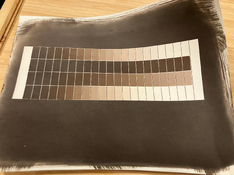
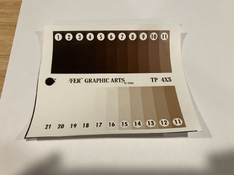
I’ve been having issues getting argyrotypes dialed in. My first couple were beautiful, high dmax, kind of reddish tone out to the highlights. But every print after that has been kind of grey / silver, often mottled, low dmax. I tried various things (acidify my paper, different amounts of tween, varying exposure time), nothing helped.

Today I thought I’d try filtering sediment, and there was a couple mm of black sludge at the bottom. I’m thinking something went wrong making the sensitizer.

One post here suggests it could have been contamination from my everyday coffee filters.

1: Is my bad sensitizer theory solid?
2: If so what other sources should I consider?
3: If it’s filters, what filters do folks suggest I try?
 

Attachments

  • IMG_4890.jpeg
    IMG_4890.jpeg
    503.3 KB · Views: 15
  • IMG_4889.jpeg
    IMG_4889.jpeg
    682 KB · Views: 14

Raghu Kuvempunagar

Member
Allowing Ads
Joined
Jul 28, 2016
Messages
3,069
Location
India
Format
Multi Format
The book by Don Nelson on Argyrotype, VDB and Kallitype does have a section on specific troubleshooting for Argyrotype including the two issues you described. Maybe worth taking a look at though it is mostly about relatively old sensitiser.

Fotospeed also addresses these issues in its Argyrotype instructions manual:

Hope you will figure out a way to fix the problems you're currently facing.
 
OP
OP
aconbere

aconbere

Subscriber
Joined
Aug 2, 2023
Messages
368
Location
Seattle, WA
Format
4x5 Format
The book by Don Nelson on Argyrotype, VDB and Kallitype does have a section on specific troubleshooting for Argyrotype including the two issues you described. Maybe worth taking a look at though it is mostly about relatively old sensitiser.

Fotospeed also addresses these issues in its Argyrotype instructions manual:

Hope you will figure out a way to fix the problems you're currently facing.

I have the book but haven’t found the sections on these issues illuminating.

For reduced D-Max they suggest that the sensitizer could be past its shelf life, but it doesn’t help explain how that could have happened so quickly (order of days).

For mottled blacks the suggestion is just “get better at coating”, but coating technique hasn’t been an issue in any other methods I’ve used (and I’ve been trying different strategies with only small improvements!).

My suspicion is that the sensitizer /has/ deteriorated, but the question is “why”. My thinking is that it’s possible that my coffee filters have increased the PH of the sensitizer causing silver citrate to predicate out reducing the effectiveness of the sensitizer. [1]

Buuuut i’m curious if folks had other theories before I run head long into buying some lab grade filters and making a new batch :smile:
 

Attachments

  • IMG_4892.jpeg
    IMG_4892.jpeg
    84.3 KB · Views: 9
OP
OP
aconbere

aconbere

Subscriber
Joined
Aug 2, 2023
Messages
368
Location
Seattle, WA
Format
4x5 Format
Quite unlikely. Have you measured pH of your Argyrotype sensitiser?

I haven’t. I bought a nice PH meter last year for exactly cases like this and I’m always afraid to use it!

Okay so, if the paper filter theory isn’t good… any other thoughts on what could be happening? I could always just make another batch but I’d love a theory going in :smile:
 

Raghu Kuvempunagar

Member
Allowing Ads
Joined
Jul 28, 2016
Messages
3,069
Location
India
Format
Multi Format
Sediment formation could be due to contamination or could be natural for this sensitiser. How're you certain about contamination assuming you used lab quality ingredients other than the filter paper? :smile:

Have you tried double coating for increased DMax and even coating as recommended by Fotospeed?

"We have found that the most even coating is achieved by double coating using a flattened out jay cloth covered with the solution, drying the sheet between the two layers."

One potential way to prevent sediment formation is to maintain a two part sensitiser as is done in Kallitype.
 
OP
OP
aconbere

aconbere

Subscriber
Joined
Aug 2, 2023
Messages
368
Location
Seattle, WA
Format
4x5 Format
Sediment formation could be due to contamination or could be natural for this sensitiser. How're you certain about contamination assuming you used lab quality ingredients other than the filter paper? :smile:

Have you tried double coating for increased DMax and even coating as recommended by Fotospeed?

"We have found that the most even coating is achieved by double coating using a flattened out jay cloth covered with the solution, drying the sheet between the two layers."

One potential way to prevent sediment formation is to maintain a two part sensitiser as is done in Kallitype.

I sourced the chemicals from artcraft (the biggest gotcha seems like it’s usually FAC but I’ve used this same batch for New Cyanotype successfully). That’s not to say I couldn’t have messed up some part of the process or contaminated something in my lab.

Mike Ware’s article on Argyrotype suggests that precipitate is expected (and suggests filtering it out when it happens), but also says it should be a small amount over a long period of time. In my case there was a large amount over a short period time and that seems concerning to me.

I get the sense that you feel this is a coating issue? Even the loss of D-max? I’m not, completely against the idea but if it is coating it’s surprising. Again the first prints all came out much better than the later prints even though they were by and large coated similarly.

Stuff I tried in between then and now was, acid soaking the paper (bergger cot 160), varying tween, varying exposure time, two different brushes. This has helped with the evenness but not the dmax.

I guess I could try double coating, but I’m confused. I have a couple of prints made immediately after mixing the sensitizer that have excellent dmax. Which again to me suggests that something with my sensitizer has failed shockingly early. My suspicion is contamination, so maybe I should run with that. Clean everything in the lab well and make a second batch.
 

nmp

Member
Allowing Ads
Joined
Jan 20, 2005
Messages
2,087
Location
Maryland USA
Format
35mm
Mike Ware is fond of making one part sensitizer which is convenient but also falls victim to problem with stability. Why not keep separate the two ingredients and mix only when making a print. At least that way, you will be eliminating one potential variable at the get-go if there is a problem.

:Niranjan.
 

Raghu Kuvempunagar

Member
Allowing Ads
Joined
Jul 28, 2016
Messages
3,069
Location
India
Format
Multi Format
I have a couple of prints made immediately after mixing the sensitizer that have excellent dmax. Which again to me suggests that something with my sensitizer has failed shockingly early.

It could be that complexation of Silver in Argyrotype sensitiser takes time (days?) and change in behaviour might be natural till it stabilises.

If you are happy with results you got immediately after mixing, then try a two part sensitiser and mix just before coating as Niranjan has also suggested. But solubility of Silver Sulfamate at room temperatures could be a potential concern.

Substance Formula 0 10 20 30 40 60
Silver Sulfamate AgNH2SO3 2.30 4.82 7.53 10.3 15.3 28.5
Data taken from Lange's Handbook of Chemistry, 15th edition.
 
Last edited:

nmp

Member
Allowing Ads
Joined
Jan 20, 2005
Messages
2,087
Location
Maryland USA
Format
35mm
It could be that complexation of Silver in Argyrotype sensitiser takes time (days?) and change in behaviour might be natural till it stabilises.

If you are happy with results you got immediately after mixing, then try a two part sensitiser and mix just before coating as Niranjan has also suggested. But solubility of Silver Sulfamate at room temperatures could be a potential concern.

Substance Formula 0 10 20 30 40 60
Silver Sulfamate AgNH2SO3 2.30 4.82 7.53 10.3 15.3 28.5
Data taken from Lange's Handbook of Chemistry, 15th edition.

Looks like silver sulfamate solubility is around 7-8% at RT. My quick calculation on the Argyrotype formula, the actual concentration in the sensitizer is more like 12%. There also seems to an excess of sulfamic acid which might be helping solubilizing the sulfamate salt....I don't know. But sure it would be a source of potential concern over time as you say.

If you want to "deconstruct" the sensitizer, you would normally double the concentration of each components (and add them 1:1) which might be a problem with sulfamate. So perhaps you would have to keep the same concentration of sulfamate but quadruple the FAC (then add 4:1) which might not be a problem as solubility limit of FAC is quite high at around 60%.

:Niranjan.
 

Raghu Kuvempunagar

Member
Allowing Ads
Joined
Jul 28, 2016
Messages
3,069
Location
India
Format
Multi Format
If you want to "deconstruct" the sensitizer, you would normally double the concentration of each components (and add them 1:1) which might be a problem with sulfamate. So perhaps you would have to keep the same concentration of sulfamate but quadruple the FAC (then add 4:1) which might not be a problem as solubility limit of FAC is quite high at around 60%.

Or make 12% Silver Sulphamate and 22% FAC solutions, mix 1+1 at the time of coating and double coat. And double coating might help mitigate the uneven coating problem too. If I were to take this route, I would first make just 5 ml each of these solutions and test them before making larger volumes.
 
OP
OP
aconbere

aconbere

Subscriber
Joined
Aug 2, 2023
Messages
368
Location
Seattle, WA
Format
4x5 Format
What I’m hearing is that if my next batch is weird I should make Kallitypes instead 🤣

But! I did wake up with this idea. I used my hot-plate’s stainless steel themo-probe when heating the sulfamic acid. And thinking back it noticeable reacted and I totally didn’t think about it. (I know better than using the probe with reactive chemicals but just didn’t think about it).

How do we feel about the idea that I contaminated my sensitizer with iron from my probe?
 

nmp

Member
Allowing Ads
Joined
Jan 20, 2005
Messages
2,087
Location
Maryland USA
Format
35mm
What I’m hearing is that if my next batch is weird I should make Kallitypes instead 🤣

But! I did wake up with this idea. I used my hot-plate’s stainless steel themo-probe when heating the sulfamic acid. And thinking back it noticeable reacted and I totally didn’t think about it. (I know better than using the probe with reactive chemicals but just didn’t think about it).

How do we feel about the idea that I contaminated my sensitizer with iron from my probe?

We feel like we should make the new and improved, but that can be a trap as we leave the shortcoming of one and fall into the shortcomings of the other. Be it kallitype vs argyrotype or classic cyanotype vs New cyanotype. If there is a reaction and filtering involved I am hesitant because there are just too many variables that can move from batch to batch. But that's just me.....

:Niranjan.
 
OP
OP
aconbere

aconbere

Subscriber
Joined
Aug 2, 2023
Messages
368
Location
Seattle, WA
Format
4x5 Format
We feel like we should make the new and improved, but that can be a trap as we leave the shortcoming of one and fall into the shortcomings of the other. Be it kallitype vs argyrotype or classic cyanotype vs New cyanotype. If there is a reaction and filtering involved I am hesitant because there are just too many variables that can move from batch to batch. But that's just me.....

:Niranjan.

But in this case I have the materials, would seem a shame to give up now!
 

AntonKL

Member
Allowing Ads
Joined
Jun 23, 2025
Messages
20
Location
Europe
Format
35mm
If you overheat sulfamic acid solution it will hydrolyze giving ammonium bisulfate. For this to happen at a relevant speed it needs to get above ~90°C.
This might have happened locally in case you did not stir the solution enough while heating it?
 
OP
OP
aconbere

aconbere

Subscriber
Joined
Aug 2, 2023
Messages
368
Location
Seattle, WA
Format
4x5 Format
If you overheat sulfamic acid solution it will hydrolyze giving ammonium bisulfate. For this to happen at a relevant speed it needs to get above ~90°C.
This might have happened locally in case you did not stir the solution enough while heating it?

Hmmm it’s on a hot plate stirrer with stirring enabled. But certainly on a second attempt I plan to be a bit more gentle.
 

nmp

Member
Allowing Ads
Joined
Jan 20, 2005
Messages
2,087
Location
Maryland USA
Format
35mm
If you overheat sulfamic acid solution it will hydrolyze giving ammonium bisulfate. For this to happen at a relevant speed it needs to get above ~90°C.
This might have happened locally in case you did not stir the solution enough while heating it?

Could it be that some of the sulfamic acid got hydrolyzed and as a result there was less (or no) excess sulfamic acid in the mixture which then resulted in formation of silver citrate over time.

:Niranjan.
 

Raghu Kuvempunagar

Member
Allowing Ads
Joined
Jul 28, 2016
Messages
3,069
Location
India
Format
Multi Format
Quoting Mike Ware, italics mine.

"The sensitizer solution can be brushed onto the paper, but this is wasteful, expensive and uneven. It is more economical to coat by means of a glass rod, as I have described in detail elsewhere."

This could be a general observation or specific to Argyrotype.
 
OP
OP
aconbere

aconbere

Subscriber
Joined
Aug 2, 2023
Messages
368
Location
Seattle, WA
Format
4x5 Format
Quoting Mike Ware, italics mine.

"The sensitizer solution can be brushed onto the paper, but this is wasteful, expensive and uneven. It is more economical to coat by means of a glass rod, as I have described in detail elsewhere."

This could be a general observation or specific to Argyrotype.

I keep meaning to try it, I have some glass rod in my cart to try making some. Perhaps now is my moment.
 

nmp

Member
Allowing Ads
Joined
Jan 20, 2005
Messages
2,087
Location
Maryland USA
Format
35mm
I keep meaning to try it, I have some glass rod in my cart to try making some. Perhaps now is my moment.

I have a couple of these that work great as coating rods:


:Niranjan
 
Photrio.com contains affiliate links to products. We may receive a commission for purchases made through these links.
To read our full affiliate disclosure statement please click Here.

PHOTRIO PARTNERS EQUALLY FUNDING OUR COMMUNITY:


Ilford ADOX Freestyle Photographic Stearman Press Weldon Color Lab Blue Moon Camera & Machine
Top Bottom