

• Welcome to Photrio!
    Registration is fast and free. Join today to unlock search, see fewer ads, and access all forum features.
    Click here to sign up

Are 35mm compatbile Carl Zeiss lenses as good as they claim to be?

Synchronized pool cleaners

A
Synchronized pool cleaners

  • 0
  • 0
  • 0
Dog

A
Dog

  • 3
  • 3
  • 36

Recent Classifieds

Forum statistics

Threads
202,987
Messages
2,848,471
Members
101,583
Latest member
Hendrik
Recent bookmarks
0

ted_smith

Member
Allowing Ads
Joined
Feb 19, 2008
Messages
493
Location
uk
Format
Multi Format
As a multi-format shooter (MF Hasselblad, 35mm Nikon F5) this question is aimed at the 35mm range, not medium format.

I own two Carl Zeiss lenses for my Hasselblad - really pleased with them etc. However, my Nikon body has Nikon lenses only. I've read on the web and watched on YouTube lots about Carl Zeiss lenses that fit Nikon bodies. An extreme and expensive example is the 55mm Distagon with 12 lens elements that costs about £3K I gather. https://www.youtube.com/watch?v=8mEj6CqZWMk&list=UU6t7IQyBM77KVoCUPfuveOA&index=2

Anyway, my question is whether the more 'normal' Carl Zeiss lenses are really as good as they claim to be (I can't afford that 55mm one so not even interested in that!)? It's obvious that they must be better than your standard Nikon lenses, but are they so much better to justify the cost? I've never used one and never seen a non-biased side-by-side comparison of a shot taken with, for example, the 50mm 1.8 Nikon or even the 1.4 pitted against a comparable CZ lens? Curious to know if it's worth spending about twice as much?

(and, out of interest, are those side-by-side comparisons in the video linked above accurate, or exaggerated marketting tricks?)
 
They are great. Will you get better results because of them? Probably not. I have full sets of Contax 35mm SLR gear with Zeiss lenses and Nikon SLR and lenses too. Both are great. If you got the $, get some if not don't sweat it.
 
I do not have any of the Zeiss lenses for Nikon, but I have two of the Zeiss ZM lenses for Leica M. They're incredibly sharp lenses that fully equal Leica. I have a Leica 50mm Summicron too. The only downside to the ZM lenses is build quality, which is not up to Leica standards. Current Nikon lenses are plastic garbage, so the Zeiss lenses will exceed them in build quality by a long shot.
 
There's one thing these lenses aren't so good at:
autofocus.
That's pretty much a deal killer for me, at least as far as 35mm goes.
 
While I have never owned the 35mm Zeiss lenses, back when I worked at the camera store (4-years ago), we had several professionals who swore by them. I initially thought it was a bit of professional arrogance (e.g., "I don't use amateur lenses") until I saw several photos that one of the professionals had taken for a job, some taken by him with a Zeiss 35 f/2 and some by his wife (also a professional photographer) with a Nikon 35 f/1.4, both on separate Nikon D3's which were set up identically. Neither was shot wide-open (it was a large wedding).

The Zeiss colours were cleaner, more contrast, with less chromatic aberrations. This is in no way to say the Nikon lens was not excellent but once you saw the two together, the Zeiss was much better.

But! This is like drinking a 50-year old scotch and then having a 25-year old scotch - the 25-year old will be terrible. On the other hand, if you had a cheap blended malt beverage and switched to the 25-year old scotch, you would think it was wonderful. Putting the two pictures together, I could see the difference (two other employees in the store could not see the difference at all, neither could his wife who thought it was an expensive toy) but if you just stuck one picture in front of me today and asked which lens was used, I couldn't tell you; the difference could only be seen in direct comparisons.

If you never used one, you will never miss it; if you use one, expect that 90% of photographers (and 99% of non-photographers) will never be able to tell the difference. If, as an artist, you can see the difference and that difference is important in your art, then it would be worth it. As a B&W photographer, the increase in contrast would be nice (since the colour and CA does not affect my photos) but not for triple the price.
 
Anyway, my question is whether the more 'normal' Carl Zeiss lenses are really as good as they claim to be

How good do they claim to be? I have about 12 or so Zeiss lenses for 35mm SLRs. They are fine lenses, but in the end you are still left with a 35mm negative when it comes time for printing.
 
The Zeiss-for-Alpha (ZA, with autofocus) lenses are great. I've used the 85/1.4 and 135/1.8 and they are both fantastic. If you really want to try some Zeiss glass, buy one of those (or the 24/2) and a $100 Minolta body to stick it on.

Your compositional skills matter significantly more, but you knew that :wink:
 
I regularly use a ZF.2 50mm f/1.4 Planar on my F3 and F (FTn Finder). My Main Camera is a Contax 645 with the 80mm Zeiss. Color and mechanics will be better than the Nikon stuff, but sharpness and bokeh will be pretty similar. Color is identical between the Zeiss 80 f/ Contax and the Zeiss 50 f/ Nikon.

This is Portra 160 with that 50mm and my F3 wide open, at f/1.4:

7642253886_74b25dd1a1_o.jpg


It's not the sharpest combination wide open, but stopped down it's perfect and the color is just out-of-this-world. My personal favorites are the 50 1.4 Planar, 25 f/2 Distagon, and the 100 f/2 Makro-Planar. The 35mm 1.4 is really nice, but a bit big on an ungripped F3 ;p
 
I've come to prefer the look of the Carl Zeiss lenses over anything else. I still have fun with other cameras, but I always return to the Zeiss glass.

My favorites are the Planar and Sonnar, regardless of the focal length.

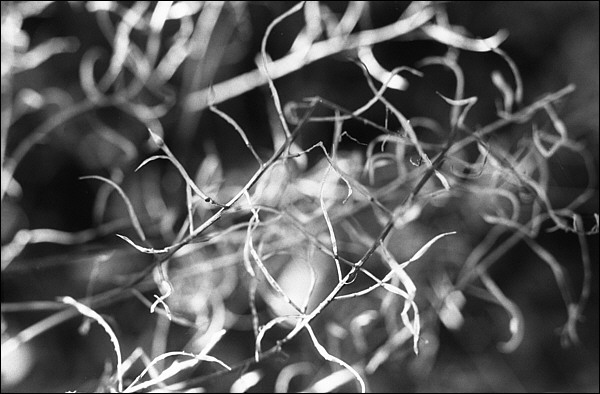
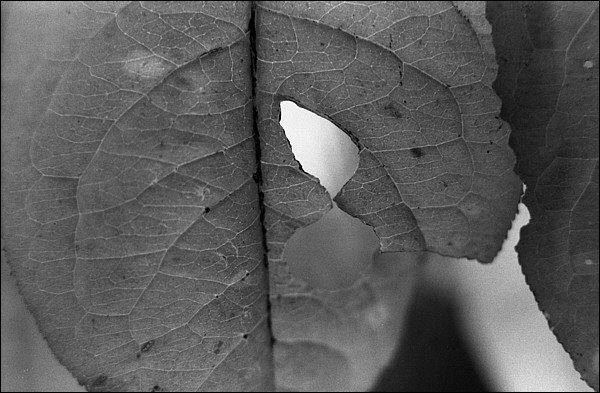
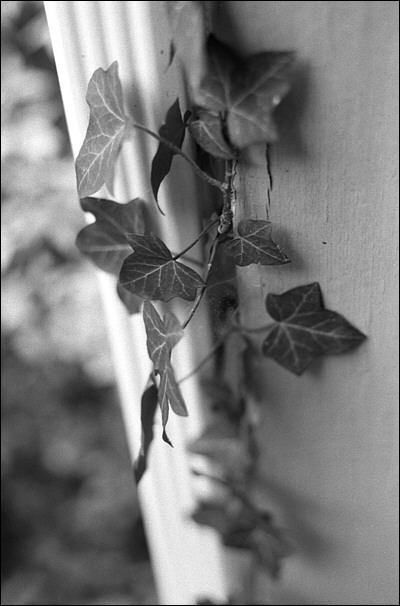
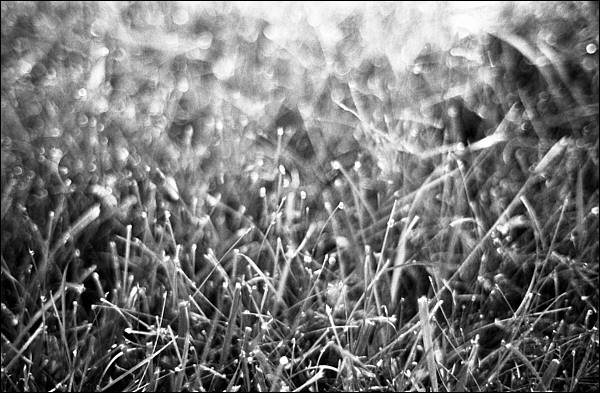
All from the 50mm Planar:

yardthings2.jpg


single-leaf.jpg


ivy-spout.jpg


dew.jpg


flowers.jpg


And why settle for someone else's knockoff when you can pay a few extra bucks and get the real thing?
 
Same here Mike and I've tried a few.
The Planars and Sonnars have their distinctive looks and now see why the leica guys dig all their flavors. Dont discount the Distagon.

The older sonnars can draw a portrait and bg very distinctive indeed. (if this was FM now someone would challenge me to pick the zeiss 85 1,4 vs the Rokonon or Nikon out of a series) hahahah :wizard:
 
I have a friend who used to use a ZF 100/2 MP and ZF 35/2. He was very pleased with the 100mm but eventually sold both lenses because it was difficult for him to hit the focus. He changed the ZF 35 for the Nikon 35/1,4 G and never looked back. Not that the Zeiss was bad (it had a very nice rendition from what he showed me), but the Nikon is f1,4 and has AF and that was the point for him. As far as I know, some of these new Zeiss designs really stand out (the 100/2 and especially the new 135/2 APO as well as some of the wide angles.). The 50/1,4 and 85/1,4 are not that different from their Nikon counterparts if you compare them to the latest lenses from what I´ve read.
 
I rented a bunch of premium lenses a while ago, Zeiss included, and maybe I'm crazy but I didn't notice any difference between them and mid-range lenses except maybe wide open or at extreme enlargement. The build quality was much better for the premium lenses, but the size of a 35mm negative seemed to set the image quality limit, not the lens.
 
Expectations about performance will always influence comparisons like these.

The only way to find out if there is a significant real world difference is to do some kind of blind experiment. Has anyone here done that?

Trond
 
Last edited by a moderator:
Not at all. Beautifully made. Not better in terms of image quality, and therefore not worth the money in my opinion. I bought 4 of them for my Nikon and have so far sold 2 and went back to the Nikkors. Since you've asked specifically about a 50mm I'll say my lowly Nikkor AF-D 50mm f/1.4 is every bit is good as the 50mm f/1.4 ZF Planar I ended up selling.

Save your money.

Geee... Do you think that's because they're the same design?:whistling:
Guys, you're all talking about Planars and Sonnars... the Planar is a double Gauss type, and so is virtually every f:1.4 and f:2 50 - 58mm lens.

Sonnars? 105/2.5 Nikkor, the first version. The one which replaced it was a... double Gauss!:D
A well designed, well made dG will have the same look as any other well designed, well made dG. And so on.
Having handled a ZF lens once, (which was enough) I would buy one only to resell at a profit. The haptics suck badly.
 
I love the fact that Zeiss brags about how everything they do is in the name of top image quality, yet they put a shiny filter ring on it...
 
Then again don't forget that there is some crazy good Nikkor glass. Play with a 28/2.8 AI-S or a 105/2.5 (any version).
 
It depends on who is using them, my Canon FD lenses after more than twenty years of my ownership are still much better lenses than yours truly is a photographer if I'm honest about it
.Zeiss lenses are without doubt very good from a purely technical aspect, but there are many other excellent lenses available that cost a fraction of the Zeiss ones that are more commensurate with most photographers ability s and pockets.
 
It depends on who is using them, my Canon FD lenses after more than twenty years of my ownership are still much better lenses than yours truly is a photographer if I'm honest about it
.Zeiss lenses are without doubt very good from a purely technical aspect, but there are many other excellent lenses available that cost a fraction of the Zeiss ones that are more commensurate with most photographers ability s and pockets.

I can say the same regarding lenses I have which were made in the early years of the previous century.:wink:
 
... are they so much better to justify the cost?

Wrong question.

Right question: What is wrong with your 35mm photographs?

Choose solutions based on a problem you actually have, it will make your hobby cheaper. Unless of course your hobby is GAS.
 
Speeking of the ZF-lenses only, I think the answer isn't that easy. Some of their lenses are outstanding but others aren't any better than comparable MF-Nikkors. Examples of the less impressive ones are 2,8/25mm, 1,4/50mm and 1,4/85mm. Incidently, all of them inherited their optics from Yashica/Contax lenses from the seventies. The younger lenses are generally better if not outstanding.
 
I think Ted the question you should be asking is, will Zeiss lenses make have any significant improvement to outcome of my photography considering their extra cost over other leading marque lens manufacturers optics ?, I believe the answer is no.
 
Like any "is lens A better than lens B" question, you'll get a lot of different answers, some useful, some not so useful.

First of all, the 55 Zeiss that you mention isn't for sale yet. They claim is is the first of a new generation of Zeiss optics for 35mm (probably not "new" in the new-to-earth meaning--I bet they are just designs from their motion picture gear--highly regarded--or scientific optics, repurposed to still photography).

I *do* own a number of the Zeiss-for-Nikon lenses and I do like them. I'm not a pixel peeper and don't do "lens testing" (quotes intentional) but the images do seem sharper, more contrasty, and just a nicer look than other lenses. I've tried a variety of Nikkors but not Sigmas or Tamrons, or any of the more obscure off brands, though I hear in many cases they are quite good.

i suspect that Zeiss's quality control process is more rigorous than Nikon's. That is to say, I've had lenses from Nikon that other's have praised that I have not had as much luck with--especially zooms--while each of my Zeiss's has been excellent. So part of what you may be paying for is simply the extra cost of more thorough testing, etc. The guy at Lens Rentals is the only one who has seen enough samples to really know...

You are also, in my experience, paying for outstanding customer service. I've had two problems with my Zeiss lenses. Both were taken care of immediately (as in, days). In one case I was sent a new lens, despite the problem being one that could easily have been repaired.

A big advantage of the Zeiss line is that they are manual focus. AF is great for many purposes but no so great for others. You'll notice that on the same focal length, the barrel of an AF lens only has to turn a little bit to go from it's minimum focus distance to infinity--I guess that makes it focus faster--less lens to turn. (As a side note, I've always wondered if that also caused more focus errors--a very slight miss would be a significant distance change for the plane of focus...) That also makes them problematic to focus in manual mode for many uses. Too hard to hit your target. Much easier to be precise with a manual focus lens (Nikkor or Zeiss) at the sacrifice of speed. The focus stays put, too. On AF lenses in MF mode I find the AF far too easy to bump. Try shooting astro images in the dark with one without taping the focus ring and you'll know what I mean. Or stitching a 24-image stitch. Whoops. Must have bumped the focus ring around image 8. Oh well. Uggh. Been there, done that.

On the other hand, I have had in some cases outstanding luck with Nikkors. I had a 28-300 Nikkor that seemed better than the average, based on what I saw on the web. Its focus (or the camera's focus) wasn't always spot on all the way out--quite frustrating--but when it was on it was surprisingly good at 300. I also have a new 300 f/4 Nikkor that is simply stunning. I read they were very good on all the forums but the one I received seems extraordinary (shooting on a D800e).

But they are a different breed. No zoom. No AF. Expensive. If those aspects don't bother you--or, indeed, if they attract you--buy one used or rent one. Renting is inexpensive, buying used is often free as you can sell it at about the same price if you buy it right.

--Darin
 
I rented a bunch of premium lenses a while ago, Zeiss included, and maybe I'm crazy but I didn't notice any difference between them and mid-range lenses except maybe wide open or at extreme enlargement. The build quality was much better for the premium lenses, but the size of a 35mm negative seemed to set the image quality limit, not the lens.

This is my conclusion too. see my thread (there was a url link here which no longer exists) where I did a little test. OK, a fairly grainy film/developer combination and yes, all at 250 F8 so stopped down, not wide open, but I half expected the 50mm MIJ Zuiko 1.8 to be the "best" (as it's a lens that has an excellent reputation), and in fact it was indistnguishable from the Schneider on the Retina and the Jupiter 8 Sonnar clone on the Kiev. the resolution disappeared into the film grain, and I don't believe any lens would have given a different result.
 
Last edited by a moderator:
Photrio.com contains affiliate links to products. We may receive a commission for purchases made through these links.
To read our full affiliate disclosure statement please click Here.

PHOTRIO PARTNERS EQUALLY FUNDING OUR COMMUNITY:


Ilford ADOX Freestyle Photographic Stearman Press Weldon Color Lab Blue Moon Camera & Machine
Top Bottom