


• Welcome to Photrio!
    Registration is fast and free. Join today to unlock search, see fewer ads, and access all forum features.
    Click here to sign up

Arbus Retrospective Draws Criticism

Cool as Ice

A
Cool as Ice

  • 0
  • 0
  • 22
Pond

H
Pond

  • 2
  • 0
  • 47

Recent Classifieds

Forum statistics

Threads
202,701
Messages
2,844,450
Members
101,478
Latest member
The Count
Recent bookmarks
0
I agree. In today's standard Winogrand would have been canceled as a misogynist especially his book "Women are beautiful"

Actually, the book was poorly received when it came out.

Seems that even his daugther called it the work of a male chauvinist pig.
 
Calling themselves artists is a way of raising the price for their photos. :smile: It;s a rather modern thing to do. Einstein called himself a physicist, not a scientific genius. Benny Goodman was a clarinetist and a band leader, not an artist. The word artist has been thrown around to raise the price of photos, oils, and song albums. A photographer calling themself an artist when they've never sold a single photo is rather presumptuous, don't you think? Shouldn't we let others decide their artistic talents?
Being an artist–or calling oneself one–has nothing to do with sales. As a matter of fact, most photographers that are considered artists don't sell as much or make as much money as commercial photographers.
 
You probably would have liked to meet Oscar Peterson as well, and to have made the same request .....
Hmmm - I wonder if the two Canadians knew each other?
EDIT: apparently they met briefly, but also had some other indirect connections: https://www.tvo.org/transcript/496408

It reminds me for some reason of an apocryphal Miles Davis story. Apparently, he hired some new, young player who didn't fully know the evening's set list. At some point, he leaned over to the kid and growled, "If you don't know the tune, play the melody."
 
Last edited:
Many in this thread have a problem with judging older work using today's standards and finding it lacking for whatever reason. The Arbus review that started this thread is a good example. But what about the opposite? Can anyone think of an example of judging old work with today's standards and finding it improved, and if so do you have a problem with that as well?
 
Actually, the book was poorly received when it came out.

Seems that even his daugther called it the work of a male chauvinist pig.

His family was bitter with him because his biggest priority was to photograph.

Not his best work but i don't see the point against him. He was fascinated by women, Arbus was fascinated by freaks. He just photographed what atrracted him
 
His family was bitter with him because his biggest priority was to photograph.

Not his best work but i don't see the point against him. He was fascinated by women, Arbus was fascinated by freaks. He just photographed what atrracted him

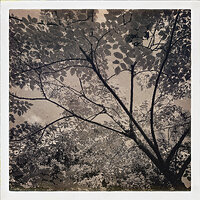
This worries me because it means I have a possibly unhealthy fascination of dilapidation and tree stumps ...
 
Many in this thread have a problem with judging older work using today's standards and finding it lacking for whatever reason. The Arbus review that started this thread is a good example. But what about the opposite? Can anyone think of an example of judging old work with today's standards and finding it improved, and if so do you have a problem with that as well?

Of course. Like with the praise to Robert Mapplethorpe for reasons other than photographic
 
Of course. Like with the praise to Robert Mapplethorpe for reasons other than photographic

In fairness, Mapplethorpe's most provocative images - in his own time - where made mostly for reasons other than just/primarily photographic. In his own words:

"Art is a powerful tool for social change. It can challenge societal norms and make people question their beliefs."

"Art should make you question your own beliefs and confront your own biases."

So, he pretty clearly saw his photography as a means to peddle a social agenda. That is, he was not exclusively concerned with art as art.

Any honest retrospective of his work from today's viewpoint has to acknowledge his intent to produce propaganda/agenda, not just art.

There is a fine line between art, titillation, and agenda flogging.
 
His family was bitter with him because his biggest priority was to photograph.

Not his best work but i don't see the point against him. He was fascinated by women, Arbus was fascinated by freaks. He just photographed what atrracted him

My point is you got it backwards. Winogrand's book was considered misogynistic back then, not today.

If one can even find an affordable copy today...
 
So, that response tells me that we shouldn’t take you seriously. That’s fine with me.

What I'm saying is that you shouldn't take anyone seriously who calls themselves an artist - a legend in their own mind.
 
When they state what seems like a pretty baseless opinion as fact, I do, yes.

They're still my friends, believe it or not. 🙂

And quite a few of my friends are artists and call themselves artists. They make very little money, and they are quite simple and modest people, believe it or not.

I too would rather be a poor artist than a poor photographer. :smile:
 
As with almost all artists for hundreds of years painting for the church, the ruling class and wealthy merchants.

Indeed, but with one important difference. The art produced for these groups was decidedly not for the purpose of "social change" or "confronting [one's] own biases. To the extent that art was as agenda-driven it was to preserve the status quo, not confront it.

The meaning of the religious art is more nuanced. Some of the greatest religious music was produced by overtly areligious composers - The Verdi Requiem leaps to mind, composed by a man who was openly agnostic to the point of atheist. Similarly, one suspects Bach would have seen his music as an act of worship not first as supporting the Luthern church institutionally. There are many other examples on both sides of the religiosity divide, but it pretty much no case from this era was there some overt agenda for change or a propagandist message. This art was a direct, unfiltered reflection of these composer's time.
 
Last edited:
I like to think of my own work as carefully considered snapshots.

Critics can turn snapshots into expensive works of art. We just need the right connections.
 
It reminds me for some reason of an apocryphal Miles Davis story. Apparently, he hired some new, young payer who didn't fully know the evening's set list. At some point, he leaned over to the kid and growled, "If you don't know the tune, play the melody."

Back in my distant youth, I was assigned to photograph a concert at, IIRC, the Vancouver Forum, featuring Beck, Bogert and Appice.
As I had a press pass, I was right down in the "pit", immediately in front of the stage - close enough to hear some of the un-miked dialogue between the band members.
Just before the start of the first number, I clearly heard Carmen Appice say to the (un-remembered) rhythm guitarist that they had added to the band for the tour a comment that was essentially: "See if you can avoid getting your ego in the way of the music tonight".
 
As with almost all artists for hundreds of years painting for the church, the ruling class and wealthy merchants.
Yes but with one exception:
Art and religion share common mysteries with death being the most obvious and also the world of the metaphysical. So they can work very well together
 
My point is you got it backwards. Winogrand's book was considered misogynistic back then, not today.

If one can even find an affordable copy today...

Yes i remember it almost ruined his reputation back then.
Is it that expensive book now really?
 
Many in this thread have a problem with judging older work using today's standards and finding it lacking for whatever reason. The Arbus review that started this thread is a good example. But what about the opposite? Can anyone think of an example of judging old work with today's standards and finding it improved, and if so do you have a problem with that as well?

I like pictorialism that seems to have gotten a bad rap since the 1940s. It's artsy.
 
Indeed, but with one important difference. The art produced for these groups was decidedly not for the purpose of "social change" or "confronting [one's] own biases. To the extent that art was as agenda-driven it was to preserve the status quo, not confront it.

Seems to me that attempting to help save the souls of all mankind has a "social change" component to it.
 
If you can do that, I'll hire you as my agent.

You have the wrong guy. I can't even get my wife to look at the pictures I took when we were on vacation in Paris and London. 😔
 
sy.
Seems to me that attempting to help save the souls of all mankind has a "social change" component to it.

I have to agree with @nikos79 on this. Church and Art were seen as two complimentary sides of the metaphysical questions facing mankind, not as remarkable agents of social change... at least for awhile.

In the Middle Ages, art tended to portray things from God's point of view looking down upon His creation. This wasn't some overt agenda to promote the church of the day, it was just a common way of thinking about art. Art was there reinforcing the accepted beliefs of the church and its adherents.

(This changes beginning with the Renaissance when paintings begin to show things from a human's vantage point. Things like perspective and converging lines of distance appear whether they never had before.)

Even in the post-Reformation era, there was this sense that art and faith were intertwined. Bach, as just one example, frequently annotated his manuscripts with Soli Deo gloria ("to God alone the glory"). He had a professional responsibility to compose music for the church, because they were paying him, but he wasn't composing for the church, but for the God whom he worshiped.
 
Photrio.com contains affiliate links to products. We may receive a commission for purchases made through these links.
To read our full affiliate disclosure statement please click Here.

PHOTRIO PARTNERS EQUALLY FUNDING OUR COMMUNITY:


Ilford ADOX Freestyle Photographic Stearman Press Weldon Color Lab Blue Moon Camera & Machine
Top Bottom
