

• Welcome to Photrio!
    Registration is fast and free. Join today to unlock search, see fewer ads, and access all forum features.
    Click here to sign up

apo lens for enlarging

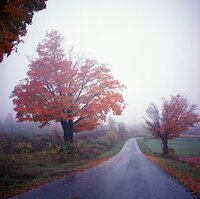
Rainy Day Trees

A
Rainy Day Trees

  • 5
  • 1
  • 82
One Way

A
One Way

  • 3
  • 1
  • 79

Recent Classifieds

Forum statistics

Threads
203,154
Messages
2,850,693
Members
101,703
Latest member
arrowactive
Recent bookmarks
0
Sal, I will try to make those comparisons before too long. ;-) Sorry for being slow. Too many lenses/gear/cameras, not enough time. My comparo will be:

150 Componon S
150 El Nikkor A
150 Apo Rodagon N
210 Nikkor AM-ED

2x-3x is probably where I would do most of enlarging, at least to start with, so that's a good place to test.

I am thinking one-stop-down from wide open is probably the best aperture for most of these, if you can control the DOF/flatness of the neg enough for that. (E.g. glass carrier if need be.)
 
...the 240 Apo Nikkor was clearly superior to the 150 Rodagon N, which has too much falloff anyway, and really needs to be used at f/8 to optimize...
However, even with a 180 Apo Nikkor I'd need to obtain some kind of lensboard extension to enable 2X. The 240 is way too long for my enlarger. Thus the questions to Rafal and Ed; a 150 Apo Rodagon N is my only other realistic improvement possibility using an LPL.
 
Sal, I will try to make those comparisons before too long. ;-) Sorry for being slow...
Ed, don't apologize. I was just giving you a hard time -- see the smiley in my earlier post. Anyway, there's no rush. It's not like I'm being inundated with opportunities to buy a pristine 150mm Apo Rodagon N. :smile:
 
So if you plan to get the most of a Leica negative (why... are Leica negatives per se better than others? Oooops, nevermind...), and price is not an issue, just buy the most expensive lens, "Leica Alike". APO enlarging lenses (true APO or not) are actually the best.

I want to see this with my own eyes, if there is a difference. I do not trust sales guys on their blue eyes :smile:

"I now use a 80 componon-s or a el-nikkor 80mm for 35mm film. (I Always use a higher lens which gives a better print than a 50mm)
For 6x6 I use a 105 el-nikkor"

Hmmm, another myth? Is it regardless on the specific lens, or the enlargement factor...??? :smile:

I tested this myself and for me the quality improved between componon-s 50 and componon-s 80 lens for 35mm.
 
Too much thinking..Forget about tests, look at the prints and see if you like them.
 
Ctein has done a very thorough test and comparison of every relevant lens in his book Post Exposure. Still available it seems - http://www.amazon.com/Ctein-Post-Ex...425753403&sr=1-1&keywords=ctein+post+exposure

Tleirtro, while Ctein has done a very good job, indeed, esepcially in his comments about Apo or non-Apo, which is the subject of this thread (see page 81 in his book), I am afraid he did not review the lenses we are discussing. Specifically, in the 4x5 150 mm range (page 90) he only reviews the non-apo Rodagon, which is quite inferior to the Apo Rodagon N in my own experience. Also, it is not clear which El Nikkor 150 he is referring to, which makes me feel it might be the older version, which, again, is quite inferior to the newer model—I assume, perhaps incorrectly, that if he knew of the existence of the newer version he would have remarked about it, considering how thoughtful his observations tend to be. Overall, I appreciate this thread, everyone who posted, and the discussion that ensued, despite prior publications, which are very worthwhile, too.
 
I tested this myself and for me the quality improved between componon-s 50 and componon-s 80 lens for 35mm.
But not in all conditions; I bet I can give you normal sized prints from a "Leica negative" (say 18x24 or 8x10", the most common at this format), and you will have a hard time to distinguish the one from a crappy 3 element Componar-C and the other from a 6-7 elements Apo-Rodagon N... add a Componon 50/4, a Trinar 50/4, an Apo Rodagon N 80/4, etc. I did the test, and the *only* obvious differences we found were mostly related to exposure and magnification.
BTW, I also like to use slightly longer than "standard" lenses for a given format, (e.g. 75-80mm lenses for 35mm), mostly because when making small prints, the working distance is more comfortable with some enlargers. For bigger than say, 8x10", to focus a 80mm (35mm format) is really awkward (my arms are not so long!) :D
 
Last edited by a moderator:
BTW, I also like to use slightly longer than "standard" lenses for a given format, (e.g. 75-80mm lenses for 35mm), mostly because when making small prints, the working distance is more comfortable with some enlargers. For bigger than say, 8x10", to focus a 80mm (35mm format) is really awkward (my arms are not so long!) :D

You are right, and besides that what also is mentioned the somewhat longer element terminates all the minimal light fall off at the edges.
 
Well, light fall off could be the only benefit of using a Componon-S 80 for 35mm. One should decide if that difference is worth the use of a longer lens, specific (Componon-S) lenses wise. For most of my prints, it`s not (I use Apo Rodagons).
Other than this, the Componon-S 50 is a terrific lens, so I`d not be surprised if it overrides the level of performance of its bigger brother.
 
Last edited by a moderator:
For us who often burn in the edges of a print slightly, reducing light fall-off with a longer lens is a trivial advantage.
 
I spent yesterday afternoon spotting prints. I could EASILY see the difference between prints made with the Apo Rodagon N versus the more
more conventional lenses, which in my case are all more acute than the older Componons and even Componon S series. Does that mean YOU need something like this? It all depends. If you can afford one of the apo lenses, go for it. But sometimes a lesser lens has a less clinical look
that you might find desirable for certain images. Many enlarging lenses are so inexpensive right now that owning more than one is easy.
 
...I have both the 150 Apo Rodagon N and the 150 EL Nikkor A. I will try to compare them sometime...

...I just saw you are specifically asking about acutance effects, edges I suppose. I'd need to pop a negative in and compare. If you have a test negative you fancy posting to me, I'd be happy to print it for you with the Nikkor and the Apo Rodagon N.

Thanks Rafal, but no specific test image. I'm primarily interested in the appearance of sharpness at 2X from 4x5. Your assessment of whatever negative(s) you've got with lots of fine detail would be great. Also, as I implied in another post, prints will of necessity be made down around f/11 - f/16 at this small magnification to avoid unreasonably short exposure times, so comparison with the El-Nikkor A in that aperture range is of great interest. Thanks very much.
Ed and Rafal, have either of you made this comparison yet? If so, what were the results? Thanks in advance for any updates you post.
 
I started my business with normal Rodagon's - I had about 4 enlargers , it was in the 90's when business was booming for film , process and print.
So I had to purchase all new and I could not afford 3 Apo of each size I was using at that time - 50mm 80mm 150mm so I purchased three regular Rodagons of each.

over the years I decided to try out Apo's- I have never used my regular Rodagon's since, and have replace all with APO's . Also I switched to 90mm instead of 80mm .

I could see the difference in my prints immediately, so the jump was not a scientific conclusion but a visual conclusion. I don't think I woke up that morning and became
a better printer.

Also I have always used aligned glass carriers that I check with Laser Aligner, and the heads are all braced... Black walls behind and around any enlarger... these small changes
are indeed part of a bigger magic bullet.
 
It's a totally settled question in my mind. Better contrast, better sharpness, better microtonality.
 
Hi,

I bought a leica M and was wondering if the quality could be improved by using a apo lens for enlarging.
I know that the apo stands for color optimalization, but was wondering if someone did a test with black/white enlarging.

I now use a 80 componon-s or a el-nikkor 80mm for 35mm film. (I Always use a higher lens which gives a better print than a 50mm)
For 6x6 I use a 105 el-nikkor.

Is there someone outthere who has done a test between a apo and a non apo lens for black/white?

Thanks.

Buy a large front element Focotar or Focotar 2.

A good 35 mm lens is NOT bettered by larger format lens. A well aligned enlarger, base, lens stage, and negative stage and at least a neg carrier that has a glass top, or better yet, double glass is far more important.
 
Of course it's often bettered with a somewhat longer lens, because you're only using the center of the optic, the "sweet spot". You not only
might get better resolution, but get it at a wider f-stop, in some cases, even wide open. Longer than "normal" enlarging lenses also give more even illumination with less fall-off in the corners. I print 35mm negs with a 105 Apo Rodagon. Another advantage of this is that it doesn't compress the enlarger bellows as much, or need a recessed lens board, both of which potentiallyaffect lens alignment of focus shift, even in pro enlargers.
 
Of course it's often bettered with a somewhat longer lens, because you're only using the center of the optic, the "sweet spot".

Cstein thinks that this is a myth. Is his book "Post Exposure" which can be found here on his website, he writes on page 80 (PDF file page92):

"Some folks claim that printing with a much longer focal length, using only the center of the lensÂ’s field of view, produces superior results. Maybe it did with older lens designs, but that technique has been wrong for at least 20 years. My results prove that except for providing more uniform light output, longer focal lengths donÂ’t project a higher quality image. The Best Enlarging Lenses in the World Medium- and large-format enlarging lenses typically have a maximum aperture of f/5.6. Even if they perform best wide open, and most donÂ’t, they canÂ’t be sharper than a lens that is optimal at f/4.5. Most longer lenses have optimum apertures of f/8 to f/11. Optical theory says theyÂ’ll only be about half as sharp as their short brethren, and my tests confirm that.

Consequently, although a little more focal length in the lens helps light uniformity, much more compromises sharpness. There is no point in buying a longer-than-normal lens when you can buy a normal one of equal or better quality. The extra focal length gains you an undetectable improvement in uniformity, but youÂ’ll almost always pay for it with a visible loss of harpness. That longer lens costs a lot more, too!"
 
Sal, I haven't gotten around to doing the 150mm shootout yet. Someday soon hopefully! Work gets in the way of everything else. ;-)
 
I'm not guessing about any of this. Nor am I just web surfing for some BS argument. I'm aware of Ctein's enlarger lens opinions. We've talked in person about this more than once. He's a friend of mine. I respect his tests; but they mostly apply to older lenses.
 
Nor am I just web surfing for some BS argument.
Neither am I. As you can see, I'm not a "thousands-of-posts-but-no-images" person. :whistling: I've never met Ctein in person. However, his chapter on enlarger lenses test looks pretty thorough and many of the described lenses are still current, incl the APO Rodagon (N) . So I doubt that his argument about using the optimal focal length is BS.

But if your experience is the different, maybe you can explain to us what it is in the print quality that makes you chose a longer focal length lens.
 
I have 2 apo rodenstock and schneider. Top notch, fantastic. Im gonna sell the supposed to be best enlarging lens: 40 Schneider APO HM.
 
...Ctein...his chapter on enlarger lenses test...many of the described lenses are still current, incl the APO Rodagon (N)...
Unfortunately, if you look at page 90 of "Post Exposure," you'll see that he didn't include a 150mm Apo Rodagon N, the subject of my inquiry, in his tests. I don't believe it was available yet when the book was written.
 
The gold standard of enlarging lenses back then (and still true) was the Apo EL Nikkor series. What some labs realized is that, for only one
stop smaller optimum aperture, the four-element Apo Nikkor process lenses are in the same league. But the latter were not offered in short
focal lengths. For large format film, that's not an issue. But then the Apo Rodagon enlarging lenses came along, along with Schneider's HM
series, as a premium upgrade for film sizes from 35mm to 4x5, not quite in the league of the Apo EL or Apo Nikkor graphics lenses, but truly worthy of their higher price nonetheless. My own testing has gone well beyond basic printing needs into the much more demanding usage for enlarged printing dupes and internegs on film, registered vac filmholders and all. That kind of application really separates the men from the boys in terms of lenses. Or I've used the 150 Apo Rodagon wide open at f/4 for speed to enlarge 6x7 negs onto slow papers like Azo. But even in ordinary black and white printing, the prints made from my various Apo lenses just have a different look to them.
The microtonality and highlight separation just stands out.
 
For you skeptics, I don't even own a digital camera, and to appreciate what I'm saying would be impossible to present on some idiotic
web image. You might as well be looking at gangbanger spray can graffiti if the web if your idea of a standard of comparison. What you need is a magnifying loupe standing with your nose on a 30X40 inch Cibachrome prints, so you can see all the damn detail. Ctein used a microscope to evaluate the results, I believe. His darkroom itself is relatively primitive.
 
Photrio.com contains affiliate links to products. We may receive a commission for purchases made through these links.
To read our full affiliate disclosure statement please click Here.

PHOTRIO PARTNERS EQUALLY FUNDING OUR COMMUNITY:


Ilford ADOX Freestyle Photographic Stearman Press Weldon Color Lab Blue Moon Camera & Machine
Top Bottom