• Welcome to Photrio!
    Registration is fast and free. Join today to unlock search, see fewer ads, and access all forum features.
    Click here to sign up

Ansco Color Developing Outfit for Anscochrome

Recent Classifieds

Forum statistics

Threads
201,760
Messages
2,829,664
Members
100,929
Latest member
WBM
Recent bookmarks
0

Fredrick Van Atta

Member
Allowing Ads
Joined
Feb 14, 2016
Messages
29
Location
San Antonio, Texas
Format
Medium Format
I have come across a 16oz kit and everything seems in order. powders are still powders and such... there are no dates anywhere but the price penciled on the box is $1.80.

I would love to hear some stories.

it came with some rolls of unshot Kodachrome 64 and Ektachromes 100HC, 400HC, and 400. I also have some exposed rolls of Kodacolor (x's and II's) laying around I could process...
 

Terrence Brennan

Subscriber
Allowing Ads
Joined
Mar 31, 2008
Messages
500
Location
Ottawa, Ontario
Format
35mm
I first used one of those kits in the Autumn of 1971. I used it to develop GAF/Ansco color slide film, the 500-speed and the 64-speed daylight films, as well as the 100-speed tungsten film. AFAIR, the cost of the kit (in Montreal) was something like $4.95, plus tax.

With two friends, who were also interested in photography, we made an evening of it, developing the film in the kitchen of my home. The high point of the evening was when we removed the film from the reel, and saw the colour images. One interesting moment was when we were preparing to wash the film, and the hose attached to the faucet got away from me and sprayed water all over the ceiling!

I used GAF/Ansco colour film, processing it myself, until I left to study photography in Toronto in September of 1974. On one occasion, I shot the 500-speed daylight film with my meter set at 1000; I had read in--I think it was Popular Photography--that if the developing time was extended, the film could be push processed one stop. The results were surprisingly good, considering that I was photographing in an indoor ice rink.

I had also used the AGFA 50-speed daylight film as well, processing it in the appropriate AGFA chemicals. It was always a bit of a problem, both with the GAF/Ansco and the AGFA films, in that I had to wait until I had exposed the requisite number of rolls before it was worth my while to mix up the chemicals. As I recall, the chemicals had a very short shelf life, compared to B&W chemistry, and I didn't want to waste them.

Looking back at it, 40+ years later, the savings were minimal in processing your own colour film, although it was a fun and interesting experience.
 

DWThomas

Subscriber
Joined
Jun 13, 2006
Messages
4,623
Location
SE Pennsylvania
Format
Multi Format
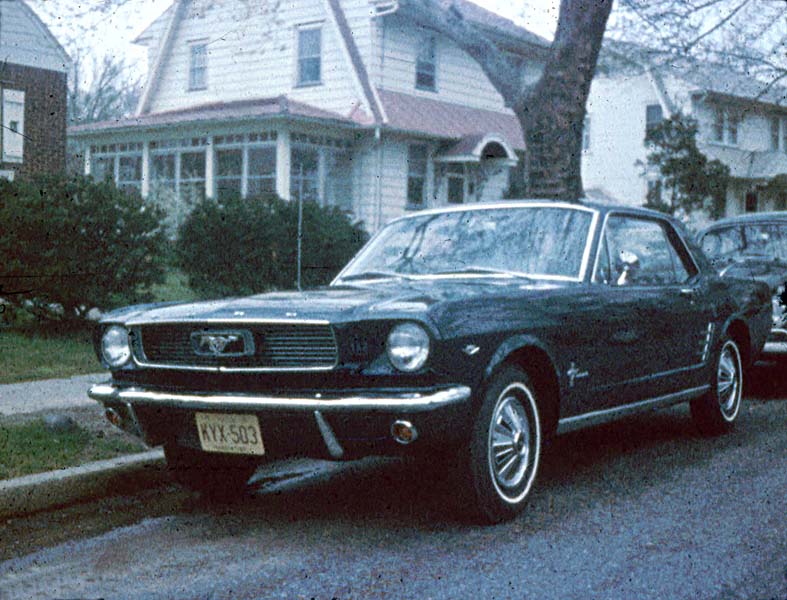
I used such a kit to process a couple of rolls of Anscochrome in Minox format in the mid 1960s. It worked and was an exciting accomplishment at the time. A few years ago I ran across those slides and tried to scan a few. They are badly deteriorated color-wise from the way I remember them. I used a lot of electronic tricks on them, but they are still so-so at best. Mostly just a back-of-the-closet milestone.
One of the better salvage jobs:
92925266.jpg

(My 1st new car! 1966 Mustang 289 4-speed from Ye Olde 8x11 mm frame)
 

Photo Engineer

Subscriber
Allowing Ads
Joined
Apr 19, 2005
Messages
29,018
Location
Rochester, NY
Format
Multi Format
I had a '65 mustang in metallic green with a cream / green and embossed wood interior. What a rotten car it was, and a gas guzzler!

I was doing a lot of Anscochrome then as well, and had done it even back to the '50s. It was not good for raw stock keeping nor were the images very stable.

The kits were not compatible with any Kodak or Agfa film. Ansco used small syringe type bottles with rubber stoppers to package the liquid parts of their kits. One of the liquids was Benzyl Amine, replicating in part, the function of the Benzyl Alcohol in E1, E2, E3, E4, and C22 film processes, but boy did it stink. If there is any in your kit be prepared for a world class odor experiment.

PE
 

AgX

Member
Allowing Ads
Joined
Apr 5, 2007
Messages
29,972
Location
Germany
Format
Multi Format
Did the odour vanish or did it stick to to the film?
 

Photo Engineer

Subscriber
Allowing Ads
Joined
Apr 19, 2005
Messages
29,018
Location
Rochester, NY
Format
Multi Format
The odor was only in the CD and vanished with the following steps (bleach, fix, hardener, stabilizer and a bunch of wash steps).
 
OP
OP
Fredrick Van Atta

Fredrick Van Atta

Member
Allowing Ads
Joined
Feb 14, 2016
Messages
29
Location
San Antonio, Texas
Format
Medium Format
Thanks everyone! I'm loving the stories! I appreciate your input PE. It is good to know that these chemicals would not work for developing the kodak films I have, E-2 -- E-4, K-12(?), and C-22... I guess I'll end up doing a 75 degree C-41 process on them all when I have enough rolls together.

For the kit, All of the chemistry is packed in individual foil pouches labeled 1, 1a, 1b, etc... the liquids are still in foil pouches, with pastry bag type tips.

I will probably list the chemistry on E-Bay along with the Kodak Dayloader it came with, for now I'll stick to my stainless reels and canisters.

And great composition DW! beautiful automobile.
 

BainDarret

Subscriber
Allowing Ads
Joined
Dec 31, 2011
Messages
353
Location
Ottawa, On
Format
Multi Format
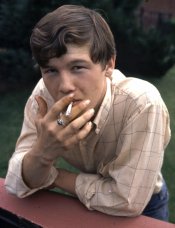
I developed some Anscochrome in the summer of 1969. This is portrait of my late friend Wayne shot on Anscochrome and processed in my parents basement. I had one of the Ansco tanks with the thermometer agitator. Great stuff for a high school kid!
 

Attachments

  • Nuggles! (1969).jpg
    Nuggles! (1969).jpg
    621.5 KB · Views: 356

Gerald C Koch

Member
Allowing Ads
Joined
Jul 12, 2010
Messages
8,131
Location
Southern USA
Format
Multi Format
The Ansco films were very soft. I followed the instructions in one of the photo magazines which used a copper based bleach. The emulsion just slid off the base after the bleach step.
 

Paul Howell

Subscriber
Allowing Ads
Joined
Dec 23, 2004
Messages
10,091
Location
Scottsdale Az
Format
Multi Format
A few years ago I bought a bulk roll of GAF 200 that had been frozen, I had bought 3 kits on line and finally loaded, shot and developed, I dont recall which steps have a liquid foil pack that had been dried out, took all 3 kits to cobble together enough of the steps to develop 2 rolls, had to also buy the right lamp for the reversal step. The film is so old that the color shifted and was washed out. In the 60s and 70s I shot GAF 50of 0 and 200, most of the slides are faded. As I recall E 4 was similar to Ansco/Gaf.
 

Kevin P.

Member
Allowing Ads
Joined
Jul 14, 2016
Messages
3
Location
Colorado
Format
35mm
I wanted to make a few comments on GAF Slide film and developing before this thread got too old.

Yes, I did use a few of these GAF 1-pint developing kits back in the late 1970's. I got involved in photography in Jan. 1976, buying a Canon Ftbn (with 1.4 lens) in April 1976. I was really interested in existing light photography-the reason for the fast lens so naturally my interest gravitated toward the fast films.

As you all probably know, the fastest color film in the world at the time was GAF 500 color slide. Fortunately for a poor college student such as I, Kmart sold GAF 500 film under their own private label 'Focal' (rated ASA 400) and it was less than half the retail cost of GAF 500 with processing. Cost about $2.68 for a 20 exposure roll with GAF processing, while list price of the GAF 500-20 exp. with processing was $ 5.95. Also, it was less than half the price of Kodak HS Ektachrome (ASA 160, E-4) pushed to 400 with Kodak ESP-1 processing.

GAF 500 was introduced in late spring 1967, it was tested in both Modern and Pop Photo in July/August 1967 issues. It remained the world's fastest color film until the October 1976 Photokina when Fuji announced the breakthrough ASA 400 color negative film, Fujicolor FII 400 (although it did not become available until early 1977). Up until then, color negative films were only in ASA 80-100 speed. So GAF had the world's fastest color film for nearly 10 years. Yes, it varied in speed sometimes, probably closer to 320-400 range.

GAF got out of the consumer photo business in July 1977 (although they apparently stayed in the industrial photo field until the early 1980's, according to a poster on apug.)

Kodak introduced their ESP-1 processing service in mid 1968, about a year after GAF 500 was introduced. I think the competition from the new GAF 500 had a lot to do with that! Kodak's fastest unpushed color film at the time was ASA 160 (H.S. Ektachrome E-4).

Kodak did not have a true (unpushed) ASA 400 slide film until fall of 1978.

I was disappointed with the quality of prints I got from slides, so I went back to color neg. until about 1978 or '79 when I started developing my own color film. With more experience in photography, I realized I liked the look of GAF films. I did manage to find a few rolls of GAF 500 that still looked good. A local, small camera store had a small supply of some GAF 1 pint color slide film kits (marked to half price (about $2.49 vs. the approx. $5 retail price). The kits came in thin cardboard boxes with red printing and artwork. All the kit components were in small foil packets. The majority were powders but there were some liquids. These had little foil shaped tips as part of the packaging and you simply tore off the tip to squeeze out the small amount of liquid. I do remember one of the color developer components being a liquid. Processing temp. was 75 degrees.

The kit used light reversal and I used either a 75 watt floodlight bulb I had, or simply two unshielded 40 watt cool white fluorescents in the light fixture over my dad's workbench. The film reels I used were clear plastic. Temps with GAF's 75 degrees was much easier to control and be consistent than the new E-6 100 degrees.

I did try buying some GAF 500 color slide film in fall 1979 from Fereestyle, (by then outdated) but the color was bad (color was very bluish with a very bluish D-max). It was a 100 foot roll and I did return it to them and they gave me a full refund.

I did find a few rolls from private sellers and even pushed a roll of 500 to ASA 1000 successfully!

Freestyle did sell their own GAF color slide film developing kits; apparently put together by a third party. They came in heat sealed clear plastic bags, with each component in a separate plastic bag or bottle with a simple label and a sheet of instructions. In 1979 Freestyle sold 1 quart kits for $7.95, these would do 8-10 20 exp. 35mm. rolls

In 1981, I shot and processed some GAF 64 and it gave pleasing results, no color shift or loss of D-max. Although I shot it on a cloudy day there was no trace of bluishness and skin tones were beautiful, tarnish and pleasant. Greens were soft and warm and there was no overall color cast. I realized that the 500 film deteriorated much faster once it passed the expiration date than the slow 64 did.

It's very interesting too look at the Modern Photography slide film tests from 1976 and '77. GAF films tended to have tarnish skin tones. In shade the GAF films strongly resisted the tendency to go bluish more than all the other films, while K64 was very bluish-magenta in shade. Both HS Ektachrome and Fujichrome (E-4) were quite bluish in shade. GAF 500 was easily the contrastiest slide film, and of course it did have the coarsest grain but it's higher contrast made it look sharper in blowups than you would think. GAF 200 did poorly in the April 1976 test but showed 'tremendous improvement' in the Sept. 1977 test, unfortunately too late for GAF.

GAF 500 also did uniquely well under fluorescent light without a filter, giving slightly orangish skin tones with no trace of greenishness at all.

I still have some GAF 500 color slides from 1976 (and later), none of them show any signs of color cast or fading. Keeping them in the dark, plus Colorado's low humidity have helped. I don't have any scans of them, otherwise I would post a few shots.

I really miss GAF.

 

railwayman3

Member
Allowing Ads
Joined
Apr 5, 2008
Messages
2,816
Format
35mm
I remember GAF slide film being sold in the large town in the UK near where I then lived, probably in the early 1970's. The shop was a rather smart dedicated "GAF Imaging Centre", selling film, copying machines and graphic and artists supplies. I can't recall using the films myself, but I remember my late Father, a keen photographer, trying some out and saying they were not "up to" the mainstream Kodachromes and Agfachromes of the time.
 

Photo Engineer

Subscriber
Allowing Ads
Joined
Apr 19, 2005
Messages
29,018
Location
Rochester, NY
Format
Multi Format
GAF formulas were based on the Agfa formulas of the 1940s, but updated more slowly than that of Agfa itself.

PE
 

Prof_Pixel

Member
Allowing Ads
Joined
Feb 17, 2012
Messages
1,917
Location
Penfield, NY
Format
35mm
During the mid-50s, I used to make color prints on Ansco Printon, an acetate based direct positive (reversal) material. They've lasted pretty well.
 

AgX

Member
Allowing Ads
Joined
Apr 5, 2007
Messages
29,972
Location
Germany
Format
Multi Format
I remember GAF slide film being sold in the large town in the UK near where I then lived, probably in the early 1970's. The shop was a rather smart dedicated "GAF Imaging Centre", selling film, copying machines and graphic and artists supplies. I can't recall using the films myself, but I remember my late Father, a keen photographer, trying some out and saying they were not "up to" the mainstream Kodachromes and Agfachromes of the time.

GAF formulas were based on the Agfa formulas of the 1940s, but updated more slowly than that of Agfa itself.


GAF was practically a wartime spin-off of Agfa.

In the 70s Kodak and Agfa-Gevaert were the two major film manufacturers. Of course GAF had much less resources.

But GAF in the 60s nevertheless partially changed over to type Ektachrome couplers. Much, much earlier than Agfa.
 

Photo Engineer

Subscriber
Allowing Ads
Joined
Apr 19, 2005
Messages
29,018
Location
Rochester, NY
Format
Multi Format
Agfa Ansco was "nationalized" by the US government at the start of WWII. They remained a US government appendage until the '60s when they were spun off as Ansco, later to become GAF (General Aniline and Film). We bought many products from Ansco in the late '50s and early '60s for government use at Cape Canaveral and had regular visits from Ansco reps. who updated us on the separation of Ansco from the Government. They showed us samples of many things coming as soon as the two entities were separated. I still have an early sample of an Ansco color negative print paper.

PE
 

GRHazelton

Subscriber
Joined
May 26, 2006
Messages
2,251
Location
Jonesboro, G
Format
Multi Format
B&N has started to sell phongraphs with a USB port. What a juxtaposition!

And BN also has a selection of high-priced re-issues on vinyl. The turntables are what my friends and I back in the day called "groove grinders." Cheap schlock plastic crap, IMHO.
 

GRHazelton

Subscriber
Joined
May 26, 2006
Messages
2,251
Location
Jonesboro, G
Format
Multi Format
I ran across this site Dead Link Removed which is possibly of interest.
 
Photrio.com contains affiliate links to products. We may receive a commission for purchases made through these links.
To read our full affiliate disclosure statement please click Here.

PHOTRIO PARTNERS EQUALLY FUNDING OUR COMMUNITY:


Ilford ADOX Freestyle Photographic Stearman Press Weldon Color Lab Blue Moon Camera & Machine
Top Bottom